The dream dictionaries answer fast and flat: new beginnings, a project coming to term, something on the way. They take the image and pin it to one happy meaning, as if the unconscious only ever sends good news. But a dream of pregnancy is rarely so tidy. There is the longed-for pregnancy and the unwanted one; the swelling you carry with pride and the one you wake from in dread; the child you cannot wait to meet and the one you would rather not have conceived at all. Pregnancy in a dream is not a verdict that good things are coming. It is the experience of carrying something not yet born — something growing in the dark, on its own schedule, that you did not entirely choose and cannot fully see.
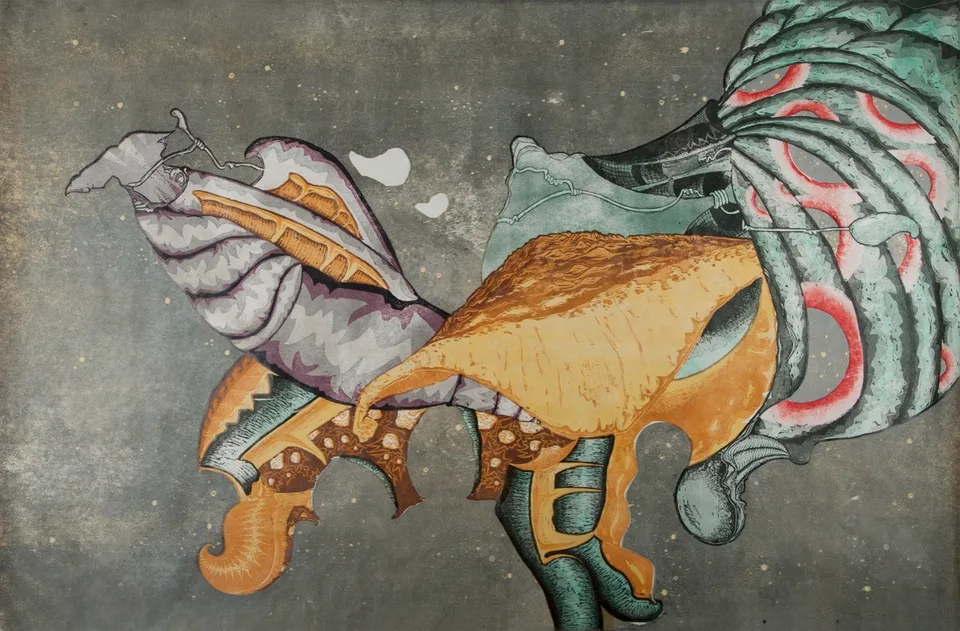
The tradition takes the image literally enough to be useful: something has been conceived in you. The man whose dream this is may not be a woman, and the woman who dreams it may not be planning a child. Esther Harding, writing of maternity, separates the physical fact from the deeper one. The child born of the inner experience, she writes, “is in the same way not the mother’s personal ego reborn, but is non-personal, a new center of the psyche, which Jung has called the Self” (Harding, The Way of All Women, 1970). The dream may foreshadow, she adds, “the rebirth of the woman herself, re-created through the experience of pregnancy and parturition.” What is gestating is not necessarily an infant. It is a new center of gravity in the person.
Jung saw this happen in the slow grammar of dreams themselves. He describes a patient whose dream represented “the act of conception… symbolically and, exactly nine months later, the unconscious… produced the symbolism of a birth, or of a new-born child, without the patient’s being conscious of the preceding psychological conception or having consciously reckoned the period of her ‘pregnancy’” (Jung, Collected Works Volume 16, 1954). The whole process, he notes, “passes off in a series of dreams and is discovered only retrospectively.” Something was carried to term in her before she knew she was carrying it.
This is the unnerving part the dictionaries omit: the pregnancy precedes your consent. Marie-Louise von Franz is blunt about its cost. The creative idea, while still inside, feels enormous — “you carry the whole Godhead in your womb, so to speak” — and that fullness is partly fraud. “A pregnancy is, so to speak, an inflation,” she writes; what feels world-altering inside almost always shrinks on the way out, so that “the mountains have labor pains and a ridiculous little mouse is brought forth” (von Franz, Creation Myths, 1995). The dream of being pregnant can be the psyche puffed up with a “preconscious creative process” it has not yet had the courage to deliver. The only cure is the labor itself: “the only thing to do is under all circumstances to bring the mouse out, for sometimes it is more than a mouse.” Refuse the work and you do not stay full forever — you become identical with the swollen, undelivered state, “absolutely miserable and getting worse and worse.”
James Hillman gives this its older name. One whole pattern of creativity, he writes, “is called incubation — even pregnancy and birth,” and it asks of you something the ego dislikes: “passivity, receptivity to what comes, ingestion, following images of fantasy as they flow feelingly through” (Hillman, The Myth of Analysis, 1972). To be pregnant in a dream is to be conscripted into that receptive, waiting mode — humbled into service of something forming below the level of will. You do not manufacture the child. You feed it and wait.
The ancients knew the wait was governed by powers larger than the mother, and that birth was a threshold where fate was fixed. R. B. Onians traces the Greek figures who stood at that threshold: the Moirai, the Fates, “divided that office with Eileithuia, the goddess of childbirth,” spinning the thread of a life at the very moment it began (Onians, The Origins of European Thought, 1988). To give birth was to have a destiny woven onto the loom. This is why the dream carries weight beyond the personal — what is being delivered arrives already threaded into a pattern you did not set.
And the body remembers what the head forgets. Erich Neumann places pregnancy among the woman’s “blood-transformation mysteries,” the bodily passages through which “woman is the organ and instrument of the transformation of both her own structure and that of the child within her” (Neumann, The Great Mother, 1955). The point is the doubleness: the one who carries is herself remade by the carrying. You cannot gestate something new and stay the person you were. The growth inside reshapes the container.
So the question is never simply what does the baby mean. It is: what has been conceived in you that you have not yet acknowledged — and are you willing to carry it to term, or are you waiting for it to vanish? Some dream-pregnancies are unwanted because the new life would cost the old one too much. Some inflate because the dreamer loves the fullness more than the delivery. The image holds both: a promise and a sentence, a swelling that is either a self being made or an idea you are afraid to bear. The dream is not congratulating you. It is telling you that something is already growing in the dark, on a schedule that is not yours, and asking whether you will be present at the birth.