Christian Roesler, reviewing whole dream series across courses of therapy, reports a blunt result: “we found no support for the assumption that there are typical or even fixed meanings for specific symbols” (Roesler, The Process of Transformation, 2025). A symbol that meant one thing in one dreamer’s hands meant something else entirely in another’s.
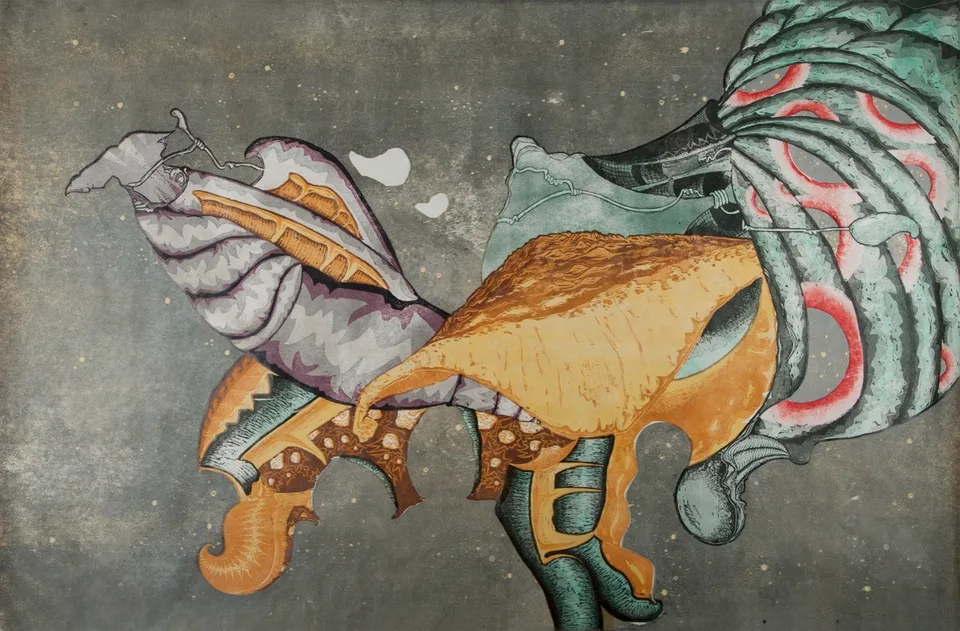
That finding lands hardest on an image like giving birth, which the dream dictionaries cash out in advance: a fresh start, a new chapter, a project about to be delivered. The reading is worn so smooth it says nothing, and blind to nearly everything the image actually does — the easy delivery beside the labor that will not end, the child you hold and the child taken from you, the birth you give and the birth you only witness, the longed-for infant who arrives as a stranger. A birth dream is never a single message, and the traditions that take dreams seriously refuse to assign it one. They ask instead what is being brought forth, at what cost, and whether the dreamer is ready to receive what comes. The image has to be read as labor, as something happening to a particular psyche under particular pressure.
What is most often happening, the depth tradition says, is the arrival of a new self. Esther Harding follows a dream in which the sun goes down for its night journey under the sea, and finds at the bottom of that descent a birth: the child to whom the dreamer gives birth becomes the symbol of “a new self, re-created through the act by which she has fulfilled her own nature” (Harding, The Way of All Women, 1970). The dream is not announcing a pregnancy. It is staging a transformation in which the dreamer is both mother and the thing born.
This is why the alchemists, who watched the psyche through their vessels, made birth the climax of the whole work. The new self does not appear out of nothing; it is delivered out of a death. Marie-Louise von Franz traces the oldest texts to a single sequence: out of the nigredo, the blackness “always likened to the state of death, when the corpse is destroyed in the tomb,” there comes “a child born which is either the infant Mercurius or a divine child, or the philosopher’s stone” (von Franz, Creation Myths, 1995). The corpse in the tomb becomes the child in the womb. No tomb, no child. The birth in the dream may be lit, then, by whatever has had to die first.
Jung read that divine child as the central symbol of the process he called individuation. The “future birth of the divine child,” he wrote, is the psyche’s image for its own wholeness; the child is the teleios anthropos, the whole man, and “its synonyms” are the symbols by which the self announces itself (Jung, Psychology and Religion: West and East, 1958). To dream of giving birth, in this reading, is to dream the self trying to be born — not a part of you, but the totality coming into the light, choosing, as Jung put it, “the empirical man” as its birthplace.
The Greeks knew the labor was real, and dangerous, and divinely attended. In the Homeric Hymn to Apollo, Leto is “racked nine days and nine nights with pangs beyond wont,” surrounded by the goddesses, unable to deliver until Eilithyia, “the goddess of sore travail,” finally sets foot on Delos: only then “the pains of birth seized Leto, and she longed to bring forth,” and “the child leaped forth to the light, and all the goddesses raised a cry” (Hesiod, Hesiod, the Homeric Hymns, and Homerica, c. 700 BCE). The hymn keeps two truths in one image — that birth is agony held back until its hour, and that what comes forth is luminous. The dream that withholds the delivery may be Leto on Delos: not failure, but the hour not yet come.
And the Greeks were careful about who does the bringing-forth. Ruth Padel, reading the tragic vocabulary, shows how the language itself splits the act: the verb tiktein, “to bring to birth,” collides with trephein, “to nourish,” in the courtroom arguments of the Oresteia, where the mother is figured now as the one who brings forth, now merely as “a field receiving seed from someone else” (Padel, In and Out of the Mind, 1994). The Greek question — who truly gives birth, the one who bears or the one who plants — is exactly the question the dream poses to the dreamer. Are you the ground, or the gardener? Did this new thing come from you, or merely through you?
Erich Neumann insists the answer reshapes everything downstream. For the woman, he writes, the transformative power “even of her own transformation” is lived first in pregnancy and childbearing; and while the change “to motherhood is completed with birth, birth sets in motion a new archetypal constellation that reshapes the woman’s life down to its very depths” (Neumann, The Great Mother, 1955). Birth in this account is not an ending but an ignition. The delivery is the easy part; what follows — the nourishing, the holding fast, the being permanently rearranged by what you made — is the real labor the dream is pointing toward.
So the question the dream asks is not whether something new is coming. It is what had to die for it; whether the hour of delivery has actually arrived or is still being held back on Olympus; whether you are the field or the one who sows; and whether you are prepared to be remade by what you bring forth. The dream does not hand you a baby and call it a fresh start. It puts you into labor and asks if you will bear down. Either way, what is trying to be born is almost certainly more yourself than you yet know — and it will not return you to who you were.