Not a stumble, not a wrong turn: a fall out of the sky, engine and all. The psyche’s choice of image is the whole point, and it is the point the dream dictionaries miss when they reach for anxiety first — fear of losing control, a project going down, a change you cannot steer. All true enough to be useless. To dream a plane crash is to dream of a height that fails: the self lifted far above the ground it came from, carried by something it did not build and cannot pilot, and then the long, helpless descent. The tradition has a name for the height, and a name for the fall, and it has been reading them together for a very long time.
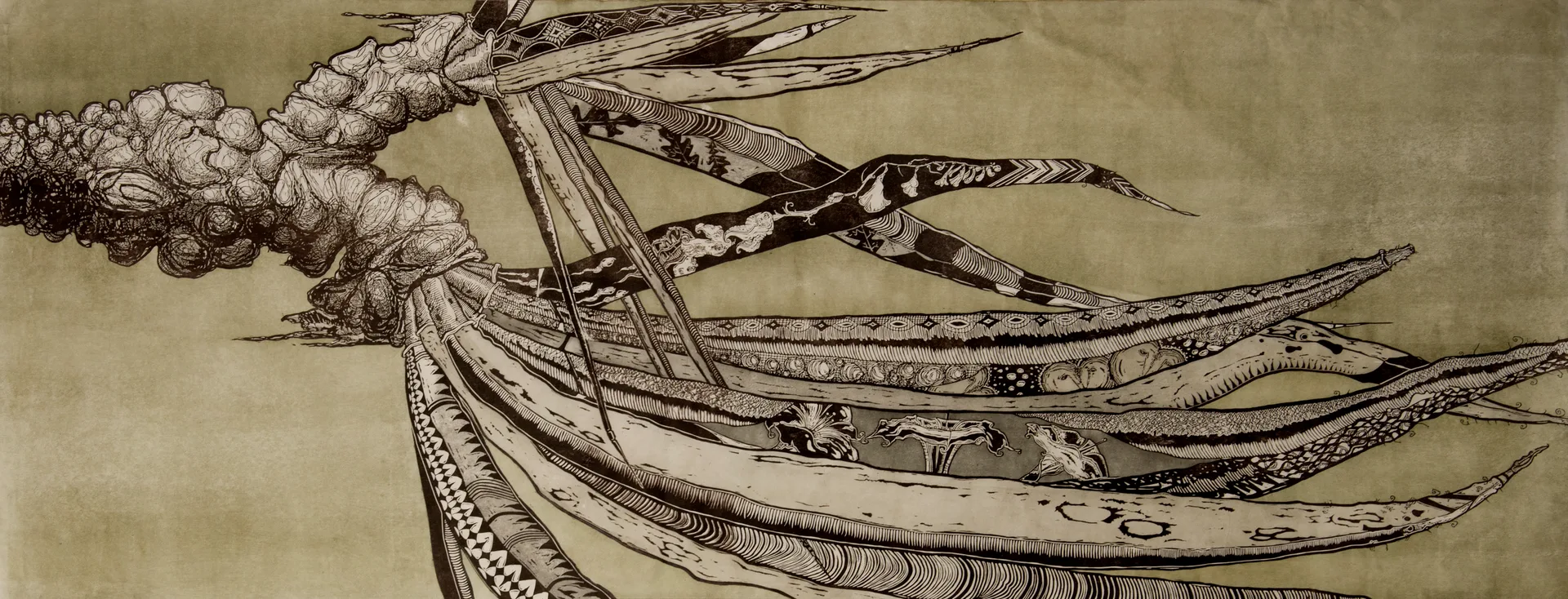
Begin with the height, because the terror of the crash is borrowed from the exhilaration of the climb. The West’s oldest image of engineered flight is Icarus, given wings by his father and one instruction he could not keep. “’Icarus, my son,’ said Daedalus, ‘I charge you to keep at a moderate height, for if you fly too low the damp will clog your wings, and if too high the heat will melt them. Keep near me and you will be safe’” (Dayton, Emotional Sobriety: From Relationship Trauma to Resilience and Lasting Fulfillment, 2007). The whole tragedy is in the moderate height he was told to hold and could not. James Hillman gathers Icarus into a whole company of these figures — “Icarus on the way to the sun, then plummeting with waxen wings; Phaethon driving the sun’s chariot out of control, burning up the world; Bellerophon, ascending on his white winged horse, then falling onto the plains of wandering, limping ever after” — and calls them “the puer high climbers, the heaven stormers” (Hillman, Senex & Puer, 2015). The plane in the dream is the modern wing: a device for getting off the ground, above the ordinary, into thinner and more brilliant air.
The depth tradition ties the falling dream to this myth directly. Edward Edinger, reading such dreams as images of inflation and its correction, writes that “all dreams of flying have some allusion to the myth of Icarus,” and that the danger, once one is aloft, is precisely the fall: “abrupt impact with reality, symbolized by the earth” (Edinger, Ego and Archetype: Individuation and the Religious Function of the Psyche, 1972). The ascent, in his reading, is not simply bad — it is often a “necessary crime of inflation.” But it “is a real crime and does involve real consequences. If one misjudges the situation he suffers the fate of Icarus.” The crash is the moment the misjudgment comes due.
There is a difference the plane makes, and it is worth naming. Icarus flew on wings strapped to his own back; the dreamer in the plummeting jet is usually a passenger, or is flying by machinery rather than by muscle. Edinger notes that the Icarus allusion is sharpest in “dreams of flight without any means of mechanical support” — so the plane, the engineered and collective vehicle, adds something Icarus lacked: the ascent has been entrusted to a system, a crew, an apparatus larger than the self. This is why the plane-crash dream so often carries the specific horror of helplessness. You are not the one who overreached; you are the one strapped into the overreaching, unable to bring it down gently. The height was built by ambition — your own or your family’s or your culture’s — and you are riding it when it fails.
Robert Moore draws the pattern out of myth and into the ordinary modern life where these dreams actually occur. “We all know the story,” he writes, “of the promising leader, the CEO, or the presidential candidate, who starts to rise to great prominence and then shoots himself in the foot. He sabotages his success, and crashes to the earth.” And he names the ancient law underneath it: “the ancient Greeks said that hubris is always followed by nemesis. The gods always bring down those mortals who get too arrogant, demanding, or inflated” (Moore, King, Warrior, Magician, Lover: Rediscovering the Archetypes of the Mature Masculine, 1990). The crash-dream can be the psyche enforcing that law from within — nemesis arriving not as punishment but as gravity, the necessary correction of a self that climbed past its own foundations.
And yet the tradition does not simply condemn the climb, and this is the humane turn in it. Stanton Marlan, weighing the same danger, insists that the ascent has real worth: the task is “to know both the value of the puer spirit, while at the same time being aware of the dangers of inflation,” for “like a moth drawn to a flame, our Icarian souls are in peril when in our aspirations we forget” the ground (Marlan, The Black Sun: The Alchemy and Art of Darkness, 2005). The soul is supposed to want the heights. The wings are not a mistake. The mistake is forgetting they are made of wax — forgetting that the self is carried by something that answers to a sun.
So when the plane goes down in the dream, do not ask only what you are afraid of losing. Ask what you were flying on, and how high: what ambition, whose wings, entrusted to what machinery you did not build. Ask whether the descent is a disaster or a correction — the psyche insisting, before the wax melts entirely, on the moderate height that was the whole of the father’s warning. The dream does not tell you the fall is only ruin. It brings you back to the ground, hard, and waits to see whether you will learn to fly nearer to it.