Seba.Health
Key Takeaways
- Lanius's volume transforms the ACE study's epidemiological correlation between childhood adversity and adult disease into a mechanistic argument, mapping the precise neurobiological, epigenetic, and dissociative pathways through which early relational trauma lodges itself in the body — thereby providing the biomedical scaffold that Kalsched's archetypal account of trauma's inner world lacks.
- The book's multi-author structure exposes a disciplinary fault line: neuroscientists, psychiatrists, and psychotherapists each describe what is essentially the same dissociative fracturing of experience that Jung identified as the psyche's "splinter-psyches," yet they rarely recognize one another's vocabulary — making this volume an inadvertent Rosetta Stone for translating between depth psychology and trauma neuroscience.
- By foregrounding the "hidden epidemic" framing, Lanius and her co-editors perform a political act within medicine itself: they insist that trauma is not a psychiatric specialty concern but a primary etiological factor in cardiovascular disease, autoimmune disorders, chronic pain, and addiction — a claim that restructures the very meaning of "pathology" in ways that converge with Hillman's insistence that pathologizing is the psyche's autonomous activity, not a diagnostic label to be cured away.
The Body Keeps the Score Before the Mind Learns to Speak: Lanius Bridges the Gap Between Neuroscience and the Archetypal Inner World
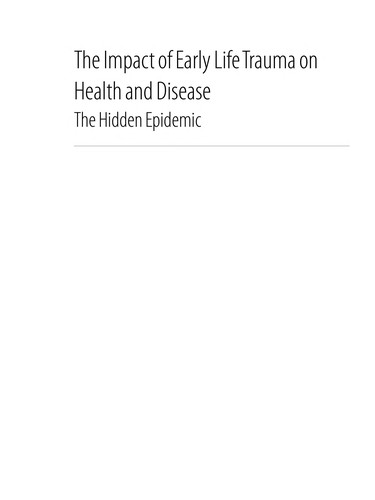
Ruth Lanius, along with co-editors Eric Vermetten and Clare Pain, assembles a volume that does what no single-author work could: it forces neuroscience, developmental psychology, epigenetics, and clinical psychiatry into the same room to answer one question — how does early life trauma become disease? The Adverse Childhood Experiences (ACE) study by Felitti and Anda had already demonstrated the dose-response relationship between childhood adversity and adult pathology, but correlation is not mechanism. Lanius’s edited collection supplies the mechanism. Contributors trace how chronic activation of the hypothalamic-pituitary-adrenal axis, dysregulation of the autonomic nervous system, and epigenetic modifications to stress-response genes create a biological substrate that expresses itself decades later as heart disease, diabetes, autoimmune dysfunction, and addiction. This is the missing empirical architecture for what Donald Kalsched, working from within the Jungian tradition, describes as the psyche’s “self-care system” — the archaic defensive operations that fragment experience in order to preserve the “personal spirit.” Where Kalsched shows in clinical dream material how “a second line of defenses comes into play to prevent the ‘unthinkable’ from being experienced,” Lanius’s contributors demonstrate that this prevention has a somatic address: altered cortisol rhythms, impaired prefrontal-amygdala connectivity, and pro-inflammatory cytokine cascades. The two accounts are not competing but complementary — one maps the geography of the inner world, the other its physiology.
Dissociation Is Not a Symptom but the Body’s Primary Grammar of Unspeakable Experience
The most consequential theoretical move in the volume is the repositioning of dissociation from a discrete psychiatric symptom to a foundational organizing principle of traumatic experience. Several contributors argue that dissociation — encompassing depersonalization, derealization, somatoform fragmentation, and affective numbing — constitutes the body-mind’s primary response to overwhelming threat, not a secondary complication. This converges powerfully with Kalsched’s observation that “the psyche’s dissociative defenses” are personified in dream imagery as archetypal daimonic figures — splitting, projective identification, trance-states, and “switching among multiple centers of identity.” Kalsched’s key insight is that these defenses “cannot allow all the elements of whole experience to be present at once,” resulting in “an attack against links between somatic and mental components of experience.” Lanius and her colleagues provide the neuroimaging data: traumatized individuals show functional disconnection between brain regions responsible for interoception, emotion regulation, and narrative memory. The body registers what the mind cannot narrate. This reframes dissociation not as a failure of integration but as a sophisticated, biologically instantiated survival strategy — one that, as Kalsched warns, becomes “anti-life” precisely because the “Protector/Persecutor is not educable” and “functions on the magical level of consciousness with the same level of awareness it had when the original trauma occurred.” The neurobiological finding that early trauma literally shapes neural architecture gives this clinical observation material teeth: the defense is not merely psychological resistance but structural remodeling.
The Hidden Epidemic Redefines Pathology Itself: From Diagnosis to Etiology
Lanius’s “hidden epidemic” framing is more radical than it first appears. It challenges the entire nosological architecture of modern medicine by arguing that trauma is not a disease category but a transdiagnostic etiological factor — a root cause hiding inside the symptom presentations of cardiology, endocrinology, gastroenterology, and oncology. This has resonance far beyond biomedicine. James Hillman, in Re-Visioning Psychology, introduced the term “pathologizing” to describe “the psyche’s autonomous ability to create illness, morbidity, disorder, abnormality, and suffering in any aspect of its behavior.” Hillman insisted that pathology is not something wrong to be corrected but something the soul does — a mode of deepening. Lanius’s volume, operating in an entirely different register, arrives at an analogous structural claim: the diseases emerging from early trauma are not random misfortunes but intelligible expressions of an organism’s attempt to survive relational catastrophe. The inflammation that produces atherosclerosis, the immune dysregulation behind lupus, the metabolic disruption underlying obesity — these are the body’s long-delayed testimony about experiences it could not otherwise articulate. Kalsched’s formulation is precise here: “The affect and sensation aspects of experience stay with the body and the mental representation aspect is split off into the ‘mind.’ Such a person will not be able to let somatic sensations and excited bodily states into mental awareness.” What Lanius’s contributors demonstrate is that this split is not metaphorical — it is measurable in cortisol assays, inflammatory markers, and functional MRI scans.
Why the Interdisciplinary Structure Is the Argument
The volume’s edited, multi-disciplinary format is not incidental but essential to its thesis. No single discipline can hold the full picture of how early trauma becomes adult disease because the phenomenon itself crosses every boundary — psychological, somatic, epigenetic, social. The very structure of the book enacts what Kalsched identifies as the challenge of locating illness in “psyche” — Jung’s “intermediate third area” that is “neither in the mind nor in the body” but in the space where body meets mind. Lanius’s contributors collectively demonstrate that this “third area” now has measurable correlates across multiple scientific domains, yet no single domain owns it. The book thereby serves as a methodological argument: trauma research that confines itself to psychiatry misses the cardiovascular consequences; cardiology that ignores developmental history misses the etiology; depth psychology that stays within dream interpretation misses the somatic substrate.
For anyone working at the intersection of depth psychology and contemporary trauma science, this volume is indispensable not because it replaces the archetypal and imaginal accounts of Kalsched or Hillman but because it provides what those accounts structurally cannot: empirical evidence that the body is the unconscious made flesh. It transforms the intuition that trauma lives in the body from a clinical metaphor into a demonstrable biomedical fact, and in doing so it compels depth psychologists to take the soma as seriously as they take the dream, and physicians to take developmental history as seriously as they take the lab panel.
Sources Cited
- Lanius, R. A., Vermetten, E., & Pain, C. (Eds.). (2010). The Impact of Early Life Trauma on Health and Disease: The Hidden Epidemic. Cambridge University Press.
- Felitti, V. J., et al. (1998). Relationship of childhood abuse and household dysfunction to many of the leading causes of death in adults. American Journal of Preventive Medicine, 14(4), 245-258.
- Teicher, M. H., et al. (2003). The neurobiological consequences of early stress and childhood maltreatment. Neuroscience & Biobehavioral Reviews, 27(1-2), 33-44.