 Seba.Health
Key Takeaways
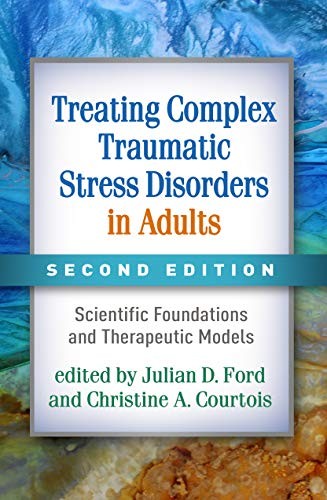
- Courtois and Ford's volume accomplishes what neither clinical manuals nor depth psychology texts alone could: it operationalizes the phase-based treatment of complex trauma into a consensus framework that implicitly answers Kalsched's call for honoring "the reality of the psyche" while meeting the demands of empirical accountability.
- The book's insistence on a three-phase model (stabilization, trauma processing, integration) is not merely a clinical convenience but a structural parallel to the archetypal individuation sequence Neumann describes — the ego must first consolidate before it can descend into the unconscious material without annihilation.
- By centering relational disturbance rather than discrete traumatic events as the core of complex traumatic stress disorders, Courtois reframes trauma treatment as fundamentally an intersubjective project, positioning this clinical handbook closer to Winnicott's transitional space than to the abreaction model Jung criticized in 1921.
Phase-Based Treatment as a Clinical Answer to the Problem of Archetypal Defense
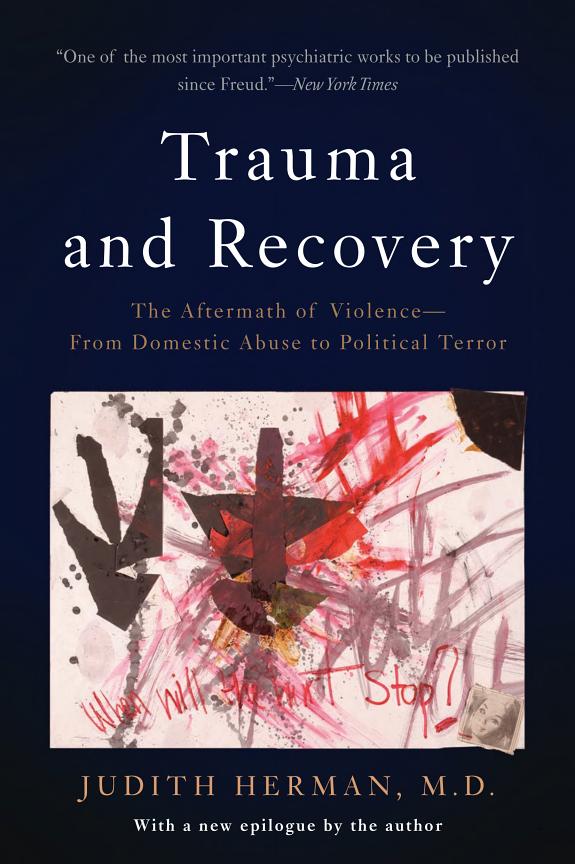
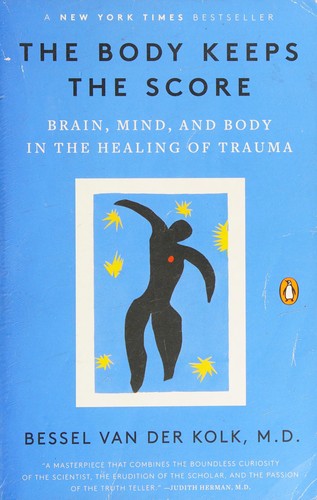
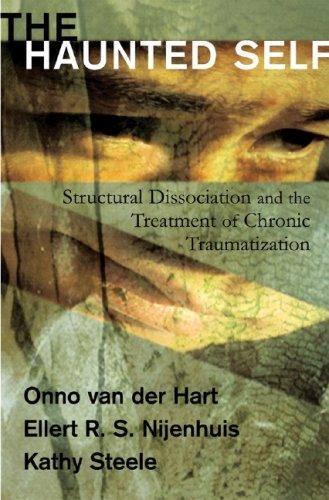
Christine Courtois and Julian Ford assembled this edited volume at a critical juncture: the field had accumulated decades of research on complex trauma — Judith Herman’s original formulation, Bessel van der Kolk’s somatic investigations, the dissociation literature stemming from Janet — but no authoritative consensus text existed to translate that knowledge into treatment architecture. Treating Complex Traumatic Stress Disorders fills that gap with precision. Its central organizing principle is the three-phase model: stabilization and safety, trauma memory processing, and consolidation/integration. What is easy to miss, particularly for readers immersed in depth psychology, is that this phased structure is not arbitrary clinical prudence but a recognition of the same psychic reality Donald Kalsched identifies in The Inner World of Trauma — that the self-care system erected after early relational trauma will destroy the therapeutic process if the clinician moves toward traumatic material before the ego possesses sufficient coherence to metabolize it. Kalsched describes how “the very images which are generated to defend the self can become malevolent and destructive, resulting in further trauma for the person.” Courtois’s stabilization phase is the clinical protocol designed to prevent precisely that iatrogenic retraumatization. The phase model respects the daimonic guardian; it does not storm the tower where Rapunzel is held.
Relational Trauma Replaces the Event-Based Paradigm That Jung Already Questioned
The book’s most consequential theoretical move is its insistence that complex trauma is defined not by a single overwhelming event but by chronic relational violation — attachment disruption, betrayal by caregivers, cumulative developmental injury. This reframing has enormous implications. Jung himself noted in his 1921 essay on abreaction that in “by far the greater number of ordinary cases there is no question of a traumatic aetiology” understood as a single violent impact, and that “the neurosis is as a rule a pathological, one-sided development of the personality, the imperceptible beginnings of which can be traced back almost indefinitely into the earliest years of childhood.” Courtois takes this insight and builds an entire treatment edifice upon it. Complex PTSD, as theorized here through the contributions of multiple chapter authors, is not a disorder of memory but a disorder of selfhood — of affect regulation, identity coherence, relational capacity, and meaning-making. This is why simple exposure therapy, which aims at processing discrete traumatic memories, is insufficient and potentially dangerous for this population. The book marshals evidence that premature exposure work in complexly traumatized patients produces decompensation, not resolution — a clinical finding that vindicates what Kalsched describes mythologically as the self-care system’s violent retaliation when its defenses are breached without adequate preparation.
The Therapeutic Relationship as Transitional Space — Not Technique but Ontological Precondition
Running through every chapter is an emphasis on the therapeutic relationship as the primary vehicle of change. This is where Courtois’s framework converges most profoundly with the depth tradition, specifically with Kalsched’s reading of Winnicott. Kalsched locates the psyche in “transitional space” — “the place where body meets mind and the two fall in love” — and argues that the post-traumatic individual has lost access to precisely this intermediate realm. Courtois operationalizes this understanding: the therapeutic alliance is not one technique among many but the ontological precondition for any technique to function. Contributors address how the therapist must become a reliable enough relational object to gradually disconfirm the patient’s procedural expectations of betrayal and abandonment. This is Winnicott’s “good-enough” environment translated into trauma-specific protocol. It also implicitly answers Hillman’s concern that therapy not become “too mental” or reduce soul to technique — Courtois’s framework insists that without relational safety, cognitive interventions are inert. The body chapters addressing somatic regulation, sensorimotor approaches, and affect tolerance echo Kalsched’s warning that “if affect from the body cannot be expressed in verbal or symbolic language between people, it cannot reach the level of ‘meaning’ which is where the psyche is.”
Integration as Individuation: The Third Phase’s Unacknowledged Depth
The least discussed but most psychologically rich dimension of the book is its third phase: consolidation and integration. Most clinicians treat this phase as aftercare — relapse prevention, life-skills building. But read through the lens of Neumann’s developmental schema in The Origins and History of Consciousness, integration is the moment when the ego, having descended into and survived contact with the unconscious contents of traumatic experience, must now reorganize itself in relation to the whole personality. Neumann describes how “ego consciousness evolves by passing through a series of ‘eternal images,’ and the ego, transformed in the passage, is constantly experiencing a new relation to the archetypes.” Courtois’s third phase, with its emphasis on meaning-making, identity reconstruction, and renewed relational engagement, describes exactly this transformed relationship — the patient who has processed trauma is not restored to a prior state but reorganized at a higher level of integration. The book does not use archetypal language, but the structure it describes is individuation under clinical conditions.
This volume matters today not because it is the most imaginative or theoretically daring book on trauma — it is deliberately neither. It matters because it provides the disciplined clinical container within which the deeper work that Kalsched, Hillman, and Jung describe can actually occur without destroying the patient. It is the temenos built to specification, the architecture that makes depth possible. For anyone practicing or studying at the intersection of trauma treatment and depth psychology, this is the text that demonstrates how the phase-based clinical framework and the archetypal understanding of psychic self-protection are not rival paradigms but complementary necessities — the vessel and the fire it is built to hold.
Sources Cited
- Courtois, C. A., & Ford, J. D. (Eds.). (2009). Treating Complex Traumatic Stress Disorders: An Evidence-Based Guide. Guilford Press.
- Herman, J. L. (1992). Trauma and Recovery. Basic Books.
- Cloitre, M., et al. (2011). Treatment of complex PTSD. Journal of Traumatic Stress, 24(6), 615-627.