Seba.Health
Key Takeaways
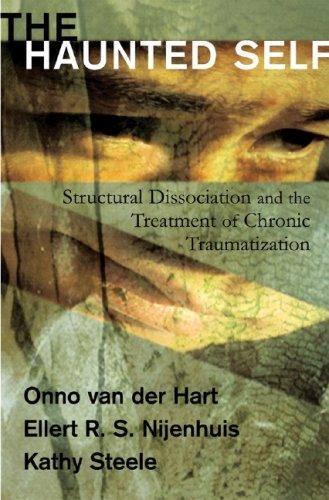
- The Haunted Self provides the most rigorous clinical architecture for what Kalsched mythologizes and Hillman poeticizes: the psyche's structural division into action systems is not metaphor but measurable dissociative organization, and this precision is what makes it indispensable to any depth-psychological engagement with trauma.
- Van der Hart, Nijenhuis, and Steele demonstrate that Janet's nineteenth-century dissociation model — not Freud's repression model — is the correct chassis for understanding chronic traumatization, thereby repositioning the entire psychoanalytic century as a long detour away from the phenomenon it claimed to treat.
- The book's phase-oriented treatment model resolves a tension that haunts both Jungian and psychoanalytic practice: the question of when integration is therapeutic and when it is retraumatizing — the very problem Kalsched identifies as the "negative therapeutic reaction" — by insisting that stabilization must precede any encounter with traumatic memory.
Structural Dissociation Reclaims the Clinical Ground That Depth Psychology Narrates Mythologically
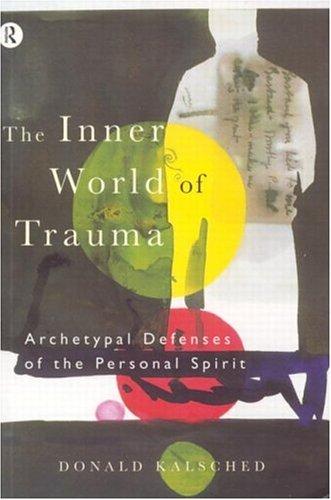
Van der Hart, Nijenhuis, and Steele’s The Haunted Self (2006) accomplishes something no prior trauma text managed: it takes the phenomenology that clinicians like Donald Kalsched explore through dream, fairy tale, and archetypal image and grounds it in a falsifiable, neurobiologically informed structural model. Where Kalsched’s The Inner World of Trauma (1996) describes the “Protector/Persecutor” — a daimonic figure that “disperses into fragments (dissociation), or encapsulates and soothes with fantasy (schizoid withdrawal), or numbs with intoxicating substances (addiction)” — van der Hart and colleagues formalize the same phenomenon as the division between the “Apparently Normal Part of the Personality” (ANP) and the “Emotional Part of the Personality” (EP). The ANP manages daily life by avoiding traumatic memory; the EP is fixated in the traumatic experience, reliving it with full sensorimotor and affective intensity. This is not a different observation from Kalsched’s; it is the same observation stripped of mythopoetic clothing and dressed in the language of evolutionary action systems. The ANP operates through daily-life action systems (attachment, caregiving, exploration, play, energy regulation), while the EP is locked into mammalian defense systems (fight, flight, freeze, collapse, submission). The genius of the model is that it makes the purpose of dissociation visible: the personality divides precisely along the fault line between survival and living, and it does so because integrating the two is beyond the individual’s current mental capacity — what the authors call “integrative failure.”
Janet, Not Freud, Is the True Ancestor of Trauma Psychology
The book’s most consequential historical argument is its rehabilitation of Pierre Janet over Sigmund Freud. Jung himself recognized that “the essential factor is the dissociation of the psyche and not the existence of a highly charged affect,” and that “the main therapeutic problem is not abreaction but how to integrate the dissociation.” Yet mainstream psychoanalysis, following Freud’s pivot from the seduction theory to the primacy of intrapsychic fantasy, spent a century treating trauma as if repression were the operative mechanism. Van der Hart and colleagues demonstrate, with exhaustive clinical and empirical evidence, that dissociation and repression are fundamentally different processes. Repression presupposes a unified personality that pushes material down; dissociation describes a personality that was never unified in the first place, because the integrative capacity required to synthesize overwhelming experience was absent at the moment of traumatization. This distinction matters clinically: if you treat a structurally dissociated patient as though they are repressing, you interpret where you should stabilize, you push toward catharsis where you should build capacity, and you risk the precise catastrophe Kalsched describes — the “negative therapeutic reaction” in which “integration or ‘wholeness’ is initially experienced as the worst thing imaginable.” The authors’ threefold model of structural dissociation — primary (one ANP, one EP, as in simple PTSD), secondary (one ANP, multiple EPs, as in complex PTSD and disorders of extreme stress), and tertiary (multiple ANPs and multiple EPs, as in dissociative identity disorder) — provides a graduated diagnostic framework that no purely archetypal or object-relational model offers.
Phase-Oriented Treatment as the Resolution of the Integration Paradox
The clinical heart of The Haunted Self is its phase-oriented treatment model, derived from Janet and refined through decades of practice with chronically traumatized patients. Phase 1 focuses on stabilization, symptom reduction, and skill-building — expanding the patient’s “window of tolerance” and strengthening the ANP’s capacity for daily-life functioning. Phase 2 addresses the treatment of traumatic memories, but only when the patient has sufficient integrative capacity to synthesize what was previously overwhelming. Phase 3 targets the integration and rehabilitation of the personality as a whole. This sequence directly addresses the paradox that Kalsched frames mythologically: the self-care system’s “Protector/Persecutor” attacks therapeutic progress because it cannot distinguish new relational opportunity from old traumatic danger — it “is not educable” and “functions on the magical level of consciousness with the same level of awareness it had when the original trauma occurred.” Van der Hart and colleagues translate this insight into a treatment principle: you do not confront the EP’s traumatic fixation until the ANP has developed enough reflective capacity and relational trust to metabolize what emerges. Hillman’s critique of ego-centered psychology — his insistence in Re-Visioning Psychology that “instead of trying to cure pathological fragmentation wherever it appears, we would let the content of this fantasy cure consciousness of its obsession with unity” — finds a surprising clinical ally here. Van der Hart and colleagues do not rush toward unity. They respect the dissociative structure as an achievement, not merely a pathology, and they dismantle it only at the pace the patient’s integrative capacity allows.
The Missing Bridge Between Neuroscience and the Archetypal Imagination
What makes The Haunted Self irreplaceable in a depth psychology library is precisely what it does not do: it does not mythologize. Kalsched gives us the axeman, the shotgunner, the food daimon — vivid personifications of the psyche’s self-traumatizing operations. Van der Hart and colleagues give us the neurobiological substrates: the medial prefrontal cortex’s failure to inhibit amygdala activation, the orbitofrontal cortex’s compromised capacity for affect regulation, the hippocampal deficits that prevent traumatic experience from becoming autobiographical narrative. Neither account is sufficient alone. Without Kalsched’s archetypal imagination, the structural dissociation model risks becoming a cognitive-behavioral algorithm that misses the soul of the patient’s suffering. Without van der Hart’s structural precision, Kalsched’s daimons remain therapeutically beautiful but clinically ungovernable — the therapist knows what haunts the patient but not when or how to intervene. Jung’s own position, articulated in his essay on abreaction, was that “mere rehearsal of the experience does not itself possess a curative effect” and that the doctor’s “human interest and personal devotion” is essential — but even Jung acknowledged that the “conscious personality of the patient” must be sufficiently “reinforced by his relationship to the doctor” before integration can proceed. The Haunted Self operationalizes this insight with a specificity Jung never achieved.
For anyone working at the intersection of trauma and depth psychology today, this book is not optional reading — it is the structural grammar without which the mythological, archetypal, and relational vocabularies of the tradition remain dangerously imprecise. It tells you what dissociation is as a system, not merely what it looks like in a dream. And in doing so, it honors Janet’s original vision, vindicates Jung’s intuition about the primacy of dissociation over repression, and provides the clinical scaffolding that keeps the encounter with traumatic memory from becoming yet another traumatic event.
Sources Cited
- van der Hart, O., Nijenhuis, E. R. S., & Steele, K. (2006). The Haunted Self: Structural Dissociation and the Treatment of Chronic Traumatization. W. W. Norton.
- Janet, P. (1907). The Major Symptoms of Hysteria. Macmillan.
- Nijenhuis, E. R. S. (2015). The Trinity of Trauma. Vandenhoeck & Ruprecht.