 Seba.Health
Key Takeaways
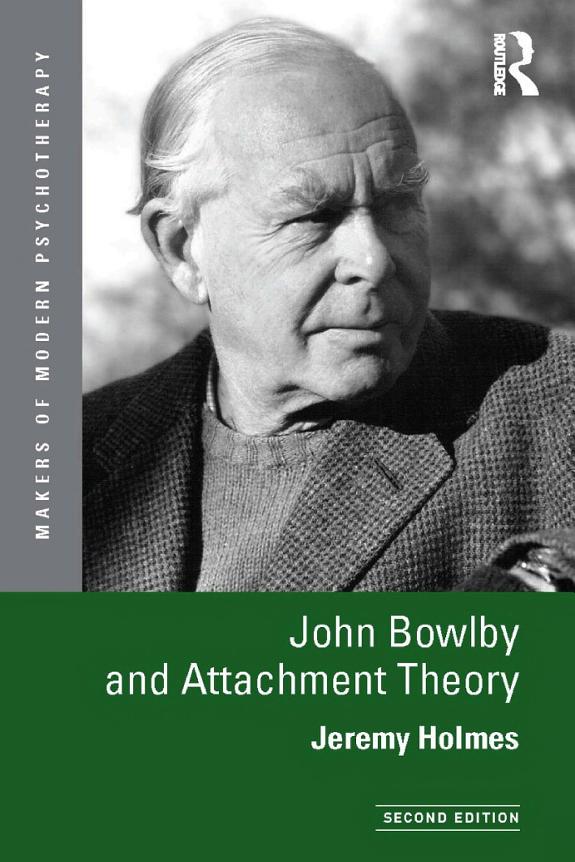
- Holmes accomplishes the rare feat of translating Bowlby's empirical project into the language of clinical psychotherapy, thereby revealing attachment theory not as a rival to depth psychology but as an unacknowledged bridge between object relations and the neuroscience of relational trauma.
- The book exposes a structural irony: Bowlby was exiled from the British psychoanalytic establishment for biologizing the mother-infant bond, yet his framework became the very scaffold on which contemporary relational and trauma-informed therapies now stand—including traditions that claim no debt to him.
- Holmes's biographical method demonstrates that Bowlby's personal attachment history—his emotional distance from his own mother, his boarding school separation—was not incidental context but the generative wound from which the entire theoretical edifice emerged, making the book an inadvertent case study in what Hillman would call the acorn's necessity.
Bowlby’s Exile from Psychoanalysis Was the Condition of His Influence, Not an Obstacle to It
Jeremy Holmes structures his 1993 study as both intellectual biography and theoretical rehabilitation, and this dual architecture is the book’s decisive contribution. By interleaving Bowlby’s life with his ideas, Holmes reveals that attachment theory did not emerge from dispassionate observation but from the precise nexus of personal loss, institutional rejection, and scientific ambition. Bowlby’s childhood—handed to a nanny, dispatched to boarding school at seven, relationally estranged from a mother who considered parental affection dangerous—reads less as biographical trivia than as the primal scene of the theory itself. Holmes makes this point without sentimentalizing it: the theory of separation anxiety was forged in someone who knew separation as a formative wound rather than an abstract concept. This places Holmes’s Bowlby in direct tension with Hillman’s “parental fallacy” thesis in The Soul’s Code, where Hillman dismisses Bowlby’s framework as an archetypal inflation of the mother figure, a “scientific fiction” that traps children in developmental determinism. Hillman’s charge is rhetorically brilliant but theoretically imprecise: he conflates Bowlby’s nuanced internal working models—which are revisable, relational, and procedural—with a crude causal determinism that Bowlby himself moved beyond in his later trilogy. Holmes’s book is the best available corrective to this misreading, not by arguing against Hillman but by showing the clinical texture that Hillman ignores.
Attachment Theory Occupies the Exact Space Winnicott Called “Potential”—and Neither Tradition Has Fully Recognized This
Holmes positions Bowlby in relation to the British Independent tradition, particularly Winnicott, and this is where the book’s interpretive depth becomes most compelling. Winnicott’s concept of the “potential space”—that intermediate area between merger and separation where play, symbolization, and cultural experience become possible—depends entirely on what Winnicott calls “the baby’s trust in the mother experienced over a long-enough period.” This is, in everything but vocabulary, the secure base. Holmes demonstrates that Bowlby’s “internal working models” and Winnicott’s “holding environment” describe the same relational ground from different epistemological altitudes: Bowlby from ethology and empirical observation, Winnicott from clinical phenomenology and paradox. What Holmes grasps, and what the psychoanalytic establishment of the 1960s and 70s refused to see, is that these are complementary rather than competing frameworks. Winnicott’s insight that “a baby can be fed without love, but loveless or impersonal management cannot succeed in producing a new autonomous human child” is an attachment claim stated in the idiom of poetry. Bowlby’s contribution was to operationalize this poetic truth so it could be tested, measured, and—crucially—used to design interventions for children in institutional care. Holmes never reduces one to the other; he holds both registers open simultaneously.
The Secure Base Is Not a Sentimental Ideal but a Prerequisite for the Capacity to Be Alone
One of Holmes’s most clinically consequential moves is showing how Bowlby’s “secure base” concept reframes the relationship between attachment and autonomy. The popular caricature—that attachment theory produces dependency, that it privileges closeness over independence—inverts the actual logic. Holmes demonstrates that for Bowlby, secure attachment is the launching pad for exploration, risk, and ultimately individuation. This resonates powerfully with James Hollis’s observation in Under Saturn’s Shadow and The Middle Passage that the capacity to tolerate loneliness and pursue one’s own development depends on whether early experience established sufficient trust. Hollis writes that the child’s “phenomenological interpretation of tactile and emotional bonding” shapes the fundamental capacity to trust—a formulation that is, in structural terms, indistinguishable from Bowlby’s secure attachment classification. The difference is that Hollis frames this as existential diagnosis while Bowlby frames it as developmental science. Holmes’s book makes visible the shared architecture. Furthermore, Jan Wiener’s work on transference in Jungian analysis explicitly invokes attachment theory and neuroscience, noting that patients who experienced a mother capable of “mediating and regulating her baby’s emotions” develop internal capacities for self-soothing, while those who did not remain volatile or shut down. This is Holmes’s Bowlby translated into clinical process: the internal working model is not a static blueprint but a living relational template that activates in the transference and can, under the right conditions, be revised.
Holmes Rescues Bowlby from Both His Detractors and His Disciples
The book’s final achievement is tonal and strategic. Holmes writes as a clinician who uses attachment theory in practice, not as a disciple defending a master. He acknowledges the limitations—Bowlby’s relative neglect of fantasy, his discomfort with the Kleinian internal world, his sometimes mechanical prose—while insisting that these limitations do not invalidate the framework. This balanced advocacy is essential because Bowlby has been distorted from two directions: by psychoanalytic traditionalists who dismissed him as a behaviorist (Hillman’s “scientific fiction” charge is the archetypal-psychology version of this dismissal), and by popularizers who reduced attachment categories to personality types on social media. Holmes’s book remains the indispensable middle ground. For anyone working within depth psychology today—whether Jungian, relational, or trauma-informed—this text clarifies that attachment theory is not an alternative to the symbolic and imaginal dimensions of psyche but a necessary empirical foundation beneath them. Without the secure base, there is no potential space; without the potential space, there is no play, no symbol, no soul-making. Holmes makes this chain of dependency legible in a way no other single volume does.
Sources Cited
- Holmes, J. (1993/2014). John Bowlby and Attachment Theory (2nd ed.). Routledge.
- Bowlby, J. (1969). Attachment (Attachment and Loss, Vol. I). Basic Books.
- Main, M., & Hesse, E. (1990). Parents' unresolved traumatic experiences are related to infant disorganized attachment status. In M. T. Greenberg et al. (Eds.), Attachment in the Preschool Years. University of Chicago Press.