Why did it have to be everything? That is the question the dreamer carries out of sleep — not grief over one particular loss, but bewilderment at the scale. The psyche keeps smaller pictures of trouble on hand, and it passed over every one of them for the total image: the world itself, ended. The dream dictionaries flatten exactly this when they file the image under overwhelm — too much pressure, a chapter of life closing, change on the way. None of that is false; it simply answers a smaller dream than the one that was dreamt. Honor the scale instead and the dream turns apocalyptic in the tradition’s precise sense, a word that promises something other than catastrophe: apocalypse means unveiling, not destruction. What ends is a version of the world, and its ending is what draws the veil aside.
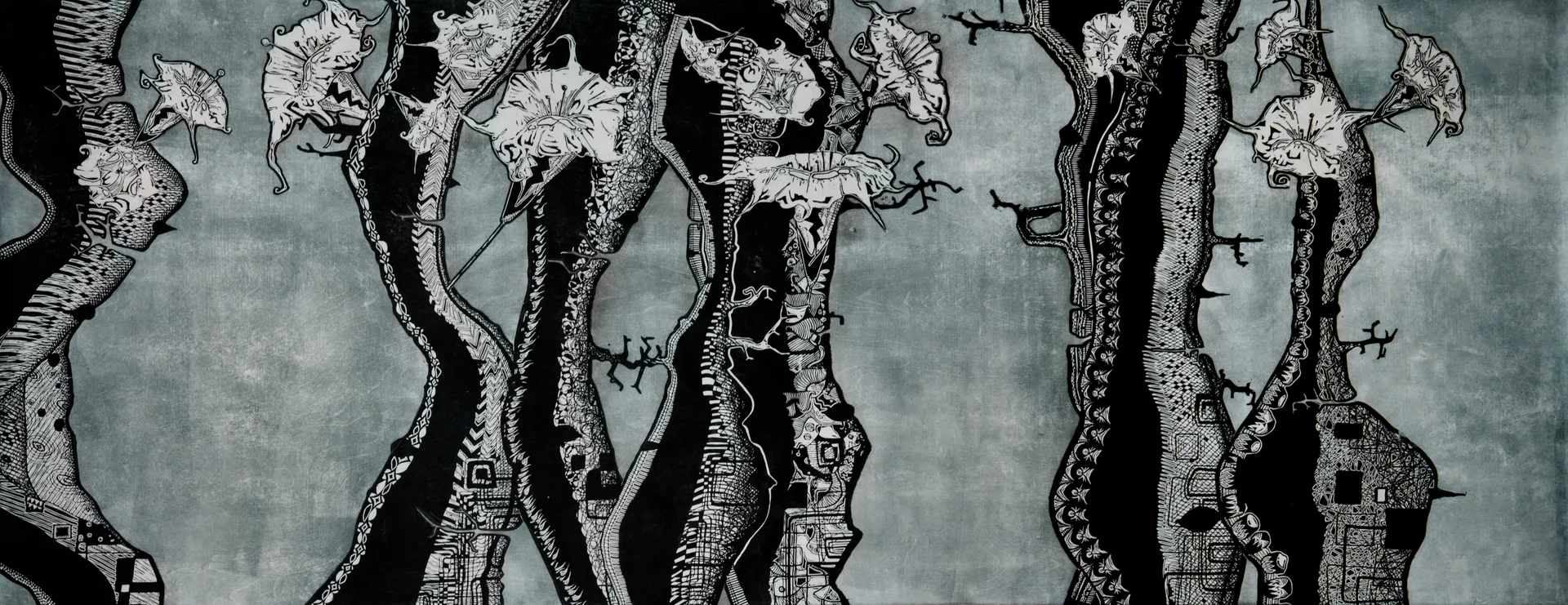
Begin with the strange precision of the image, because a Jungian analyst noticed something the dictionaries miss: in the dream, the end of the world is the end of you. Edward Edinger, tracing this theme across dreams and delusion alike, writes that “the death or relativization of the ego is equated with the death of the world, and rightly so, since the world exists only to the extent that there is a conscious ego to perceive it” (Edinger, Transformation of the God-Image: An Elucidation of Jung’s Answer to Job, 1992). This is the key that unlocks the image. The world that ends in the dream is the world as the ego has arranged it — the whole construction of who-I-am and how-things-are — and when that arrangement reaches the end of its usefulness, the psyche does not represent it as a small correction. It represents it as the sky coming down. Edinger records one such dream, from a man who later became an analyst: he stands overlooking a great city, and “the world in fact has been destroyed. It’s just one heap of rubble. There are fires everywhere.” The dreamer is still standing. What has ended is the world he was standing in.
The depth tradition insists this ending is also, and always, a hinge. Mircea Eliade, gathering the archaic myths of catastrophe, found the same shape everywhere: a series of “cosmic and historical calamities” announces the end, and then “the renewal of the world would follow” (Eliade, The Myth of the Eternal Return: Cosmos and History, 1954). The end is never the last word; it is the pivot on which the world turns over. James Hillman puts the psychological version of this bluntly, and it is worth sitting with: “Once belief itself collapses, the end of the previous world sustained by the old gods is already here. Only by an end of the world… can the gods return” (Hillman, Mythic Figures, 2007). The apocalypse in the dream may be reporting a collapse that has already quietly happened — an old order of meaning that no longer holds — and clearing the ground so that something the old world had no room for can finally arrive.
This is why the end-of-the-world dream so often carries, under its terror, a strange note of clarity or even calm. It is the register of revelation: the sense that this is not a danger to be survived but a truth being uncovered, a line after which nothing continues in the old way. Jung read the imagery of Revelation itself as exactly this kind of turning — “the reign of Antichrist” that “will begin after a thousand years,” the end of one aeon and the pressure of the next (Jung, Psychology and Religion: West and East, 1958). The dream may be marking a threshold of the same kind on the scale of a single life: the end of an age of the self.
A word of real care belongs here, because this image sits near genuine distress. Edinger himself notes that the end-of-the-world theme “is a common delusion with the onset of psychosis,” and apocalyptic conviction can be a sign that someone is struggling. Reading a dream as a symbol is not the same as living under an end-of-the-world belief while awake; the first is the psyche’s language, the second may be a real weight that deserves real support. Held as a dream-image, though, the apocalypse is not a prophecy about the world. It is a statement about your world — which order of it has come to its end.
So when the sky falls in the dream and the world goes to rubble, do not ask only what disaster is coming. Ask what is being unveiled — what arrangement, what belief, what version of the world has reached the end of its life — and ask what the ending is clearing the ground for. The image holds both at once: the terror of total loss and the revelation the loss makes possible, the last day of one world and the first, unwitnessed morning of another. It does not tell you which you are living. It ends the world, and waits to see who is still standing in the rubble.