Seba.Health
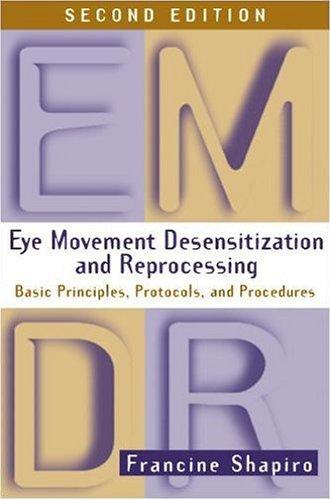
Key Takeaways
- Shapiro's Adaptive Information Processing model is not merely a clinical protocol but an implicit theory of psychic self-regulation that parallels Jung's concept of the transcendent function — both posit an inherent drive toward integration that pathology merely obstructs.
- EMDR's eight-phase protocol operationalizes what depth psychology has long described mythologically: the structured descent into traumatic memory, the encounter with its affective charge, and the guided return to adaptive resolution — a clinical katabasis rendered procedural.
- The book's most radical contribution is its insistence that bilateral stimulation catalyzes an information processing system the psyche already possesses, positioning the therapist not as interpreter of meaning but as facilitator of a self-healing capacity that Kalsched's "self-care system" simultaneously protects and imprisons.
EMDR Reveals the Psyche’s Own Digestive System for Trauma — and Depth Psychology Has Been Describing It Mythologically All Along
Francine Shapiro’s comprehensive manual does something few clinical textbooks dare: it proposes a unified model of psychopathology rooted in the premise that the mind possesses an innate information processing system designed to metabolize experience into adaptive resolution. Her Adaptive Information Processing (AIP) model holds that trauma is not fundamentally a problem of content — of what happened — but of processing: disturbing experiences become pathogenic when they are stored in state-specific, neurologically isolated networks that cannot link with the broader adaptive memory system. Symptoms — flashbacks, avoidance, negative self-cognitions — are downstream effects of this isolation. The entire EMDR protocol, with its eight phases and three-pronged approach (past memory, present triggers, future template), is engineered to restart a stalled digestive process. This is where Shapiro converges, without acknowledgment, with a central Jungian insight. Jung’s transcendent function describes the psyche’s spontaneous movement toward the reconciliation of opposites when conscious and unconscious contents are brought into sustained dialogue. Where Jung prescribed active imagination as the method for catalyzing this process, Shapiro prescribes bilateral stimulation — eye movements, taps, tones — as the somatic catalyst that unlocks the same inherent drive toward integration. The AIP model is, in structural terms, a neurobiological translation of the transcendent function stripped of its symbolic language.
The Eight-Phase Protocol Is a Clinical Katabasis — Structured Descent with a Return Ticket
Depth psychology, from Freud’s Traumdeutung through Hillman’s Dream and the Underworld, has understood therapeutic transformation as requiring a descent. Hillman insisted that “the fantasy of hidden depths ensouls the world and fosters imagining ever deeper into things” — that depth is not a location but a metaphor necessary for psychological thinking. Shapiro’s protocol enacts this descent with extraordinary procedural precision. Phase 3 (Assessment) identifies the target memory, its associated image, negative cognition, emotion, and body sensation — mapping the wound across every register of experience. Phases 4 through 7 (Desensitization through Closure) constitute the actual descent and return: the client holds the disturbing material in awareness while bilateral stimulation activates processing, allowing associative chains to emerge, transform, and eventually resolve. The therapist does not interpret. The therapist does not amplify. The therapist asks, “What do you notice now?” — a question of radical phenomenological restraint that Hillman’s image-focused therapy would recognize as kindred. What Shapiro calls “channels of association” — the spontaneous sequences of images, sensations, emotions, and cognitions that arise during processing — function as the psyche’s own narrative rewriting, remarkably close to what Patricia Berry and Hillman described as the therapeutic re-telling of one’s story in “a more profound and authentic style.” The difference is that EMDR trusts the processing system to accomplish this without the therapist’s hermeneutic intervention.
Shapiro’s Model Exposes the Central Paradox That Kalsched Identified: The Self-Care System Both Preserves and Imprisons
Donald Kalsched’s The Inner World of Trauma describes how archetypal defenses — the Protector/Persecutor dyad — form around early trauma to shield the vulnerable personal spirit from annihilation. These defenses are “not educable”; they treat every new life opportunity as a threat of re-traumatization and attack it accordingly. Shapiro’s clinical observations converge precisely here. She documents how unprocessed memories maintain their original affective charge and perceptual vividness because the information processing system cannot reach them — they are, in Kalsched’s language, encapsulated by defenses that “disperse, encapsulate, numb, or persecute” the traumatized remnant. Shapiro’s protocol is designed to circumvent this encapsulation. The bilateral stimulation, combined with the dual attention framework (one foot in the present, one in the past), creates conditions under which the frozen network can finally link with adaptive information. What Kalsched described mythologically through Rapunzel’s tower and the witch’s guardianship, Shapiro describes procedurally through desensitization and reprocessing. The witch does not need to be analyzed; she needs to be bypassed — or more precisely, the conditions that necessitated her vigilance need to be resolved so that she becomes unnecessary. This is the deep therapeutic logic of EMDR: it does not fight the defense but dissolves the conditions that sustain it.
Why EMDR Matters for Depth Psychology — and Why Depth Psychology Matters for EMDR
Marta Tibaldi’s work on integrating EMDR with Jungian analysis, referenced in the retrieved sources, points toward a synthesis that neither tradition has fully achieved. Shapiro’s book provides the clinical architecture; depth psychology provides the cosmology. Without the AIP model, the depth tradition risks treating traumatic memory as meaningful content to be amplified and interpreted, potentially re-traumatizing the client by keeping them circulating within the very networks that need to be metabolized. Without depth psychology, EMDR risks becoming a technique disconnected from the larger questions of individuation, meaning, and the soul’s purposiveness that Edinger identified as central to the vocation of psychotherapy — the recognition that therapeuein originally meant to render service to the gods. Shapiro’s manual, for all its procedural exactness, carries an implicit theology: the psyche heals itself when obstructions are removed. This is not far from the Jungian axiom that Beebe’s preface cites via Kalsched: “the self-same powers that seem so set on undermining our efforts are the very reservoir from which new life, fuller integration, and true enlightenment derive.” What Shapiro’s book uniquely provides is the clinical procedure that makes this axiom operational — a replicable method for releasing the psyche’s inherent movement toward wholeness from the frozen grip of unprocessed experience. No other book in the trauma literature offers this combination of theoretical comprehensiveness, procedural specificity, and implicit alignment with the oldest intuition of depth psychology: that healing is not something done to the psyche but something the psyche does, given half a chance.
Sources Cited
- Shapiro, F. (2001). Eye Movement Desensitization and Reprocessing (EMDR): Basic Principles, Protocols, and Procedures (2nd ed.). Guilford Press.
- Shapiro, F. (1989). Eye movement desensitization: A new treatment for post-traumatic stress disorder. Journal of Behavior Therapy and Experimental Psychiatry, 20(3), 211-217.
- van der Kolk, B. A., et al. (2007). A randomized clinical trial of EMDR, fluoxetine, and pill placebo in the treatment of PTSD. Journal of Clinical Psychiatry, 68(1), 37-46.