Seba.Health
Key Takeaways
- Heller's five survival styles constitute a somatic typology of early relational trauma that does what neither Kalsched's archetypal defenses nor standard attachment categories fully accomplish: mapping how specific developmental failures crystallize into distinct patterns of bodily contraction, identity distortion, and relational incapacity that persist as organized physiological states, not merely psychological complexes.
- The NeuroAffective Relational Model (NARM) inverts the depth-psychological assumption that healing requires excavation of the wound; instead, it treats present-moment disruptions in connection, attunement, trust, autonomy, and love-sexuality as the living surface of developmental trauma, making the symptom itself the portal rather than the memory.
- By grounding each survival style in a specific developmental capacity (connection, attunement, trust, autonomy, love-sexuality), Heller provides what Neumann's ego-Self axis theory gestures toward but never operationalizes: a precise clinical map of how the numinosum goes wrong at each stage and what the body does to survive it.
Developmental Trauma Is Not an Event but a Style of Organized Survival
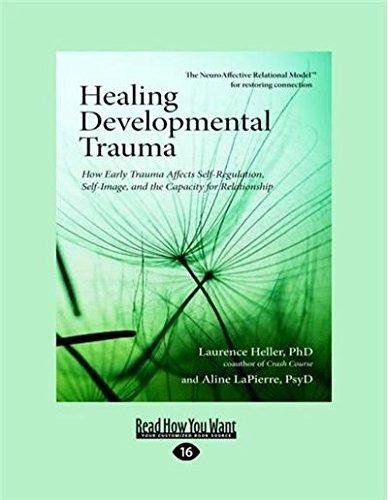
Laurence Heller’s Healing Developmental Trauma makes a deceptively simple move that reconfigures how clinicians think about early relational wounding. Rather than treating trauma as something that happened — an event to be uncovered, processed, narrated — Heller treats it as something the organism became. His five adaptive survival styles (Connection, Attunement, Trust, Autonomy, and Love-Sexuality) are not diagnostic labels imposed from outside but descriptions of how a developing nervous system organized itself around specific failures in the relational environment. Each style corresponds to a core capacity that was compromised at a particular developmental window, and each generates a recognizable constellation of bodily contraction, cognitive distortion, emotional foreclosure, and relational pattern. The Connection survival style, for instance, arises from the earliest disruption — failed bonding, prenatal stress, birth trauma — and produces adults who experience existence itself as threatening, who live in a perpetual state of physiological withdrawal even when they appear functional. This is not a complex in the Jungian sense, nor an attachment classification in the Bowlby sense; it is an organized somatic identity, a way the body learned to be in the world before the mind had words for it. Donald Kalsched’s The Inner World of Trauma describes how the psyche generates archetypal Protector/Persecutor figures to guard a traumatized core self — the “self-care system” that operates with the sophistication of an immune response. Heller’s contribution is to show what that defense looks like not in dreams and myth but in the living tissue: the collapsed chest of the Connection type, the inflated grandiosity masking shame in the Trust type, the rigid musculature of the Autonomy type who cannot yield without feeling annihilated.
The Body Completes What Archetypal Psychology Leaves Unfinished
Kalsched’s central insight — that trauma’s inner defenses are “not educable,” that they persist with the same archaic consciousness present at the original wounding — finds its somatic counterpart in Heller’s account of how survival styles resist change precisely because they are encoded below the level of narrative memory. But where Kalsched turns to fairy tales and mythopoetic imagery to illuminate the self-care system’s dynamics, Heller turns to the autonomic nervous system, to patterns of sympathetic activation and dorsal vagal collapse, to the ways truncated fight-flight-freeze responses become chronic physiological identities. This is not a rejection of depth psychology; it is its embodiment, in the most literal sense. Heller’s framework implicitly answers a challenge posed by James Hillman in The Soul’s Code — that “we have been robbed of our true biography” by theories that reduce life to developmental damage. Hillman worried that the “traumatic view of early years” flattens the person into a product of what went wrong. Heller would agree that the reduction is a problem, but his solution is the opposite of Hillman’s acorn theory. Rather than looking past developmental trauma toward an innate image or daimon, Heller looks through it: the survival style is not the person, but it is the organized distortion through which the person’s authentic impulses must pass. Healing does not mean abandoning the developmental frame; it means becoming precise enough within it to distinguish the adaptive survival strategy from the living being who adopted it. The five styles are not fates; they are contracts the organism made with an inadequate environment, and contracts can be renegotiated.
NARM’s Radical Present-Centeredness Redefines What Depth Means
The NeuroAffective Relational Model that structures Healing Developmental Trauma makes a therapeutic move that will strike many depth psychologists as heretical: it deliberately de-emphasizes the excavation of childhood memory. Heller argues that survival styles maintain themselves in present-moment disruptions of capacity — the inability to feel one’s body (Connection), the chronic disconnection from needs (Attunement), the collapse of agency under pressure (Trust), the terror of authentic self-expression (Autonomy), the split between heart and sexuality (Love-Sexuality). These are not buried; they are happening right now, in the therapy room, in every relationship, in the way the client sits in the chair. NARM works with what Heller calls the “organizing principles” — the identity distortions that keep the survival style coherent. “I don’t exist” (Connection). “My needs don’t matter” (Attunement). “I can’t trust anyone” (Trust). “I can’t be who I really am” (Autonomy). “I must choose between my heart and my body” (Love-Sexuality). These are not beliefs to be cognitively restructured; they are the nervous system’s operating assumptions, maintained by patterns of muscular contraction, breath restriction, and affective numbing that no amount of insight alone can shift. Erich Neumann, as Kalsched notes, described how the disrupted primal relationship produces a “distress-ego” bearing “the imprint of distress or doom,” paired with a daimonic superego that attacks the child’s vitality. Heller’s five organizing principles are clinical translations of precisely this dynamic — the doom-imprinted identity and its self-attacking maintenance system — rendered in language that a somatic therapist can work with in real time.
The Missing Bridge Between Somatic Psychology and Analytical Depth
What makes this book irreplaceable is its position at a crossroads that few other works occupy. Bessel van der Kolk demonstrated that the body keeps the score; Peter Levine showed that trauma resolution requires completing interrupted somatic responses; Kalsched revealed the archetypal architecture of trauma’s inner world. Heller synthesizes these streams into a clinical model that is simultaneously body-centered, relationally attuned, and developmentally specific. The five survival styles function as a typology — not unlike Beebe’s eight-function model of Jungian type, which maps how archetypal positions organize consciousness — except that Heller’s types describe not cognitive orientations but patterns of embodied suffering. Each style is a different way the Self failed to incarnate, a different point at which the developmental arc from biological existence to full relational personhood was interrupted. For the practitioner encountering depth psychology today, this book provides something the tradition urgently needs: a way to honor the body’s wisdom without abandoning developmental precision, and a way to work with trauma’s living present without pretending that the past doesn’t matter. It is the clinical manual that Kalsched’s mythological vision implies but never provides, and the developmental specificity that Hillman’s anti-developmental polemic refuses but cannot finally do without.
Sources Cited
- Heller, L., & LaPierre, A. (2012). Healing Developmental Trauma: How Early Trauma Affects Self-Regulation, Self-Image, and the Capacity for Relationship. North Atlantic Books.
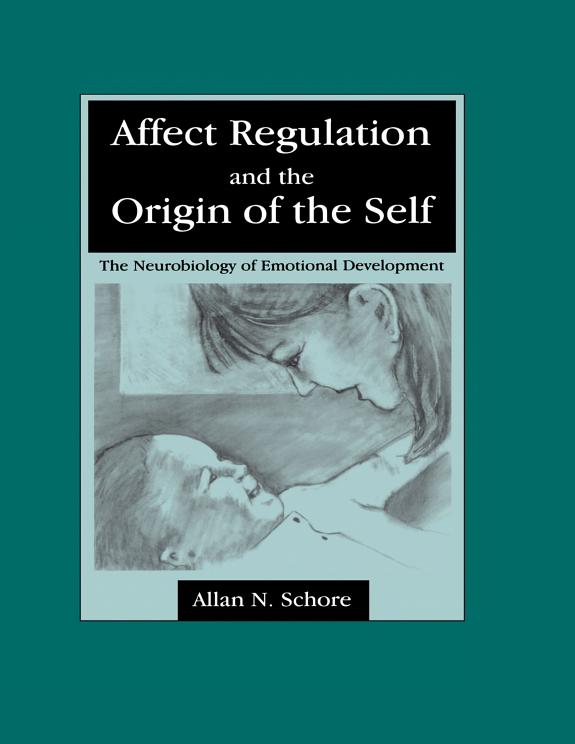
- Schore, A. N. (1994). Affect Regulation and the Origin of the Self. Lawrence Erlbaum.
- Levine, P. A. (1997). Waking the Tiger: Healing Trauma. North Atlantic Books.