Seba.Health
Key Takeaways
- Jung's division of religion into "West" and "East" is not a comparative religions exercise but a diagnostic map of two opposed psychic constitutions—extraversion and introversion elevated to civilizational scale—each of which pathologizes what the other regards as health.
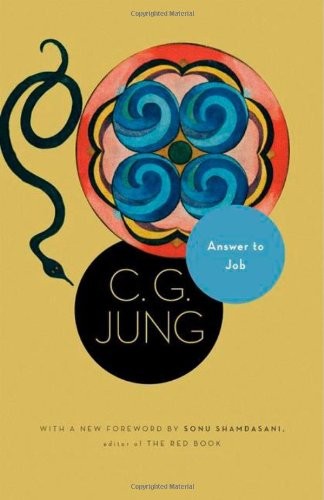
- "Answer to Job" is not a theological polemic but the volume's climax: the moment Jung demonstrates that Christian dogma itself demands psychological development, because a God-image that excludes evil is an incomplete symbol of the Self and produces neurosis in the collective psyche.
- The volume's quieter Eastern essays—commentaries on the Tibetan Book of the Dead, Zen, the I Ching—function as mirrors rather than models: Jung uses them to show Western readers the psychic capacities they have projected outward and can no longer recognize as their own.
The West’s Undervaluation of the Psyche Is Not a Philosophical Error but a Structural Neurosis
Jung opens his commentary on Eastern thought with a claim so stark it reads as provocation: “Psychic existence is the only category of existence of which we have immediate knowledge, since nothing can be known unless it first appears as a psychic image.” The sentence is not epistemological throat-clearing. It is the foundation for the entire volume’s argument that Western civilization suffers from a specific pathology—the systematic depreciation of psychic reality in favor of external fact. Jung frames this not as intellectual laziness but as a temperamental disposition: the West is constitutionally extraverted, the East constitutionally introverted, and each orientation generates its own religion, its own science, and its own blindness. The Western Christian is “wholly dependent upon the grace of God,” which means grace arrives from outside; the Eastern practitioner insists on “self-liberation,” which means the psyche itself is the ground of all transformation. Neither position is wrong, but the Western one carries a specific clinical consequence: when the soul is treated as “nothing but” a biochemical epiphenomenon, the individual loses access to the numinous dimension of inner experience and compensates through the frantic accumulation of external goods. As Jung writes in his introduction to Zimmer’s work on Shri Ramana, “the man whose interests are all outside is never satisfied with what is necessary, but is perpetually hankering after something more and better which, true to his bias, he always seeks outside himself.” This is not moralizing; it is a diagnosis of the extraverted inflation that Erich Neumann would later trace in The Origins and History of Consciousness as the hero-ego’s refusal to return to its archetypal ground. Jung’s point in Volume 11 is that religion—specifically Western Christianity—both caused and can cure this condition, but only if its symbols are read psychologically rather than concretely.
Christian Dogma Is the West’s Unfinished Individuation Process
The volume’s Part One traces Christianity’s symbolic evolution with the rigor of an amplification sequence: the Terry Lectures establish that the unconscious spontaneously produces religious imagery (mandalas, quaternity figures) in clinical material; the Trinity essay demonstrates that the Christian three-in-one is a psychic formula striving toward but not yet achieving the quaternity that symbolizes wholeness; and “Transformation Symbolism in the Mass” reveals the Eucharist as an alchemical opus in liturgical dress. The through-line is unmistakable: Christian ritual and dogma are not arbitrary impositions but crystallized records of the collective psyche’s encounter with the Self. Jung’s treatment of the Trinity is particularly incisive. The insistence on three persons, he argues, excludes the fourth—variously the feminine, the shadow, or matter itself—and this exclusion creates a symbolic deficit that Western alchemy attempted to compensate from the twelfth century onward. This argument anticipates and structurally parallels what Edward Edinger would systematize in Ego and Archetype: the ego-Self axis depends on the complete constellation of the God-image, and when the God-image is truncated, the individual’s relation to the Self is correspondingly impoverished. “Answer to Job” then pushes this logic to its extreme: Yahweh’s behavior in the Book of Job reveals a God-image that lacks self-reflection, and it is human consciousness—Job’s protest—that forces the divine to become aware of its own shadow. This is individuation projected onto the cosmic screen. The essay scandalized theologians precisely because it refused to treat God as metaphysically settled and instead read the biblical narrative as evidence of a developing archetype. In the language of Psychology and Alchemy, dogma is what happens when the alchemical opus is conducted in the open, through collective ritual, rather than in the solitary laboratory of individual transformation.
The Eastern Texts Are Not Prescriptions but Mirrors for Western Self-Recognition
Jung’s Eastern commentaries are frequently misread as endorsements. They are the opposite. His foreword to Suzuki’s Introduction to Zen Buddhism, his commentary on the Tibetan Book of the Dead, and his psychological reading of Eastern meditation all carry the same caveat: direct imitation of Eastern practice by Western individuals produces psychic inflation or dissociation, because the Western ego is structured differently. The East, Jung insists, begins from the assumption that the psyche is “the all-pervading Breath, the Buddha-essence”; the West begins from the assumption that consciousness is a fragile candle in a vast material darkness. To leap from one starting point to the other without traversing the intervening territory—the shadow work, the confrontation with the personal unconscious, the slow integration of projected contents—is to court what Jung elsewhere calls “inflation,” the ego’s identification with archetypal contents it has not earned. This is the same danger James Hillman later critiqued from a different angle in Re-Visioning Psychology: the literalization of spiritual metaphor into ego-project. Jung’s Eastern essays function as diagnostic instruments: they show the Western reader what a fully introverted civilization looks like so that the reader can recognize, by contrast, exactly what has been lost or projected. The foreword to the I Ching makes this explicit—Jung uses the oracle not to import Chinese cosmology but to demonstrate the principle of synchronicity, a mode of meaning-making the extraverted Western mind systematically suppresses.
Why This Volume Remains Irreplaceable
For anyone navigating depth psychology today, Volume 11 performs a task no other single text in the Collected Works achieves: it places the psyche at the center of religious experience without reducing religion to psychology or inflating psychology into theology. It is the volume where Jung’s clinical method, his alchemical scholarship, and his cross-cultural awareness converge on a single problem—how does the modern Western individual relate to the numinous without either surrendering critical consciousness or amputating the soul? The answer, distributed across these essays, is that the symbols must be lived through, not believed in or dismissed. “Answer to Job” alone would justify the volume’s existence as the single most audacious application of analytical psychology to the Western God-image. But read alongside the Eastern commentaries, it becomes something larger: a demonstration that the psyche’s religious function is autonomous, universal, and—if ignored—pathogenic.
Sources Cited
- Jung, C.G. (1958). Psychology and Religion: West and East. Collected Works, Vol. 11. Translated by R.F.C. Hull. Princeton University Press.
- Otto, R. (1917). The Idea of the Holy. Oxford University Press.
- Jung, C.G. (1952). Answer to Job. In Collected Works, Vol. 11. Princeton University Press.