 Seba.Health
Key Takeaways
- Aion is Jung's most sustained investigation of the Self as a coincidentia oppositorum — a union of opposites that includes Christ and Antichrist, light and shadow, as equally necessary constituents.
- Jung traces the evolution of the God-image through the Christian aeons, arguing that the progressive splitting of good and evil in Western theology produced a collective shadow that demands integration.
- The book provides the theoretical foundation for understanding evil not as an absence of good but as a psychic reality with its own autonomous power — a position with direct implications for addiction, trauma, and the clinical encounter with the shadow.
Aion, published in 1951 as Volume 9ii of the Collected Works, is the book where Jung confronts evil directly — not as a theological abstraction but as a phenomenological reality of the psyche. It is among the most demanding texts in the Jungian corpus, dense with Gnostic symbolism, astrological speculation, and alchemical imagery. It is also among the most consequential. The argument Jung builds across its fourteen chapters reconfigures the Western understanding of the Self, the shadow, and the relationship between them in ways that clinical practice has not yet fully absorbed.
The Self as Coincidentia Oppositorum
Jung’s central claim in Aion is that the Self, the totality of the psyche, the archetype of wholeness, is a union of opposites that includes both light and dark, good and evil, Christ and Antichrist. This is not a metaphor. Jung means it structurally. The Self is not the good part of the psyche elevated above the bad part. It is the field that contains both poles and holds them in tension. Wholeness, by definition, cannot exclude anything.
This position places Jung in direct opposition to the Christian theological tradition that identifies God with the summum bonum, the highest good, and defines evil as privatio boni, the mere absence of good. Jung devotes sustained attention to demolishing the privatio boni doctrine, arguing that it produces precisely the psychological catastrophe that modern Western culture exhibits: a collective shadow of enormous power, fed by centuries of repression, projected onto enemies, scapegoats, and the demonic Other. Evil that is denied reality does not disappear. It accumulates in the unconscious and returns with compound interest.
The Christian Aeon and Its Shadow
The historical argument of Aion tracks the evolution of the God-image through the two-thousand-year Christian aeon, organized around the astrological symbolism of the Pisces constellation — two fish swimming in opposite directions, one representing Christ and the other the Antichrist. Jung reads the history of Christianity as a progressive intensification of this split. The early Church identified Christ with absolute goodness and assigned all darkness to Satan. The medieval period concentrated the shadow in heresy, witchcraft, and the Devil. The Reformation shattered the containing vessel of Catholic symbolism without providing a replacement. The Enlightenment secularized the split, replacing theological dualism with the rationalist conviction that darkness belonged to the past and light to the future.
The twentieth century delivered the consequences. Jung wrote Aion in the aftermath of two world wars and the Holocaust, and the text carries that weight without sentimentality. The monstrous eruptions of collective evil in the modern era are not, for Jung, aberrations. They are the predictable result of a God-image that excluded its own shadow for two millennia. The Antichrist is not a figure of eschatological fantasy; it is the return of the repressed in the collective psyche, and its appearance signals not the end of the world but the demand for a new God-image — one that can hold both fish of Pisces in conscious tension.
The Problem of Evil in Clinical Practice
The clinical implications of Aion are profound, though Jung does not spell them out in therapeutic terms. If the Self includes the shadow, then individuation cannot proceed by identifying with the light and repressing the dark. The ego that attempts this identification is in a state of inflation — claiming for itself the wholeness of the Self while disowning the shadow that belongs to that wholeness. This is the psychological structure of the addict’s denial, the narcissist’s grandiosity, and the spiritual bypasser’s counterfeit serenity. In each case, the refusal to grant evil its reality produces a split that the psyche will eventually resolve on its own terms, violently if necessary.
The encounter with the shadow — not as a catalog of personal failings but as an autonomous psychic power with its own intentions — is what depth psychology demands and what most therapeutic modalities avoid. Aion provides the theoretical warrant for that encounter. The shadow is not a problem to be solved but a reality to be met, and the meeting changes the ego irreversibly. The Self that emerges from the integration of the shadow is not the ego’s version of wholeness. It is a wholeness that the ego can serve but never possess.
Reading Aion
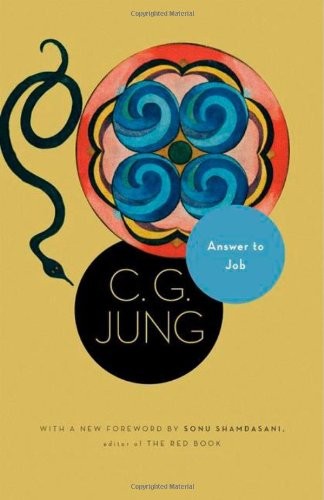
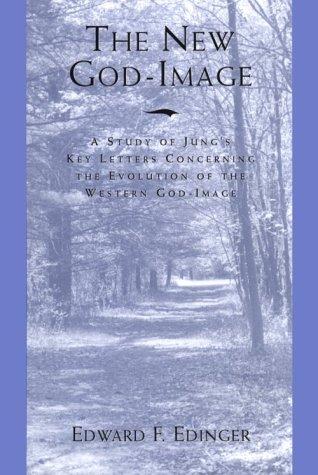
This is not an entry-level text. Readers unfamiliar with Gnostic thought, alchemical symbolism, and Jung’s earlier work on the archetypes will find Aion formidable. Edinger’s The New God-Image provides the best secondary guide, distilling Jung’s argument into accessible lectures. Jung’s own Answer to Job, written the year after Aion, takes the same core insight and renders it in passionate, prophetic prose that many readers find more immediately gripping.
But Aion itself is irreplaceable. It is where Jung does the heavy structural work that supports everything else: the quaternary models of the Self, the shadow projections that drive collective psychopathology, the insistence that the God-image is not a static inheritance but a living, evolving psychic reality that demands conscious participation. The problem of evil, in the psyche, in culture, in the consulting room, finds its foundational territory here.
Sources Cited
- Jung, C.G. (1951). Aion: Researches into the Phenomenology of the Self. Collected Works, Vol. 9ii. Princeton University Press. ISBN 978-0-691-01826-3.
- Jung, C.G. (1952). Answer to Job. Collected Works, Vol. 11. Princeton University Press.
- Edinger, E.F. (1996). The New God-Image: A Study of Jung's Key Letters Concerning the Evolution of the Western God-Image. Inner City Books.