 Seba.Health
Key Takeaways
- Jung reads the Book of Job not as theology but as a psychological document revealing the unconsciousness of the God-image itself.
- The argument that evil is not the absence of good but a necessary constituent of wholeness overturns centuries of privatio boni doctrine.
- The continuing incarnation — the idea that the divine transformation initiated in Christ remains incomplete and passes to humanity — is Jung's most radical theological claim.
The Most Personal Book Jung Ever Wrote
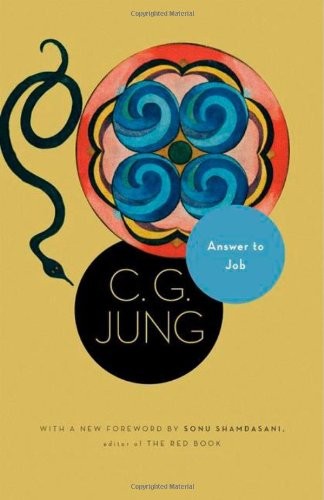
Answer to Job occupies a singular position in the Jungian corpus. It is the work Jung himself called his most personal, the text that cost him friendships, provoked theological outrage, and remains, seven decades later, the most psychologically penetrating reading of the Old Testament’s most disturbing book. Jung does not approach the Book of Job as a believer or a critic of belief. He approaches it as a psychologist confronting the phenomenology of the God-image as it appears in the human psyche, and what he finds there is a deity who is not yet conscious.
The Unconsciousness of Yahweh
The central provocation of Jung’s reading is that Yahweh, as a psychological figure, behaves as one who does not know himself. The wager with Satan, the arbitrary destruction of a faithful servant, the thundering non-answer from the whirlwind — these are not, in Jung’s analysis, the acts of an omniscient being. They are the acts of a numinous force that has not yet differentiated its own nature. Job, by contrast, achieves something Yahweh has not: moral consciousness. The servant surpasses the master. Jung argues that this reversal is not blasphemy but the essential psychological fact of the text. Job’s suffering forces Yahweh toward self-reflection, and it is this confrontation that initiates the entire drama of incarnation that follows in the Christian narrative (Jung, 1952).
Evil and the Problem of Wholeness
The theological tradition of privatio boni — the doctrine that evil is merely the absence of good, having no substance of its own — is, for Jung, a catastrophic evasion. If wholeness requires the integration of opposites, then excluding evil from the divine nature produces a God-image that is incomplete and therefore dangerous. Jung insists that the dark side of the numen is not a deficiency but a reality, and that any psychology or theology that refuses to reckon with it will reproduce the very splitting it claims to transcend (Jung, 1952).
The Continuing Incarnation
The most radical claim in Answer to Job is that the incarnation did not end with Christ. Jung reads the apocalyptic vision of Revelation as evidence that the divine transformation remains unfinished, that the burden of integrating the opposites has passed from God to humanity. The individuation of the God-image is, in this reading, identical with the individuation of the human being. Consciousness becomes the vessel through which the numinous achieves what it cannot achieve alone.
This is not comfortable theology, and Jung did not intend it to be. It is a psychological argument with theological consequences, and it remains essential reading for anyone who takes seriously the relationship between the psyche and the sacred.
Sources Cited
- Jung, C.G. (1952). Answer to Job. In Collected Works of C.G. Jung, Vol. 11: Psychology and Religion: West and East. Princeton University Press.