Seba.Health
Key Takeaways
- Jung's letters from the final decade of his life reveal a coherent theological psychology: the Western God-image is evolving, and that evolution depends on individual human consciousness.
- Edinger organizes the letters into three thematic sections — epistemological premises, the paradoxical God, and continuing incarnation — each tracing a different dimension of Jung's mature thought.
- The 'new God-image' is a union of opposites that includes the dark side of the divine, moving beyond the exclusively good God of traditional Christianity.
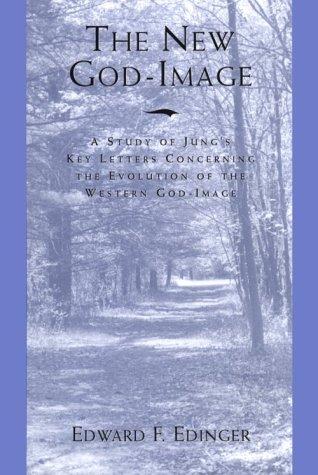
In the final decade of his life, Jung wrote a series of remarkable letters that addressed, with more directness than his published works often permitted, the question that had occupied him since childhood: what is happening to the Western God-image, and what does its transformation require of the individual? Edward Edinger selected fourteen of these letters and organized them into what amounts to the clearest available statement of Jung’s theological psychology.
Three Dimensions of the New God-Image
Edinger structures the book into three parts, each illuminating a distinct dimension of Jung’s late thought. The first addresses epistemological premises — the recognition that modern consciousness can no longer naively project the God-image outward onto metaphysical claims. The encounter with subjectivity, which depth psychology makes unavoidable, means that the divine must be approached as a psychic reality, experienced through the archetypal Self, rather than as an article of belief.
The second section concerns what Edinger calls the paradoxical God. Jung’s most controversial assertion, developed at length in Answer to Job, is that the God-image of traditional Christianity is incomplete because it excludes evil, darkness, and the irrational. The new God-image that is emerging through the discoveries of depth psychology is a coincidentia oppositorum — a union of opposites that includes both light and shadow, both creation and destruction. The claim describes the actual phenomenology of encounters with the Self in analysis, where the numinous regularly presents itself as both terrifying and healing.
Continuing Incarnation
The third section carries the most radical implication. Jung argues, and Edinger amplifies, that the incarnation of the divine in human consciousness is not a completed historical event but an ongoing process. Every individual who achieves conscious relationship with the Self participates in the continuing incarnation of the God-image. This places an extraordinary weight on the work of individuation: it is a contribution to the evolution of the divine itself, exceeding personal healing.
Why This Matters
For readers who sense that Jung’s psychology carries religious significance but are uncertain how to articulate it, this book lays out the framework. Edinger does not theologize; he reads Jung’s own words with the precision of a clinician and the gravity of someone who understands what is at stake. The result is a compact, demanding text that takes Jung’s most far-reaching claims seriously and makes them available for sustained reflection.
Sources Cited
- Edinger, E.F. (1996). The New God-Image: A Study of Jung's Key Letters Concerning the Evolution of the Western God-Image. Chiron Publications. ISBN 978-0-933029-98-9.
- Jung, C.G. (1952). Answer to Job. Collected Works, Vol. 11. Princeton University Press.
- Jung, C.G. (1973). Letters, Vol. 1: 1906–1950. Ed. G. Adler & A. Jaffé. Princeton University Press.