Seba.Health
Key Takeaways
- Consciousness is not a given but an achievement — and its ongoing creation is the central ethical obligation of human life.
- Edinger argues that Jung's psychology constitutes a modern myth capable of replacing the collapsed containers of traditional religion.
- The religious function of the psyche does not disappear when institutional religion fails; it demands new forms of conscious engagement with the numinous.
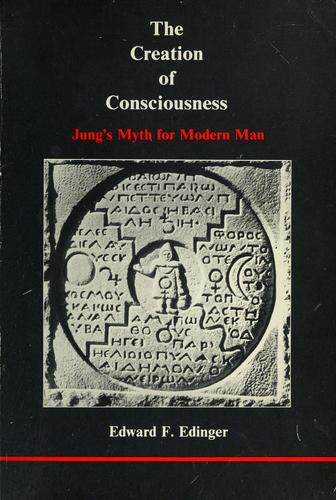
Edward Edinger’s The Creation of Consciousness is a short book that carries an enormous claim: that the creation of consciousness is not merely a psychological process but the central purpose of human existence, and that Jung’s analytical psychology provides the mythological framework through which modern individuals can understand and participate in that purpose.
Consciousness as Ethical Obligation
The argument begins with a diagnosis. Traditional religious containers — the myths, rituals, and doctrines that once held the numinous experience of the Self for entire civilizations — have fractured. The death of God that Nietzsche announced and that the twentieth century confirmed is not, in Edinger’s reading, the end of the religious function of the psyche. That function persists. What has collapsed is the collective vessel that once received it. The consequence is that the burden of consciousness, formerly distributed across institutions and shared symbolic systems, now falls on the individual.
Edinger frames the collapse of collective religion as a developmental necessity, analogous to the ego’s separation from the Self that he mapped in Ego and Archetype. Just as the individual must separate from unconscious wholeness in order to achieve conscious relationship with the Self, so the species must move beyond unconscious participation in religious symbolism toward a conscious, individual engagement with the numinous. The creation of consciousness is the task that this developmental moment demands.
Jung as Mythmaker
Edinger’s most provocative claim is that Jung’s body of work constitutes a new myth — not a theology, not a philosophy, but a living symbolic system adequate to the religious needs of modern consciousness. Drawing heavily on Jung’s Answer to Job, Edinger argues that the God-image itself evolves through its encounter with human awareness. God needs human consciousness in order to become conscious of Himself. This formulation, which Jung advanced with considerable trepidation, Edinger states with directness and conviction.
Clinical and Cultural Implications
The practical consequence is clear: the work of psychotherapy, properly understood, is participation in the creation of consciousness itself, exceeding the alleviation of symptoms. Every encounter with the unconscious that produces genuine awareness contributes to a project larger than any individual life. This gives depth psychological work its weight and its dignity.
Sources Cited
- Edinger, E.F. (1984). The Creation of Consciousness: Jung's Myth for Modern Man. Inner City Books. ISBN 978-0-919123-13-7.
- Jung, C.G. (1952). Answer to Job. Collected Works, Vol. 11. Princeton University Press.