Seba.Health
Key Takeaways
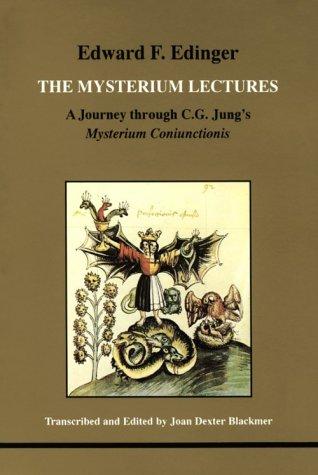
- Edinger provides a paragraph-by-paragraph guided reading of Jung's most difficult and important alchemical text, Mysterium Coniunctionis.
- The coniunctio — the union of opposites — is revealed as the central symbol of individuation, the psyche's movement toward wholeness through the reconciliation of irreconcilable polarities.
- Profusely illustrated with alchemical imagery, the lectures make visible the symbolic language that Jung decoded across decades of research.
Jung considered Mysterium Coniunctionis his magnum opus — the culmination of decades of research into the psychological meaning of alchemy. It is also, by wide consensus, his most impenetrable work: dense with Latin terminology, alchemical symbolism, and cross-references that presuppose familiarity with the entire Collected Works. Edward Edinger’s Mysterium Lectures exists to solve this problem, and it succeeds remarkably well.
A Guided Reading
The book originates from a series of lectures Edinger delivered over six months to the C.G. Jung Society of Los Angeles, working through Mysterium Coniunctionis paragraph by paragraph. The format is itself significant. Edinger does not summarize Jung’s text from a distance; he walks alongside it, pausing at each major image, each alchemical operation, each symbolic configuration to explain what Jung is describing and why it matters psychologically. The effect is that of having a deeply experienced analyst sitting beside the reader, translating the alchemical cipher into the language of lived psychic experience.
The Coniunctio as Central Symbol
The unifying theme of both Jung’s original and Edinger’s commentary is the coniunctio — the union of opposites that stands at the apex of the alchemical opus and, psychologically, at the culmination of the individuation process. The opposites in question are not abstract philosophical categories. They are the concrete polarities that structure psychic life: masculine and feminine, conscious and unconscious, spirit and matter, light and shadow. The coniunctio does not resolve these polarities by eliminating one side. It holds them together in a paradoxical unity that transcends rational comprehension, producing what Jung called the Self.
Edinger demonstrates, through clinical examples and mythological amplification, that the coniunctio is not a single terminal event but a process that repeats at increasing levels of integration. Each encounter with the opposites within oneself, each time consciousness holds a tension rather than collapsing into one pole, participates in the alchemical work.
Accessibility and Depth
The ninety illustrations drawn from alchemical manuscripts, Renaissance art, and mythological sources are not decorative. They are essential to Edinger’s method, which insists that alchemical symbolism must be seen, not merely read about. The visual dimension restores something that purely textual commentary inevitably loses.
This book is the essential companion text for the alchemical dimension of analytical psychology. It does not replace Mysterium Coniunctionis; it makes reading it possible.
Sources Cited
- Edinger, E.F. (1995). The Mysterium Lectures: A Journey through C.G. Jung's Mysterium Coniunctionis. Inner City Books. ISBN 978-0-919123-66-3.
- Jung, C.G. (1955–56). Mysterium Coniunctionis. Collected Works, Vol. 14. Princeton University Press.