Seba.Health
Key Takeaways
- Edinger maps seven major alchemical operations — calcinatio, solutio, coagulatio, sublimatio, mortificatio, separatio, and coniunctio — onto distinct psychotherapeutic processes.
- Alchemy functions not as proto-chemistry but as a symbolic language for the transformation of the psyche, providing clinicians with a precise vocabulary for stages of inner change.
- Each operation corresponds to a recognizable clinical experience: the burning away of inflation, the dissolution of rigid ego structures, the solidification of new psychological ground.
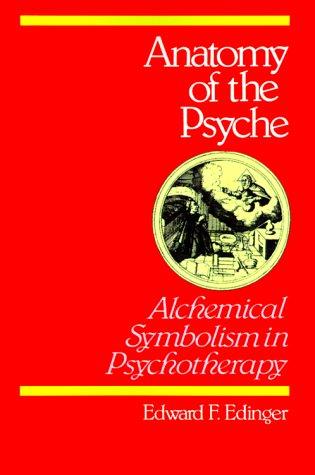
Edward Edinger’s contribution to analytical psychology is nowhere more precise than in Anatomy of the Psyche, where he accomplishes what Jung himself gestured toward but never systematized: a direct, clinically applicable mapping of alchemical operations onto the processes that unfold in depth psychotherapy. The result is not an academic exercise in symbolism but a working manual for understanding what actually happens when the psyche undergoes transformation.
The Operations as Clinical Realities
Edinger identifies seven primary alchemical operations and demonstrates, through clinical material, dream imagery, and mythological amplification, that each corresponds to a distinct mode of psychological experience. Calcinatio, the operation of fire, appears in the therapeutic encounter as the burning away of unconscious identification, the painful reduction of inflated ego-states to something more essential. Solutio, the operation of water, manifests as the dissolution of rigid psychic structures, the return to a more fluid and undifferentiated state that, while disorienting, makes new configurations possible. Coagulatio brings the opposite movement: the solidification of insight into lived reality, the moment when understanding becomes embodied rather than merely intellectual.
Each operation carries its own phenomenology, its own characteristic affects and resistances, its own dangers and necessities. Edinger treats them not as metaphors but as descriptions of real psychic events, grounded in the clinical evidence that Jung spent decades accumulating and that Edinger himself observed across a long career as a training analyst.
Why This Book Matters
The significance of this work lies in its translation. Jung’s alchemical writings, Psychology and Alchemy, Mysterium Coniunctionis, remain among the most demanding texts in the depth psychological canon. Edinger does not simplify them so much as render them operational. A clinician who reads Anatomy of the Psyche gains access to a symbolic vocabulary that can name what is happening in a treatment when ordinary diagnostic language falls short. The patient who dreams of drowning is undergoing solutio. The patient whose certainties are burning away is in calcinatio. These are not interpretive luxuries; they are orientations that allow the therapist to recognize where the psyche is working and what it requires.
Sources Cited
- Edinger, E.F. (1985). Anatomy of the Psyche: Alchemical Symbolism in Psychotherapy. Open Court. ISBN 978-0-8126-9009-5.
- Jung, C.G. (1944). Psychology and Alchemy. Collected Works, Vol. 12. Princeton University Press.