Seba.Health
Key Takeaways
- Goodwyn treats the dream not as a text requiring decipherment but as a self-organizing narrative intelligence—an "invisible storyteller" whose logic is neither Freudian latent content nor Jungian compensatory function but an autonomous compositional act rooted in evolved image-schemas.
- The book bridges the neuroscience of spontaneous imagery with archetypal psychology's insistence on the image's autonomy, offering a naturalistic grounding for what Hillman could only assert philosophically and what Jung grounded in comparative mythology.
- By foregrounding the storytelling structure of dreams rather than their symbolic content, Goodwyn shifts the locus of meaning from interpretation to participation—aligning with Patricia Berry's injunction to "stick to the image" while giving it an empirical scaffolding Berry never provided.
The Dream Is Not a Code but a Composer: Goodwyn’s Radical Reframing of Spontaneous Imagery
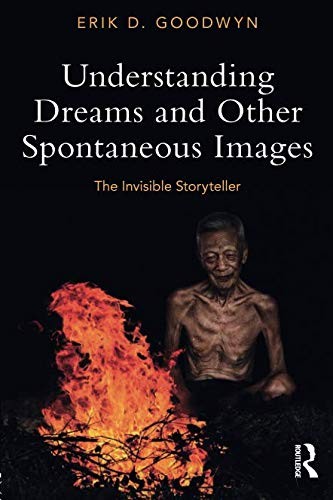
Erik Goodwyn’s Understanding Dreams and Other Spontaneous Images does something no other book in the depth psychology canon quite manages: it demonstrates that the psyche’s image-making activity is not symbolic encoding, not compensation, and not wish fulfillment, but an autonomous narrative intelligence operating according to its own compositional grammar. The “invisible storyteller” of his subtitle is not a metaphor for the unconscious in the usual Jungian sense—it is a claim about the architecture of spontaneous imagery itself. Where Freud saw latent content disguised by dreamwork, and where Jung saw compensatory messages from the collective unconscious, Goodwyn argues that the dream generates coherent narrative form as its primary function. The image is not pointing elsewhere; it is doing something. This reframing draws heavily on cognitive linguistics, embodied cognition, and evolutionary psychology, but its deepest allegiance is to the phenomenological tradition within archetypal psychology. Hillman’s axiom that the image is the “primary psychological datum” (articulated in Archetypal Psychology: A Brief Account) finds in Goodwyn not a disciple but a translator—someone who can render Hillman’s poetic assertions into the language of contemporary cognitive science without betraying the image’s autonomy. The dream, for Goodwyn, composes rather than encodes. This single distinction restructures the entire clinical relationship to spontaneous imagery.
Archetype-as-Pattern Rather Than Archetype-as-Content Resolves the Hillman-Jung Impasse
One of Goodwyn’s most consequential moves is his rehabilitation of the archetype concept through the lens of image-schemas and embodied cognition. Jung’s original formulation—archetypes as irrepresentable structuring tendencies that manifest in typical images—was always vulnerable to reification. Clinicians and popularizers routinely collapsed archetype into image, treating the Great Mother or the Shadow as fixed entities rather than as dynamic patterns of psychic organization. Hillman’s corrective, pushing toward an imagistic polytheism in which every image is its own irreducible datum, risked the opposite problem: a radical nominalism that made it impossible to speak about why certain images recur cross-culturally. Goodwyn cuts through this impasse by grounding archetypal recurrence in the body’s sensorimotor schemas—containment, balance, path, center-periphery—that generate imagistic patterns before any cultural content is layered on. This is neither Jung’s Kantian formalism nor Hillman’s aesthetic phenomenology but a third position: the archetype as an embodied predisposition to narrative form. When Kalsched, in The Inner World of Trauma, describes how “the archaic defenses associated with trauma are personified as archetypal daimonic images”—the protector-persecutor dyad that organizes dissociative experience—Goodwyn’s framework explains why this personification occurs: the psyche’s storytelling function automatically converts somatic and affective states into narrative agents. The daimonic figures Kalsched discovers in post-traumatic dreams are not symbols of defense mechanisms; they are the storyteller casting embodied survival responses as characters in a drama.
Patricia Berry’s “Stick to the Image” Gains Empirical Teeth
Goodwyn’s approach vindicates and extends Patricia Berry’s methodological insistence, articulated in Echo’s Subtle Body, that dream interpretation must “stick to the image” rather than translating it into non-imagistic abstractions. Berry argued that amplification, elaboration, and narrative engagement should remain within the image’s own field of implication—that the dream’s knot of condensed meaning unfolds through careful attention to its internal relationships, not through external theoretical grids. But Berry offered this as a craft discipline, a clinical sensibility passed from analyst to analysand. Goodwyn provides the cognitive architecture that explains why this approach works: because the dream image is already a narrative composition organized by embodied schemas, staying with the image means following the storyteller’s own logic rather than imposing an alien grammar. Thomas Moore’s treatment of the dream as irreducible to “a final meaning”—his comparison of dreamwork to contemplating a Monet landscape that yields different responses at different viewings—finds its mechanistic complement here. The dream’s polysemantic richness is not mystical surplus but the natural consequence of image-schema composition: each schema activates multiple conceptual domains simultaneously, producing the layered, inexhaustible quality that Moore and Hillman celebrate. Goodwyn does not flatten this richness; he explains its generative source.
Why Goodwyn’s Naturalism Does Not Betray the Soul
The obvious danger of Goodwyn’s project is reductionism—that grounding archetypal imagery in cognitive neuroscience will strip it of numinosity. He is acutely aware of this risk and navigates it with precision. His naturalism is not eliminative but constitutive: embodied image-schemas do not explain away the archetype, they explain how the archetype gets into the image in the first place. Jung’s own observation that “even complicated archetypal images can be reproduced spontaneously without there being any possibility of direct tradition” receives in Goodwyn a plausible mechanism that does not require the metaphysical baggage of psychoid archetypes or synchronicity. This makes Goodwyn essential reading for clinicians caught between the Scylla of neuroscientific dismissal and the Charybdis of Jungian mystification. John Sanford’s insistence in Dreams: God’s Forgotten Language that “every dream is a unique and spontaneous creation of the psyche, and the psyche is capable of using anything to mean anything” is preserved in Goodwyn’s framework—but now we understand that this creative freedom operates within the constraints of narrative composition, just as a jazz musician improvises within harmonic structure. The invisible storyteller is free precisely because it is structured.
For anyone entering depth psychology today and struggling with the question of whether archetypal language can survive its encounter with neuroscience, Goodwyn provides the most rigorous and intellectually honest affirmative answer currently available. No other single volume bridges Hillman’s imaginal phenomenology, Jung’s archetypal theory, and contemporary cognitive science with this degree of specificity. It does not replace the poetic vision of its predecessors; it gives that vision a skeleton.
Sources Cited
- Goodwyn, E.D. (2018). Understanding Dreams and Other Spontaneous Images: The Invisible Storyteller. Routledge.
- Domhoff, G.W. (2003). The Scientific Study of Dreams. American Psychological Association.
- Hartmann, E. (2001). Dreams and Nightmares: The Origin and Meaning of Dreams. Perseus Publishing.