Seba.Health
Key Takeaways
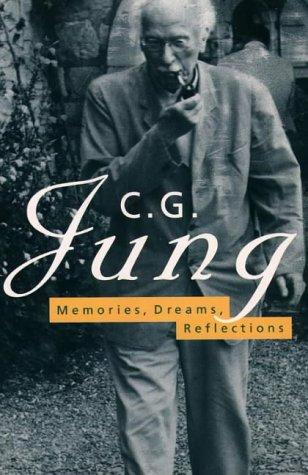
- *Memories, Dreams, Reflections* is not an autobiography but a mythological self-portrait—Jung deliberately replaces the conventions of biographical narrative with the epistemic framework of myth, arguing that myth "expresses life more precisely than does science," and thereby performs the very epistemological shift his psychology demands.
- The book's structure enacts individuation rather than describing it: the movement from childhood's numinous fragmentation through the Freud rupture, the confrontation with the unconscious, and the late-life "unconditional yes" mirrors the ego-Self axis recalibration that Edinger would later formalize as the central drama of psychological development.
- Jung's insistence that "the only events in my life worth telling are those when the imperishable world irrupted into this transitory one" constitutes a radical inversion of empiricism—he treats inner experience as primary data and external biography as epiphenomenal, a methodological stance that prefigures and grounds The Red Book's more extreme visionary phenomenology.
The Rhizome Speaks: Jung’s Replacement of Biography with Ontological Testimony
The Prologue to Memories, Dreams, Reflections does not ease the reader into a life story. It detonates the genre. “My life is a story of the self-realization of the unconscious,” Jung declares, and with that single sentence he subordinates every external event—every professional triumph, every famous friendship—to the invisible movements of the psyche. The metaphor he selects is botanical: “Life has always seemed to me like a plant that lives on its rhizome. Its true life is invisible, hidden in the rhizome. The part that appears above ground lasts only a single summer.” This is not ornamental language. It is a philosophical claim about the location of reality. The blossom—career, reputation, historical context—passes. What endures is underground: dreams, visions, eruptions from the collective unconscious. Aniela Jaffé’s introduction confirms that Jung warmed to the project only when it became an inner compulsion, producing “unpleasant physical symptoms” if he neglected it even for a day. The book was not composed; it was demanded by the psyche itself. This places Memories in a lineage not of autobiography but of visionary testimony—closer to Augustine’s Confessions or Hildegard’s Scivias than to any modern memoir. What Stephan Hoeller recognized in The Gnostic Jung—that Jung’s work carries “a second language underlying the first”—finds its purest expression here, where the first language (narrative) is explicitly made subordinate to the second (mythic disclosure).
The Freud Chapter as Sacrificial Threshold: Individuation Requires Patricide
The chapter on Freud is among the most psychologically layered texts in the Jungian corpus because Jung is simultaneously narrating a historical relationship and performing a mythologem. Jung credits Freud with the “greatest achievement” of taking neurotic patients seriously, of demonstrating empirically “the presence of an unconscious psyche which had hitherto existed only as a philosophical postulate.” Yet the chapter pivots on what Freud could not do: grasp the spiritual dimension of sexuality, the “chthonic spirit” that is “the other face of God.” Jung frames himself as the one who “alone logically pursued the two problems which most interested Freud: the problem of ‘archaic vestiges,’ and that of sexuality.” This is not arrogance—it is the son claiming the father’s unfinished work and completing it on radically different terms. Edward Edinger’s Ego and Archetype describes individuation as requiring the dissolution of participation mystique with authority figures; the Freud chapter is that dissolution rendered autobiographically. The rupture did not merely free Jung professionally. It plunged him into what he calls “a state of disorientation,” a dissolution that catalyzed the confrontation with the unconscious—the psychological equivalent of a nekyia, a descent to the underworld. Without the Freud chapter, the reader cannot understand why the subsequent visionary material carries the weight it does. The break was initiatory.
The Confrontation with the Unconscious as the Book’s Hidden Center of Gravity
Everything before Chapter VI (“Confrontation with the Unconscious”) is preparation; everything after it is consequence. Jung’s account of the years 1913–1917—the flooding of consciousness by autonomous images, the dialogues with inner figures, the construction of what would become The Red Book—constitutes the experiential foundation of analytical psychology. Richard Hull’s private letter, quoted in Sonu Shamdasani’s editorial apparatus for The Red Book, captures it with startling clarity: “Jung is a walking asylum in himself! The only difference between him and a regular inmate is his astounding capacity to stand off from the terrifying reality of his visions.” This is precisely the point. Jung’s method—active imagination, the confrontation with the shadow, the dialogue with anima and animus—was not derived from clinical observation of others. It was forged in his own psychic emergency. In Symbols of Transformation, written just before the break with Freud, Jung had already recognized that dreams and fantasies operate as “anticipations of future alterations of consciousness.” The confrontation chapters prove this thesis on his own body. They also reveal what no theoretical text could: the sheer affective terror of approaching the unconscious, the “emotionality” that gives archetypal contents their autonomous power. Jung’s later insistence, articulated in the seminars on dream interpretation, that archetypes must never be stripped of their numinosity—“all the corpses in the world are chemically identical, but living individuals are not”—derives its authority from this period of lived encounter.
Late Thoughts and the Unconditional Yes: Individuation as Amor Fati
The final chapters—“On Life after Death,” “Late Thoughts,” “Retrospect”—achieve something rare in psychological literature: they embody the completed individuation they describe. Jung writes of his near-death experience in 1944 and the “objectivity” it produced: “detachment from valuations and from what we call emotional ties.” This is not dissociation. It is what he calls “an unconditional ‘yes’ to that which is, without subjective protests—acceptance of the conditions of existence.” The language resonates with Nietzsche’s amor fati, but Jung’s formulation is psychologically more precise: the ego that endures is not the inflated ego that claims mastery but the ego tempered by confrontation with the Self. Edinger would later describe this as the ego-Self axis reaching its mature alignment. Jung goes further: “Anyone who takes the sure road is as good as dead.” Error, defeat, and the incomprehensible are not obstacles to individuation—they are its substance. The categories of true and false “take second place” to the presence of thoughts, because wholeness includes what the ego would reject. This is the book’s final and most radical claim: that psychological maturity consists not in achieving certainty but in sustaining a relationship with the unknown.
For anyone entering depth psychology today, Memories, Dreams, Reflections provides what no systematic text can: the phenomenology of the process from the inside. It is the only document in which the founder of analytical psychology submits his own life as case material—not to prove a theory but to demonstrate that the psyche’s drive toward self-realization is the primary fact of human existence, anterior to every conceptual framework erected to contain it.
Sources Cited
- Jung, C.G. (1963). Memories, Dreams, Reflections. Recorded and edited by Aniela Jaffé. Translated by Richard and Clara Winston. Vintage Books. ISBN 978-0-679-72395-0.
- Jung, C.G. (1953-1979). The Collected Works of C.G. Jung. 20 vols. Princeton University Press.
- Shamdasani, S. (2003). Jung and the Making of Modern Psychology: The Dream of a Science. Cambridge University Press.