Seba.Health
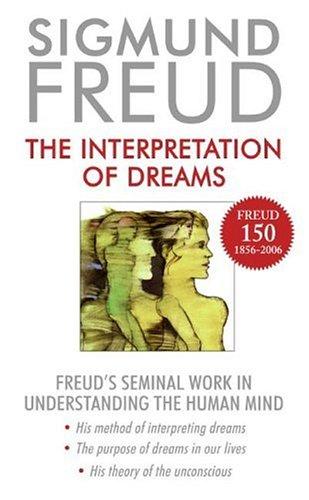
Key Takeaways
- The Interpretation of Dreams is not primarily a theory of dreams but a theory of psychical reality itself—the discovery that unconscious processes possess full psychological validity independent of consciousness, and that dreams are the proof of concept.
- Freud's methodology constitutes a radical break not by inventing dream interpretation but by relocating its authority from the interpreter's symbolic key to the dreamer's own associative chain, a move whose epistemological consequences exceed anything Freud himself theorized about them.
- The book's deepest structural contribution—the distinction between Primary and Secondary Processes—is the conceptual engine that powers not just dream theory but the entire subsequent tradition of depth psychology, including the Jungian departures that claimed to overthrow Freud's framework.
The Dream Is Not the Object of Study but the Instrument That Reveals Psychical Reality
Freud opens The Interpretation of Dreams with a deceptively modest claim: “I shall bring forward proof that there exists a psychological technique which makes it possible to interpret dreams, and that, if that procedure is employed, every dream reveals itself as a psychical structure which has a meaning.” The emphasis falls on psychical structure. This is not a book about what dreams symbolize; it is a demonstration that the unconscious possesses a syntax. Freud’s insistence that “the unconscious is the true psychical reality; in its innermost nature it is as much unknown to us as the reality of the external world” elevates the dream from curiosity to evidence—the primary exhibit in a case for a second order of mental reality operating according to its own laws. Jung, in his memorial essay on Freud, called the book “probably the boldest attempt ever made to master the enigma of the unconscious psyche on the apparently firm ground of empiricism,” and this is precisely right: the boldness lies not in the wish-fulfillment thesis but in the ontological claim that underwrites it. Before Freud, dreams were either divine messages or somatic noise. After this book, they are documents of a psychical world that is neither—a world with its own causality, its own energetics, its own logic. Everything that follows in depth psychology, from Jung’s archetypal theory to Hillman’s imaginal psychology, depends on this ontological move, even when it explicitly repudiates Freud’s reductive conclusions.
Freud’s Method Transfers Hermeneutic Authority from System to Subject
The second chapter stages what is arguably the book’s most consequential innovation. Freud surveys two ancient methods of dream interpretation—symbolic substitution (Joseph reading Pharaoh’s dream) and decoding via fixed keys (the dream-books of Artemidorus)—and rejects both. His alternative is the method of free association, in which “it is not concerned with what occurs to the interpreter in connection with a particular element of the dream but with what occurs to the dreamer.” This is a seismic epistemological shift. Artemidorus, as Freud acknowledges, already moved beyond mechanical decoding by attending to the dreamer’s character and circumstances; Freud completes the revolution by making the dreamer the sole legitimate source of meaning. The implications radiate outward. Jung’s later insistence on amplification—bringing mythological and cultural parallels to bear on dream images—is in tension with this principle, and the tension is generative. Jung’s seminar participants, as documented in his dream interpretation seminars of the late 1930s, included philologists, physicians, and lay analysts, each bringing different associative reservoirs. The question of whose associations count—dreamer’s, analyst’s, or collective humanity’s—remains the central methodological fault line in depth psychology. Freud drew the line with surgical precision; every subsequent school has redrawn it, but none has been able to ignore it.
The Dream-Work Is the Discovery; Wish-Fulfillment Is the Hypothesis
Readers who reduce this book to the formula “dreams are disguised wish-fulfillments” miss where its permanent contribution actually lies. The enduring architecture is Chapter VI: the dream-work. Condensation, displacement, considerations of representability, secondary revision—these are the operations that transform latent thoughts into manifest content. Freud demonstrates, dream after dream, that the trivial element is never trivial: “Nothing that has once been formed can be indifferent.” The dream of Irma’s injection, the “Non vixit” dream, the dream containing the number 51—each analysis shows that apparently negligible details carry the highest psychical intensity, displaced there by the censoring agency. This is where Freud’s clinical genius and his theoretical imagination fuse. The dream-work is not a decorative concept; it is the mechanism by which the Primary Process—the older, wish-driven mode of mental functioning governed by free displacement of energy—gets partially translated into the language of the Secondary Process. As Strachey’s editorial introduction makes clear, the distinction between Primary and Secondary Processes, first sketched in the unpublished “Project for a Scientific Psychology” of 1895, reaches its full articulation here. It is this distinction, not the wish-fulfillment thesis, that constitutes Freud’s deepest gift to the field. Jung’s concept of the compensatory function of dreams, Bion’s theory of alpha-function, even Hillman’s “dream-work is soul-work”—all are descendants of, or reactions to, Freud’s insight that the psyche operates on at least two distinct registers simultaneously.
The Book as Self-Analysis and the Limits of the Medical Gaze
Freud confessed in his preface to the second edition that the book was “a portion of my own self-analysis, my reaction to my father’s death—that is to say, the most important event, the most poignant loss, of a man’s life.” This is not biographical decoration. The specimen dreams are overwhelmingly Freud’s own, and their interpretation required him to expose his ambition, his rivalry, his mortality anxiety. The method demanded that the investigator become the investigated. Jung recognized both the power and the limitation of this stance: Freud “always remained a physician,” and “anyone who has this picture before him always sees the flaw in everything.” The medical gaze that enabled Freud to see neurosis in every dream also blinded him to dimensions of psychic life—religious, teleological, imaginal—that exceeded the consulting room. Jung’s critique is not mere professional rivalry; it identifies a structural constraint. Freud’s own epigraph, Flectere si nequeo superos, Acheronta movebo—“If I cannot bend the higher powers, I will move the infernal regions”—announces the limitation as a program. The book moves hell, magnificently. It does not attempt heaven.
For the contemporary reader of depth psychology, The Interpretation of Dreams matters because it establishes the grammar that every subsequent system either extends or contests. Without Freud’s demonstration that dreams possess a decipherable structure governed by identifiable psychical operations, there is no Jungian amplification, no Hillmanian “sticking with the image,” no Bosnak’s embodied dreamwork. The book does not tell you what dreams mean. It proves that they mean—and then hands you the tools to find out, one association at a time.
Sources Cited
- Freud, S. (1900). The Interpretation of Dreams (J. Strachey, Trans.). Basic Books. ISBN 978-0-465-01977-9.
- Jung, C.G. (1961). Memories, Dreams, Reflections. Pantheon Books.
- Freud, S. (1895). Project for a Scientific Psychology. In The Standard Edition, Vol. I.