Seba.Health
Key Takeaways
- Gendlin's focusing technique is not a refinement of introspection but a radical epistemological claim: that the body carries forward implicit meaning that precedes and exceeds conceptual cognition, making it the most precise philosophical challenge to the Cartesian split since Merleau-Ponty.
- Hillman's critique that focusing remains "an inspectio of the Cartesian ego" identifies the exact fault line where somatic phenomenology and archetypal psychology diverge — not over whether the body knows, but over whether the ego can be trusted to listen without colonizing what it hears.
- Focusing's insistence on a single "felt sense" settling in a particular bodily location represents both its therapeutic power and its structural limitation: it privileges unity of meaning over the multiplicity of simultaneous embodied presences that practitioners like Bosnak have found irreducible.
The Felt Sense Is a Philosophical Intervention Disguised as a Self-Help Technique
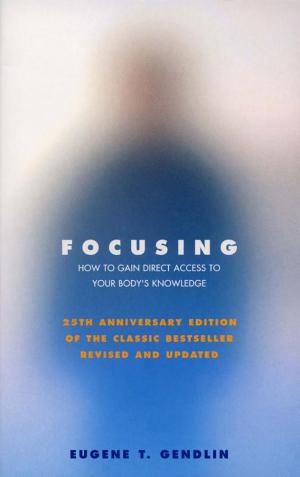
Eugene Gendlin’s Focusing (1978) presents itself as a practical manual — six steps, accessible language, exercises a reader can try tonight. This surface simplicity has led generations of readers to underestimate the book’s radical philosophical stakes. Gendlin was not a pop psychologist but a philosopher of experience who studied under Carl Rogers and developed his process model of experiencing at the University of Chicago. The “felt sense” — that murky, preverbal, bodily-held knowing that precedes articulation — is not a therapeutic trick but a formal epistemological category. Gendlin argues that the body carries forward the totality of a situation in a way that concepts cannot: the felt sense is “wider and more intricate than what we can think,” a direct challenge to any psychology that treats cognition as primary. This places Gendlin in direct conversation with Merleau-Ponty’s Primacy of Perception, which Robert Bosnak explicitly invokes when describing how “phenomena perceived by the senses reveal themselves partially when carefully observed.” Gendlin’s contribution is to operationalize that partial revelation — to give it steps, timing, and a pedagogy — without reducing it to mechanism. The felt sense is not a sensation. It is the body’s implicit comprehension of a situation that has not yet found its words, and focusing is the disciplined act of staying with that comprehension until it shifts.
Hillman’s Critique Exposes the Ego Problem That Focusing Cannot Solve from Within
James Hillman, in Healing Fiction (1983), delivers what remains the most penetrating critique of Gendlin’s method. He places focusing alongside Merleau-Ponty and Roger Poole as instances where “introspection remains an inspectio of the Cartesian ego.” Hillman’s charge is precise: “it cannot help but be a sunlit detaching observation even when it tries most to focus upon gut-feelings. Hence the feelings that emerge appear in conceptual language, words like anxiety, guilt, hopelessness, hostility — abstractions shorn of imagery.” This is not a dismissal of bodily knowing but a diagnosis of who is doing the knowing. For Hillman, the problem is that the observer in focusing is still the ego — the same “I” that introspection has always served. The complexes, the “little people,” have their own body and their own will, and these are “not bound to the ego’s by laws of compensation.” Focusing asks the ego to attend to the body’s knowledge; Hillman asks whether the ego’s attention inevitably domesticates what it finds. The felt sense, in Hillman’s framing, risks becoming an allegory — “merely the same known content depicted in another medium” — rather than a genuine encounter with psychic otherness. This critique does not invalidate Gendlin’s method, but it identifies the boundary where somatic phenomenology stops and depth psychology begins: at the threshold of the autonomous image, the personified complex, the figure who speaks unbidden.
Bosnak’s Divergence Reveals the Structural Limit of Focusing’s Singularity
Robert Bosnak’s account of his relationship to Gendlin’s work is instructive precisely because of its qualified respect. Bosnak acknowledges that Gendlin’s technique “traces felt experiences throughout the body until they settle in a particular location,” and that this corresponds to his own emphasis on bodily “trigger points” where sense memories lodge. But Bosnak’s divergence is structural, not merely methodological: “I pay attention to a variety of contrasting states focused in different parts of the body, concentrating on the interaction between them, rather than focusing on an individual state.” This is not a minor refinement. It reflects a fundamentally different ontology of embodied experience — one informed by complexity theory and the Santa Fe Institute’s work on self-organization without a central organizing principle. Where Gendlin’s focusing converges on a single felt sense and seeks its “handle” (the word or image that captures it), Bosnak holds multiple embodied presences simultaneously, allowing them to interact on the border between order and chaos until a higher-order reorganization emerges. The philosophical parallel is exact: Gendlin’s method is structurally monotheistic, seeking the one meaning the body holds; Bosnak’s is polytheistic in Hillman’s sense, attending to the “patch quilt of interactive self-interested city states without an overarching empire.” Marion Woodman’s work on the obese body offers a different but convergent insight: the body that has become “the enemy” holds not one felt sense but a tangle of symbolic meanings — womb and tomb simultaneously — that cannot be resolved by attending to a single location. Her question “Can I imagine how it feels to live in a body which I do not experience as my own?” gestures toward an alienation that focusing addresses but may not fully traverse.
The Body Knows, But Not Everything It Knows Is Yours
Gendlin’s deepest insight — that the body’s knowing exceeds and precedes the mind’s categories — remains indispensable. No subsequent somatic therapy, from Levine’s Somatic Experiencing to Ogden’s Sensorimotor Psychotherapy, has improved on his basic phenomenological description of the felt sense. His six steps provide a genuine pedagogy for a culture that has almost entirely lost the capacity to attend to preverbal bodily meaning. But the depth tradition, from Hillman’s archetypal critique to Bosnak’s embodied imagination to Woodman’s somatic symbolism, insists on a harder truth: the body is not a singular oracle delivering unified messages to a patient ego. It is a site of multiple, autonomous, sometimes warring presences whose meanings cannot be captured by the focusing sequence’s movement from felt sense to handle to shift. Gendlin opens the door to the body’s knowledge. The depth tradition asks what happens when you discover that the body’s knowledge is not monologue but polyphony — and that some of those voices do not belong to you at all. For anyone entering depth psychology today, Focusing is the essential first discipline: learning to attend, to stay, to let the body speak before the mind edits. Its limitation is also its gift — it teaches the student to hold still long enough that the deeper, stranger, more-than-personal presences Hillman and Bosnak describe can begin to arrive.
Sources Cited
- Gendlin, E. T. (1978). Focusing. Everest House. ISBN 978-0-553-27833-0.
- Gendlin, E. T. (1962). Experiencing and the Creation of Meaning. Free Press.
- Hendricks, M. N. (2001). Focusing-Oriented/Experiential Psychotherapy. In D. Cain & J. Seeman (Eds.), Humanistic Psychotherapies. APA.