Seba.Health
Key Takeaways
- Craig identifies the anterior insular cortex as the neural seat of subjective feeling — the brain region that integrates bodily signals into conscious experience.
- Interoception is not a secondary sensory channel but the foundation of selfhood, providing the continuous felt sense of being alive in a body.
- This work provides the neuroscience behind the thūmos-interoception bridge: the body's internal signals are the biological substrate of the feeling function.
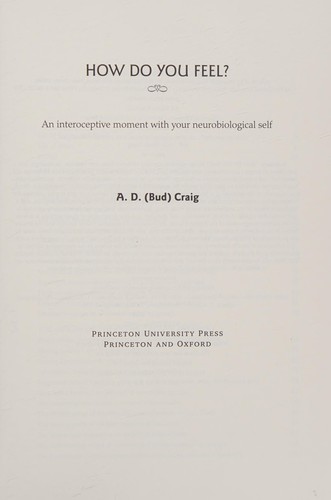
Ask someone how they feel and they will answer with a word — anxious, tired, content, uneasy. But the question, taken literally, points to something more fundamental than vocabulary. How do you feel? By what mechanism does the organism generate a subjective sense of its own state? Where in the nervous system does raw physiological data, heart rate, gut motility, blood chemistry, temperature, pain, become the felt experience of being alive in a particular body at a particular moment? A.D. Craig’s How Do You Feel? answers these questions with a specificity that no previous work in interoceptive neuroscience had achieved. The answer centers on a thin strip of cortex folded deep within the lateral sulcus: the anterior insular cortex. This is, in Craig’s formulation, the brain’s representation of the body’s self — the neural substrate of subjective feeling itself.
Mapping the Interoceptive Pathway
Craig’s contribution is architecturally precise. He traces the interoceptive pathway from peripheral receptors to cortical representation with the rigor of a cartographer. Small-diameter afferent nerve fibers, the thin, slow, phylogenetically ancient C and A-delta fibers, carry signals about the body’s internal state from every organ and tissue. These signals converge on lamina I of the spinal dorsal horn, ascend via a dedicated spinothalamocortical pathway, and arrive at the posterior insular cortex, where they are organized somatotopically — a point-by-point map of the body’s interior.
From the posterior insula, the signals are re-represented, integrated, contextualized, progressively abstracted, as they move anteriorly through the mid-insula to the anterior insula. At each stage, the representation becomes less about specific physiological parameters and more about the organism’s overall state. The anterior insular cortex, particularly on the right side, generates what Craig calls a “global emotional moment” — an integrated, conscious representation of how the body feels right now. This is feeling in its most literal sense: the cortical registration of the body’s internal milieu, rendered as subjective experience.
The Anterior Insula as the Seat of Selfhood
Craig’s argument extends beyond interoception as a sensory modality. The anterior insular cortex, he proposes, is the neural basis of subjective awareness itself. Every conscious moment is, at its foundation, an interoceptive moment — a snapshot of the body’s state integrated with contextual information about the external environment, memory, and anticipated outcomes. The self, in this framework, is not an abstraction or a narrative construction. The self is the ongoing series of global emotional moments generated by the anterior insula, each one a felt representation of the organism’s condition in the present instant.
This claim carries weight for depth psychology. Jung’s concept of the feeling function — the evaluative mode of consciousness that apprehends value, that determines significance and worth — has always been difficult to locate neurobiologically. The thinking function can be mapped onto prefrontal executive processes. Sensation and intuition have plausible neural correlates. But the feeling function, precisely because it is evaluative rather than computational, has resisted neuroscientific grounding. Craig’s anterior insular cortex provides that grounding. The feeling function operates through the body’s interoceptive representation — through the integrated sense of how things feel, somatically, before that feeling is translated into a cognitive judgment. The anterior insula is where value is registered as a bodily state, where the organism’s evaluation of its own condition becomes available to consciousness.
Interoception and the Thūmos Bridge
The Homeric Greeks had no concept of the anterior insular cortex. They had something better: a phenomenology of embodied knowing that located evaluative awareness in the chest, in the thūmos — the organ that feels the weight of a situation, that registers insult as heat and grief as pressure and resolve as an uprush of force. The thūmos is not the intellect and not the appetites. It is the body’s felt response to what is happening, and it speaks with an authority that precedes rational deliberation.
Craig’s neuroscience provides the anatomical substrate for that phenomenology. The interoceptive pathway he maps — from peripheral afferents to spinal cord to posterior insula to anterior insula — is the neural architecture of thūmos. The felt evaluations that Homer’s heroes experience as sensations in the chest are interoceptive representations, generated by the same cortical machinery Craig describes. The bridge between ancient phenomenology and modern neuroscience is interoception, and Craig’s work is its most precise articulation.
This bridge has direct clinical implications. Alexithymia — the inability to identify and describe one’s own emotional states — is, in Craig’s framework, an interoceptive deficit. The anterior insular cortex is hypoactive, or its input is degraded, or the pathway from body to cortex has been disrupted by chronic dysregulation. Alexithymia is pervasive in addiction populations, and not by coincidence. Chronic substance use recalibrates the interoceptive system, teaching the body to signal need for the substance rather than to represent its actual internal state. The person in recovery who says “I don’t know what I’m feeling” is not being evasive. That person’s interoceptive apparatus has been compromised, and the anterior insula is generating impoverished or distorted representations of the body’s condition.
Why This Book Is Foundational
Craig’s work is dense, technical, and uncompromising in its neuroanatomical detail. It is not a popular science book. It is a monograph written for researchers, and it demands sustained attention. But for anyone working at the intersection of body, psyche, and consciousness — for anyone attempting to understand what the feeling function actually is, neurobiologically — this text is irreplaceable. It does what no amount of philosophical argument can do: it shows, with anatomical specificity, where feeling happens and how the body’s internal signals become the substrate of conscious experience.
The implications for therapeutic practice are direct. If the anterior insula generates subjective feeling from interoceptive input, then restoring accurate interoceptive signaling is not a lifestyle enhancement. It is a restoration of the self’s basic infrastructure. Somatic practices, breathwork, mindful body scanning, yoga — the modalities that trauma clinicians have adopted on empirical grounds — find their neurobiological rationale in Craig’s mapping of the interoceptive pathway. These practices work because they train the very neural circuits that generate the feeling of being alive.
Sources Cited
- Craig, A.D. (2015). How Do You Feel? An Interoceptive Moment with Your Neurobiological Self. Princeton University Press. ISBN 978-0-691-15676-7.
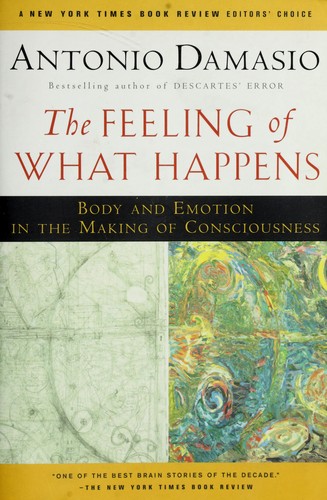
- Damasio, A. (1999). The Feeling of What Happens: Body and Emotion in the Making of Consciousness. Harcourt.
- Craig, A.D. (2009). How do you feel — now? The anterior insula and human awareness. Nature Reviews Neuroscience, 10(1), 59–70.