 Seba.Health
Key Takeaways
- Fogel distinguishes embodied self-awareness — the direct, felt sense of the body's interior — from conceptual self-awareness, and argues the former is the foundation of psychological health.
- Interoceptive capacity is not fixed at birth; it is a developable skill, shaped by relational experience and recoverable through deliberate practice.
- The book bridges developmental psychology, somatics, and clinical application, offering a practical framework for restoring the body's role in self-knowledge.
There is a clinical question that haunts every practitioner working with trauma, addiction, or dissociation: if the body has become a place of danger, a site of overwhelming sensation or deadened numbness, how does one help a person learn to inhabit it again? The neuroscience can map the interoceptive pathways. The trauma literature can document their disruption. But the question of recovery — of how a person cultivates, step by step, the capacity to feel their own body as a source of information rather than threat — requires a different kind of book. Alan Fogel’s Body Sense is that book.
Fogel is a developmental psychologist by training, which shapes both the strengths and the character of his argument. He does not begin with pathology. He begins with the infant — with the way embodied self-awareness develops in the first place, through the body-to-body resonance of early attachment, through the caregiver’s attuned touch and vocal rhythm and capacity to co-regulate the infant’s autonomic states. Self-awareness, in Fogel’s account, is not a cognitive achievement. It is a relational and somatic one, forged in the crucible of early bodily experience before language or reflective thought come online.
The Two Kinds of Self-Awareness
Fogel draws a distinction that operates as the spine of the entire book: the difference between conceptual self-awareness and embodied self-awareness. Conceptual self-awareness is thinking about oneself — narrating, analyzing, evaluating. It is the domain of the left hemisphere’s interpretive machinery, the realm of autobiography and self-concept. Embodied self-awareness is something prior and more fundamental: the direct, present-moment registration of what is happening inside the body. It is the felt sense of breath filling the lungs, of tension gathering in the shoulders, of the gut tightening in response to an interpersonal cue that the conceptual mind has not yet registered.
The distinction matters because these two forms of self-awareness operate through different neural systems and produce qualitatively different kinds of knowledge. Conceptual self-awareness generates explanations. Embodied self-awareness generates orientation — the organism’s felt sense of its own state, its position in space, its readiness or unreadiness for what comes next. A person can have an elaborate conceptual self-understanding and remain entirely disconnected from embodied self-awareness. This is the clinical presentation that any therapist working with intellectualization or alexithymia recognizes immediately: the patient who can analyze everything and feel nothing.
Fogel identifies this disconnection not as a personality trait but as a developmental outcome. Embodied self-awareness requires particular conditions to develop — attuned relational contact, a safe enough body, the repeated experience of having one’s internal states recognized and responded to by another person. When those conditions are absent — in neglectful or chaotic early environments, in families where the child’s body was a site of violation rather than safety — the capacity atrophies. The body becomes either a source of unmanageable distress or a territory from which awareness has been evacuated entirely.
Interoception as a Recoverable Capacity
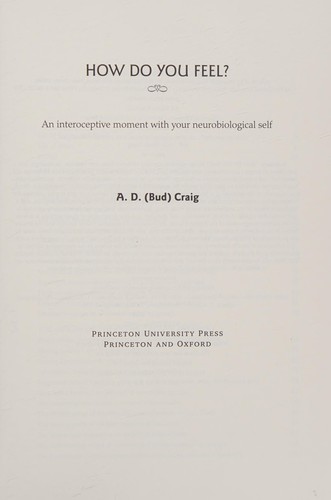
The argument that matters most for clinical work is Fogel’s insistence that embodied self-awareness is not a fixed trait. It is a capacity, and like all capacities, it can be cultivated. This is where the book moves from theoretical framework to practical application, and where Fogel distinguishes himself from the neuroscientists whose work he draws upon. A.D. Craig can map the insular cortex with extraordinary precision. Antonio Damasio can articulate the architecture of somatic self-representation. Fogel asks the next question: given that this architecture exists, how does one restore its function in a person whose developmental history has left it impaired?
His answer draws on Rosen Method bodywork, Feldenkrais, and other somatic modalities, but the underlying principle is simpler than any single technique. Embodied self-awareness recovers through sustained, nonjudgmental attention to bodily sensation in the context of a safe relationship. The relational dimension is essential — Fogel is clear that the body does not open in isolation. The same conditions that allowed embodied self-awareness to develop in infancy are the conditions that allow it to recover in adulthood: the presence of another person who is attuned, regulated, and capable of holding space for whatever arises in the body without rushing to interpret or fix it.
This formulation aligns with what depth psychology has understood about the feeling function since Jung articulated its role in the typological system. The feeling function, the capacity to register value, to evaluate through felt response, is not a cognitive operation. It is an embodied one. When Jung described the inferior feeling function in thinking types, he described a capacity that had been driven underground, that operated clumsily and unconsciously precisely because it had not been developed. Fogel’s account of embodied self-awareness as a developable capacity lays the somatic and developmental substrate for Jung’s insight. The feeling function is trained through the body, in relationship, over time.
The Throughline to Recovery
Fogel’s work addresses a gap in the depth psychological account of addiction. The addicted person has, in most cases, lost access to embodied self-awareness long before the substance entered the picture. The body became intolerable, flooded with unregulated affect, frozen in dissociative withdrawal, or oscillating between the two. The substance provided what the body could not: a reliable means of state regulation. Removing the substance without rebuilding the body’s capacity for self-regulation and self-awareness produces the white-knuckle sobriety that clinicians recognize as a precursor to relapse.
What Fogel offers is a framework for understanding that rebuilding as a specific, describable, trainable process. Interoceptive recovery is not a vague therapeutic aspiration. It is a developmental achievement with identifiable preconditions: safety, relationship, sustained attention to sensation, and the gradual expansion of the organism’s window of tolerance for its own internal states. The Homeric warrior knew himself through thūmos — through the body’s felt registration of courage, fear, grief, and vitality. The modern person in recovery must forge that same capacity anew, often from raw material that early experience left largely unworked.
Body Sense is not a depth psychology text and does not pretend to be. But it answers a question that depth psychology raises and cannot, on its own terms, fully resolve: how does a person who has lost contact with the body’s interior find their way back?
Sources Cited
- Fogel, A. (2009). Body Sense: The Science and Practice of Embodied Self-Awareness. Norton. ISBN 978-0-393-70837-0.
- Craig, A.D. (2015). How Do You Feel? An Interoceptive Moment with Your Neurobiological Self. Princeton University Press.
- Stern, D. (1985). The Interpersonal World of the Infant: A View from Psychoanalysis and Developmental Psychology. Basic Books.
- Gendlin, E. (1978). Focusing. Everest House.