 Seba.Health
Key Takeaways
- The therapeutic community model, as Avery presents it, inadvertently exposes the opioid crisis as a failure not merely of pharmacology or policy but of the soul's exile from addiction treatment—a diagnosis that Hillman's critique of ego psychology and Kalsched's account of self-care systems render structurally inevitable.
- Avery's guide reveals that the therapeutic community's insistence on communal accountability and relational transformation recapitulates, in institutional form, the same dialectical mirroring Hillman identified as essential to soul-making—the analyst's "one foot in, one foot out" translated into peer-driven recovery architecture.
- The book's clinical pragmatism conceals a radical epistemological claim: that opioid addiction cannot be addressed by the medical model alone, placing it in direct tension with the psychiatric establishment's neurochemical reductionism and aligning it, perhaps unknowingly, with depth psychology's century-long insistence that pathologizing carries its own teleology.
The Opioid Crisis Is a Crisis of Models, Not Merely of Molecules
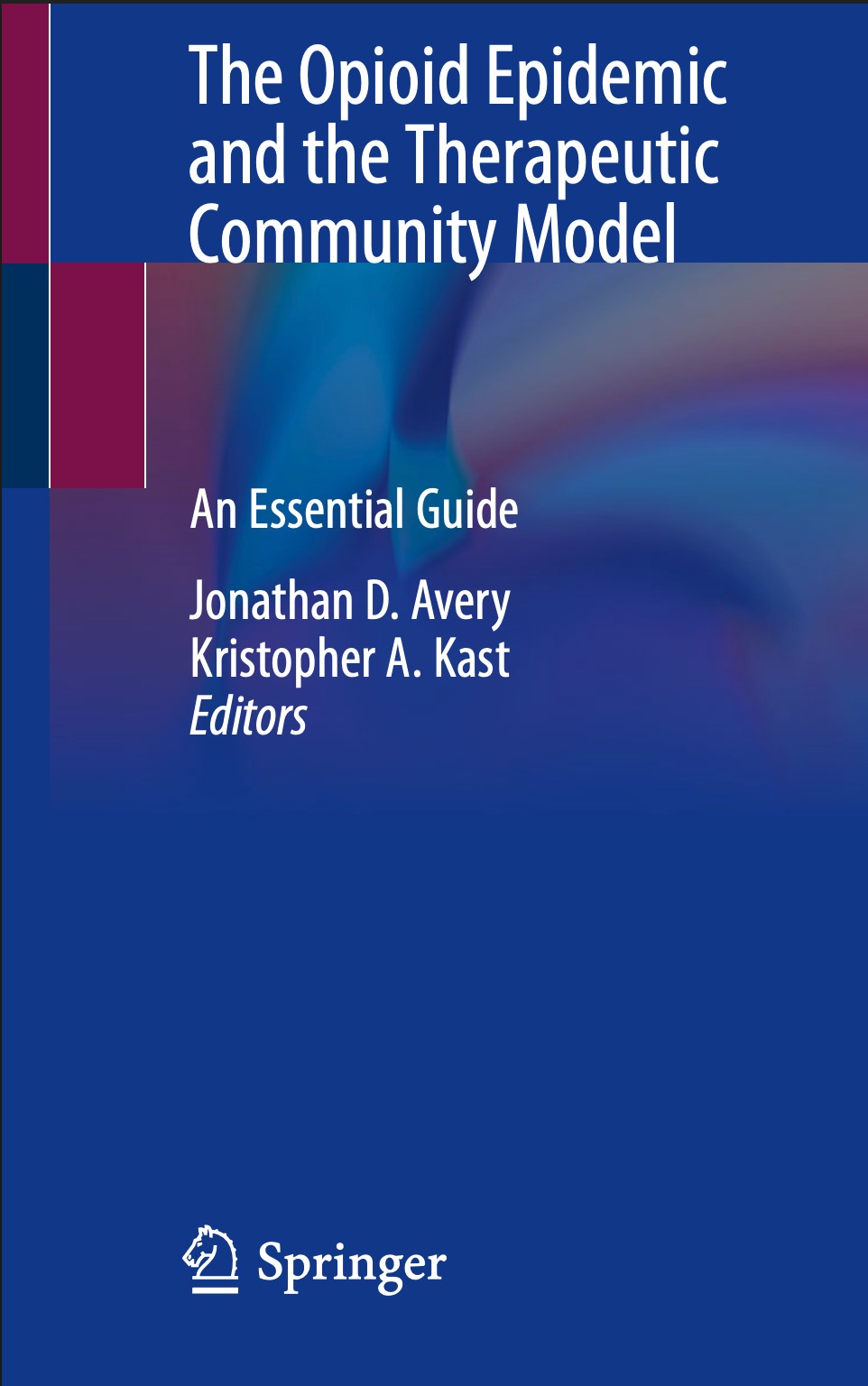
Jonathan D. Avery’s The Opioid Epidemic and the Therapeutic Community Model arrives at a moment when American addiction medicine is dominated by two competing but equally reductive paradigms: the neurochemical model, which treats opioid use disorder as a brain disease amenable to pharmacological correction, and the punitive-moral model, which treats it as a failure of will deserving containment. Avery’s contribution is to insist that neither model captures the actual phenomenology of recovery. The therapeutic community (TC)—with its roots in Synanon’s confrontational groups, its evolution through programs like Daytop Village and Phoenix House, and its integration of peer accountability, vocational development, and structured communal living—operates on a fundamentally different set of assumptions about what a person is and what healing requires. The TC assumes that addiction disorders the entire person, not just the dopamine receptor, and that recovery therefore demands a restructuring of identity within a relational matrix. This is not a minor clinical distinction. It is a philosophical one, and its implications run deeper than Avery’s measured clinical prose acknowledges.
Hillman, in Re-Visioning Psychology, argued that “the medical model has an even longer history than the religious model in our attempts to comprehend psychic trouble,” and that both models share a common failure: they treat pathologizing as something wrong to be eliminated rather than as a psychic activity carrying its own necessity. Avery does not cite Hillman, but his advocacy for the TC model implicitly echoes this critique. The TC does not attempt to eradicate the symptom of addiction through external chemical intervention alone; it attempts to transform the person’s relationship to themselves and their community. In Hillman’s language, it takes the symptom seriously as a communication from the soul rather than as a malfunction to be corrected. This alignment is not accidental. The TC tradition emerged from the same mid-twentieth-century moment that produced Alcoholics Anonymous, which Cody Peterson traces, in his work on A.A.’s Jungian roots, to a lineage running through William James’s Varieties of Religious Experience and Jung’s correspondence with Bill Wilson. The TC and A.A. share a common ancestor in the conviction that spiritual transformation—not merely behavioral modification—is the engine of recovery.
The Therapeutic Community as Dialectical Mirror: Relational Recovery and the Structure of Soul-Making
Avery’s detailed account of TC mechanics—the morning meetings, hierarchical privilege systems, encounter groups, and graduated responsibility structures—reads, on the surface, as institutional sociology. But beneath its procedural clarity lies a structure that depth psychology would recognize immediately. Hillman, writing about suicide and the analytical relationship, insisted that “it takes two to interpret a dream” and that “understanding needs a mirror.” The TC institutionalizes this principle. The recovering addict is never left alone with their own narrative. Every interpretation of one’s behavior, every claim about one’s progress, is subjected to the community’s dialectical scrutiny. The encounter group is not therapy in the clinical sense; it is a confrontation with the otherness of one’s own blind spots, mediated by peers who share the same wound. This is precisely the structure Kalsched describes in The Inner World of Trauma when he identifies the Protector/Persecutor archetype—a defense that “is not educable” and “functions on the magical level of consciousness with the same level of awareness it had when the original trauma occurred.” The TC’s relentless communal pressure on self-deception functions as an external counterforce to this internal persecutory system, breaking through the archaic defense’s closed loop not through interpretation from above but through confrontation from alongside.
What Avery documents without fully theorizing is that the TC works because it creates a container—a temenos, in Jungian language—within which the addict’s identity can be deconstructed and reconstructed. The hierarchical movement from newcomer to senior resident to staff member is not merely behavioral conditioning; it is a structured individuation process, a passage through stages that mirror mythological descent and return. Hillman’s insistence that “falling apart makes possible a new style of reflection within the psyche” finds its institutional embodiment in the TC’s willingness to break down the addict’s prior self-organization before rebuilding it. The opioid-addicted person entering a TC is not simply detoxified; they are, in Hillman’s terms, pathologized into deeper self-knowledge. The TC refuses the fantasy of quick pharmacological repair and instead demands that the resident sit with their disintegration long enough for something genuinely new to emerge.
Why This Book Matters: The Clinical as Bridge to the Archetypal
Avery’s guide is not a work of depth psychology, and it does not aspire to be. Its value lies precisely in its clinical specificity—its data on retention rates, its honest assessment of the TC’s limitations with opioid-dependent populations who require medication-assisted treatment, its practical recommendations for integrating MAT into TC settings without compromising the community’s therapeutic culture. But for readers immersed in the depth tradition, this book serves as an essential document of what happens when a treatment model unwittingly embodies archetypal principles. It demonstrates that the soul’s need for relational mirroring, communal accountability, and structured descent does not disappear simply because the presenting problem is pharmacological. The opioid epidemic is, among other things, a mass-scale illustration of what Hillman diagnosed as the consequence of psychology’s retreat from soul: when interiority is reduced to neurochemistry, the psyche protests through the body, and the body reaches for the substance that most efficiently silences the protest. Avery’s book, read alongside Kalsched on trauma’s self-perpetuating defenses and Peterson on A.A.’s Jungian genealogy, reveals the TC model as one of the few institutional forms that takes the whole person seriously enough to offer genuine recovery rather than managed suppression. That alone makes it indispensable.
Sources Cited
- Avery, J. D. & Kast, K. A. (Eds.). (2019). The Opioid Epidemic and the Therapeutic Community Model: An Essential Guide. Springer. ISBN 978-3-030-26272-3.
- De Leon, G. (2000). The Therapeutic Community: Theory, Model, and Method. Springer.
- Volkow, N. D. & Collins, F. S. (2017). The Role of Science in Addressing the Opioid Crisis. New England Journal of Medicine, 377(4), 391-394.