 Seba.Health
Key Takeaways
- Maté reframes addiction as a predictable response to childhood trauma and emotional deprivation, dissolving the false boundary between 'addicts' and 'normal' people.
- The neurobiological mechanisms of addiction — dopamine dysregulation, stress-hormone flooding, impaired prefrontal function — are presented not as causes but as consequences of early relational wounding.
- Compassion emerges in Maté's framework not as sentimental kindness but as the clinical prerequisite for any intervention that reaches the traumatized core beneath addictive behavior.
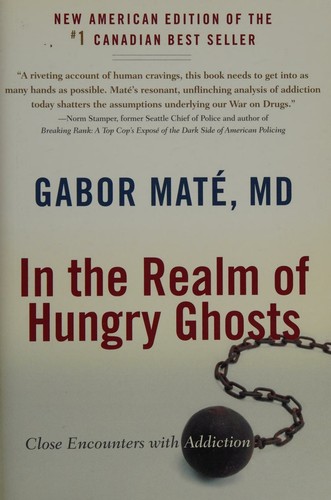
The title comes from Buddhist cosmology. The Hungry Ghost Realm is populated by beings with enormous empty bellies and needle-thin throats — creatures defined by insatiable craving, incapable of taking in what they need. Maté borrows the image not as metaphor but as clinical description. His patients in Vancouver’s Downtown Eastside, many of them injection drug users living in the most concentrated pocket of addiction in North America, are not moral failures or genetically doomed. They are hungry ghosts — human beings whose earliest experiences of attachment left them with a void that no substance can fill but every substance promises to.
The Wound Before the Drug
Maté’s central argument dismantles the popular framework that treats addiction as a disease of the brain in isolation from biography. The neuroscience is present — dopamine pathways, opioid receptors, the stress-hormone cascade of the hypothalamic-pituitary-adrenal axis — but it serves a larger thesis. The brain of the addict is not defective by accident. It was shaped by an environment in which consistent attunement, safety, and emotional regulation were absent during the critical windows of early development. The infant who does not receive adequate mirroring from a calm, present caregiver develops a nervous system primed for dysregulation. Addiction, in this reading, is the organism’s attempt to solve a problem it acquired before it had language to name the problem (Maté, 2008).
Maté grounds his argument in the ACE (Adverse Childhood Experiences) research, in rodent studies demonstrating that early maternal separation produces adult animals who self-administer drugs at dramatically higher rates, and in brain-imaging data showing that emotional neglect alters the same neural circuits that addictive substances hijack. The drug does not create the vulnerability. The drug finds the vulnerability and exploits it. What looks like a choice, the decision to use, to relapse, to keep using despite catastrophic consequences, is better understood as a compulsion rooted in neurodevelopmental injury.
The Continuum That Implicates Everyone
One of the book’s most disruptive moves is its refusal to quarantine addiction in the margins. Maté interrupts his clinical narratives with confessional passages about his own compulsive behavior — classical music purchases made in a fugue state, hours lost to acquisition that mimic the pattern of his patients’ drug seeking. The parallel is deliberate. Addiction exists on a continuum, and the difference between the Downtown Eastside heroin user and the surgeon who cannot stop working or the executive who cannot stop accumulating is one of degree, not of kind. The underlying architecture — emotional pain, an inadequate capacity for self-regulation, a substance or behavior that temporarily provides what the self cannot provide for itself — is identical (Maté, 2008).
This move carries implications for anyone working in recovery. If addiction is not a discrete pathology confined to a subpopulation but a universal human tendency that intensifies under conditions of deprivation, then the clinical posture must shift from categorization to recognition. The clinician who cannot locate the addictive pattern in their own psyche lacks the self-knowledge to meet the patient where the patient actually lives.
Compassion as Clinical Method
Maté’s insistence on compassion is the most misunderstood dimension of his work. In popular reception, it is often reduced to “be nice to addicts.” This misses the argument entirely. Compassion in Maté’s framework is an epistemological stance — a way of knowing the patient that produces different data than judgment or diagnostic distance. When the clinician meets the addict with genuine curiosity about the wound beneath the behavior, the patient’s defensive structure softens enough to reveal the early relational injury that drives the compulsion. Without that revelation, treatment addresses symptoms. With it, treatment reaches the source.
The parallel to depth psychology is striking. Jung’s insistence that the analyst must undergo their own analysis before treating others rests on the same principle: the healer who has not confronted their own shadow cannot hold the patient’s. Maté arrives at this position from neuroscience and attachment theory rather than from analytical psychology, but the convergence is instructive. The feeling function — the capacity to register and stay with emotional experience rather than flee from it — is precisely what trauma disrupts and precisely what recovery must restore.
What the Hungry Ghosts Teach
The book’s lasting contribution to the recovery literature is its integration of scale. Maté moves fluidly between the molecular and the biographical, between the dopamine receptor and the mother’s face, between the policy failure and the individual cry for help. Addiction emerges not as a problem to be solved but as a signal to be read — a communication from the body about what was never adequately received. The hungry ghost is not punished for its craving. The craving is the punishment, already and always, and it began long before the first drink or the first needle.
The throughline from interoception to recovery runs directly through Maté’s argument. The body that cannot feel its own signals, that has learned to override pain, to dissociate from hunger and satiation, to substitute chemical flooding for organic affect, is the body that addiction colonizes. Recovery, in this light, is not the cessation of substance use. It is the slow, painstaking restoration of the capacity to feel what is actually happening inside the vessel (Maté, 2008).
Sources Cited
- Maté, G. (2008). In the Realm of Hungry Ghosts: Close Encounters with Addiction. North Atlantic Books. ISBN 978-1-55643-880-6.
- van der Kolk, B. (2014). The Body Keeps the Score: Brain, Mind, and Body in the Healing of Trauma. Viking. ISBN 978-0-670-78593-3.