Seba.Health

Key Takeaways
- Sacks demonstrates through neurological case studies that selfhood is constituted by the body — when proprioception, interoception, or embodied memory fails, identity itself disintegrates.
- The clinical tales reveal that the body is not a container for the self but its active medium: patients who lose bodily self-representation do not merely lose function but lose coherence as persons.
- The book provides vivid, irreplaceable evidence for why any psychology that separates mind from body operates on a false foundation.
A man reaches for his hat and grasps his wife’s head instead. He is not psychotic. He is not delusional in any psychiatric sense. His visual processing system has become so disconnected from the embodied, felt sense of objects and persons that he navigates the world by abstract feature-matching, angles, textures, geometric relationships, without the lived recognition that distinguishes a face from a piece of furniture. Dr. P., the titular patient of Oliver Sacks’s most famous collection, has lost something that no cognitive test can capture and no prosthetic can replace: the body’s participation in perception. He can see, in the mechanical sense. He cannot recognize, because recognition requires the whole organism, not just the visual cortex.
This is the recurring revelation of The Man Who Mistook His Wife for a Hat — that the neurological case study, when observed with sufficient care and compassion, exposes the architecture of selfhood by showing what happens when particular elements are removed. Sacks writes as a clinician and a storyteller, but beneath the narrative grace lies an argument with profound implications for any psychology that takes the body seriously. Selfhood is not an abstraction layered onto a biological machine. Selfhood is the biological machine in operation — and when the machine is damaged in specific ways, what disappears is not a cognitive module but a dimension of being a person.
The Body as Constitutive of Identity
The cases Sacks presents fall into four categories, losses, excesses, transports, and the world of the simple, but the thread that connects them is the body’s role in constituting identity. Christina, “the disembodied lady,” loses proprioception entirely after an acute polyneuropathy. She can no longer feel the position of her limbs, the posture of her body, the location of herself in space. She does not merely become clumsy. She loses the felt sense of having a body at all. She describes herself as disembodied, pithed, a wraith. The vocabulary is not metaphorical. Proprioception, the body’s continuous mapping of its own position, had been so fundamental to her sense of existing as a physical being that its absence produced not a deficit but an existential catastrophe.
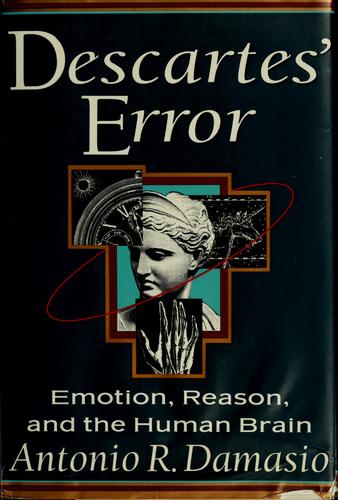
Damasio would later describe the protoself as the neural representation of the organism’s internal state, the biological foundation upon which all higher forms of selfhood are constructed. Christina’s case is the clinical proof of that architecture. Remove proprioceptive input and the protoself loses one of its essential streams of information. The self ruptures.
The same principle operates across the collection, though in different registers. Jimmie G., the “lost mariner,” has Korsakoff’s syndrome: his capacity for new memory formation has been destroyed by decades of alcoholic damage to the mammillary bodies and diencephalon. He lives in a perpetual present, recognizing no one, retaining nothing beyond a thirty-second window. And yet — and this is the observation that Sacks presses with quiet insistence — Jimmie is not a hollow shell. In music, in the rituals of the chapel, in moments of absorbed attention to something beyond his shattered autobiography, a person is visible. The body’s engagement with rhythm, with sacred space, with the felt quality of reverence produces a coherence that narrative memory cannot.
What Neurology Reveals to Psychology
Sacks was not a depth psychologist, and he would not have described his project in Jungian terms. But the pattern his case studies reveal is legible within the depth tradition. Jung argued that the feeling function — the capacity to evaluate, to register value through bodily-felt response — is one of four fundamental orientations of consciousness. When the feeling function is underdeveloped or damaged, the person does not lose intelligence or perception. The person loses the capacity to know what matters. The world becomes equally weighted, undifferentiated, stripped of salience.
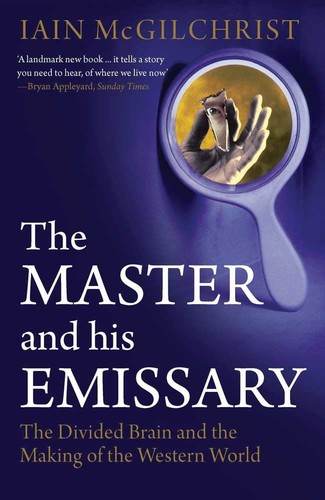
Dr. P. lives in precisely this condition, though his loss is neurological rather than typological. He can describe a glove in geometric terms — “a continuous surface, infolded on itself, with five outpouchings” — but he cannot feel it as a glove, cannot locate it in the web of practical meaning and bodily familiarity that allows a healthy person to recognize it instantly and without thought. The left hemisphere’s analytic machinery is intact. The right hemisphere’s capacity for holistic, embodied, contextual recognition — what Iain McGilchrist would later describe as the master’s mode of attending — has been severed from the perceptual process.
This is the contribution Sacks makes to the broader argument about embodiment and psychological life. He demonstrates, case by case, that the body’s participation in cognition is not a philosophical position but a clinical fact. When proprioception fails, the self fragments. When embodied memory is destroyed, identity becomes episodic and unmoored. When the felt sense of the body’s engagement with the world is disrupted, perception becomes mechanical — accurate in its components but devoid of the integrated meaning that only the whole organism can generate.
The Forge and the Fracture
For the clinician working with addiction, trauma, or dissociation, Sacks provides something the neuroscience literature alone cannot: the phenomenology of embodied selfhood under duress. His patients are not data points. They are persons whose experience of losing a bodily capacity illuminates, by its absence, what that capacity had been doing all along. The alcoholic Jimmie G. is a figure of particular relevance. His Korsakoff’s syndrome is the endpoint of a process that begins with the first drink taken to manage an intolerable internal state — a process in which the substance gradually replaces and then destroys the neural architecture of self-continuity. The body that was used as an instrument of regulation becomes, over decades, an instrument of erasure.
The Homeric warriors of the Iliad located identity in thūmos — in the chest, the breath, the felt vitality of the body in action. When a warrior died, the thūmos departed. It was not a metaphor for consciousness in the modern cognitive sense. It was a description of embodied aliveness, the felt quality of being a self in a body that registers its own states. Sacks’s patients lose aspects of what the Greeks called thūmos — the felt, bodily ground of identity — and what disappears is not a single function but a way of being in the world.
The Man Who Mistook His Wife for a Hat is not a clinical manual. It is a work of witness — evidence, drawn from the fractures of the nervous system, that the body is not housing for the mind but the medium through which mind exists. Every depth psychology that takes interoception seriously, that grounds the feeling function in somatic process, that insists on the body’s constitutive role in selfhood, finds its neurological confirmation in these pages.
Sources Cited
- Sacks, O. (1985). The Man Who Mistook His Wife for a Hat and Other Clinical Tales. Summit Books. ISBN 978-0-684-85394-9.
- Damasio, A. (1994). Descartes' Error: Emotion, Reason, and the Human Brain. Putnam.
- Luria, A.R. (1968). The Mind of a Mnemonist: A Little Book about a Vast Memory. Basic Books.
- McGilchrist, I. (2009). The Master and His Emissary: The Divided Brain and the Making of the Western World. Yale University Press.