Seba.Health

Key Takeaways
- McGilchrist argues that hemispheric asymmetry is not about localized tasks but about two fundamentally different modes of attending to the world — one embodied and relational, the other abstracting and instrumental.
- The left hemisphere's usurpation of the right's broader, contextual awareness mirrors the Western suppression of embodied knowing — the very suppression depth psychology seeks to reverse.
- This book provides the neurological framework for understanding why modern culture has lost contact with the body's evaluative intelligence.
The story Iain McGilchrist tells in The Master and His Emissary is, on its surface, about the two hemispheres of the brain. It is, in its depths, about how Western civilization lost contact with the body — with the relational, contextual, somatically grounded mode of awareness that once governed human engagement with the world, and that has been progressively displaced by a mode of attention that abstracts, categorizes, grasps, and controls. The left hemisphere, in McGilchrist’s formulation, was meant to serve the right — to be the emissary, the focused tool-user, the analyst of parts. Instead, it has seized the throne. The consequences register at every level: in philosophy, in medicine, in the treatment of mental illness, in the culture’s systematic devaluation of precisely the kind of knowing that depth psychology exists to recover.
Two Modes of Attention, Not Two Task Lists
The popular understanding of hemispheric lateralization, left brain for logic, right brain for creativity, is a caricature, and McGilchrist dismantles it thoroughly. The hemispheres do not divide labor by task. They divide it by mode of attention. The right hemisphere attends to the world broadly, contextually, with an awareness that is embodied, relational, and alive to novelty. It grasps the whole before the parts. It processes implicit meaning — metaphor, music, facial expression, emotional tone. It is the hemisphere through which the organism is in contact with lived experience as it is actually encountered: ambiguous, interconnected, saturated with significance that exceeds what can be made explicit.
The left hemisphere attends narrowly, focally, with an awareness optimized for manipulation and control. It isolates parts from wholes. It names, classifies, and renders the world in terms of static categories that can be grasped — literally and figuratively. Language, as a system of explicit propositions, is predominantly a left-hemisphere function. So is the capacity to construct tools, to follow sequential procedures, to maintain the kind of sustained focal attention that technical mastery requires. These capacities are indispensable. The problem arises when the part-focused, abstracting, categorizing mode of attention displaces the broader awareness it was designed to serve.
The Emissary’s Coup
McGilchrist’s title comes from a Nietzschean fable: a wise master sends an emissary to govern distant lands, and the emissary, seduced by power, comes to believe he is the master. The right hemisphere — older, more broadly connected to the body and the subcortical systems, more in touch with lived reality, is the master. The left hemisphere, more recently specialized, more focused, more confident in its categories — is the emissary. And Western intellectual history, from the late Greek period through the Enlightenment to the present, is the story of the emissary’s progressive usurpation.
This is not merely a neurological claim. McGilchrist traces the cultural consequences with formidable erudition. The pre-Socratic Greeks lived in a world still governed by right-hemispheric values — a world of embodied participation, where the thūmos tradition located knowledge in the chest and Homer’s heroes thought with their bodies. The shift toward left-hemispheric dominance can be tracked through the emergence of abstract philosophy, the Cartesian separation of mind from body, the Enlightenment’s enthronement of instrumental reason, and the modern reduction of human experience to what can be measured, operationalized, and controlled. Each step represents a gain in technical mastery and a loss in embodied wisdom.
The Body Exiled
For depth psychology, McGilchrist’s thesis illuminates a specific and consequential problem: the exile of the body from the domain of knowledge. When the left hemisphere’s mode of attention dominates, the body becomes an object — a mechanism to be managed, a source of data to be quantified, a collection of symptoms to be diagnosed. The body’s own intelligence — its capacity to evaluate, to feel significance, to register the emotional weight of a situation through interoceptive signals — is rendered invisible, because the left hemisphere’s mode of attention cannot perceive it. Somatic knowing does not arrive as a proposition. It arrives as a feeling, a pressure, a visceral shift — the kind of implicit, relational, context-saturated information that the right hemisphere processes and the left hemisphere discounts.
This exile is legible in clinical practice. The dominant treatment paradigms for mental health in the English-speaking world — cognitive-behavioral therapy, psychopharmacology, diagnostic manuals organized around observable behavioral criteria — are left-hemispheric products. They abstract symptoms from context. They treat the explicit content of thought as the primary target of intervention. They measure outcomes with instruments that quantify what can be made propositional and ignore what cannot. The result is a treatment landscape that is highly competent at managing surface presentations and systematically blind to the deeper, body-level dysregulations that drive chronic suffering.
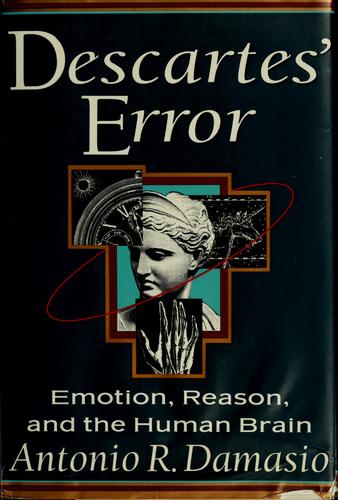
Damasio demonstrated that emotion is constitutive of reason. Craig mapped the neural pathway through which the body generates subjective feeling. Van der Kolk showed that trauma lives in the body, not in the narrative. McGilchrist constructs the cultural-neurological framework that explains why these insights were necessary in the first place — why a civilization had to rediscover, through painstaking neuroscience, what Homer’s Greeks knew as a matter of lived experience. The body’s intelligence did not disappear. The dominant mode of attention simply lost the capacity to perceive it.
Recovery as Hemispheric Rebalancing
The implications for recovery from addiction and trauma are structural, not merely technical. The person in active addiction has, in many cases, organized life around the left hemisphere’s narrowed mode of attention — the instrumental focus on obtaining and using the substance, the rigid categorization of experience into threat and relief, the progressive loss of the broader relational awareness that sustains connection to others and to one’s own somatic life. Recovery requires not just behavioral change but a shift in the mode of attention itself — a return to the right hemisphere’s broader, more embodied, more contextually sensitive way of engaging the world.
This is what the best somatic therapies, mindfulness practices, and depth-psychological approaches share: they redirect attention from the explicit and propositional to the implicit and felt. They ask the person not to think differently about experience but to attend to experience differently — to notice what the body is doing, to stay with ambiguity rather than resolving it prematurely, to tolerate the open, relational awareness that the left hemisphere’s mode of attention constantly works to foreclose. McGilchrist’s work provides the neurological justification for these practices and explains why they are not supplements to cognitive approaches but corrections to a civilizational imbalance that has been centuries in the making.
Sources Cited
- McGilchrist, I. (2009). The Master and His Emissary: The Divided Brain and the Making of the Western World. Yale University Press. ISBN 978-0-300-18837-0.
- Damasio, A. (1994). Descartes' Error: Emotion, Reason, and the Human Brain. Putnam.
- Snell, B. (1953). The Discovery of the Mind: The Greek Origins of European Thought. Harvard University Press.