 Seba.Health
Key Takeaways
- Damasio's somatic marker hypothesis demonstrates that emotion is constitutive of rational decision-making, not an obstacle to it.
- The ventromedial prefrontal cortex patients who lose emotional signaling do not become hyper-rational — they become incapable of navigating ordinary life.
- This book provides the neurobiological foundation for understanding why interoceptive awareness is essential to psychological health and recovery.
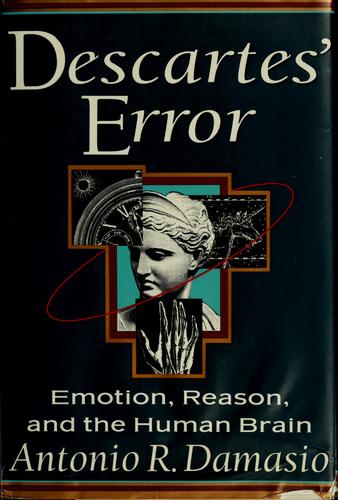
The patient known in the literature as Elliot had a tumor removed from his ventromedial prefrontal cortex. The surgery was successful. His intelligence remained intact — IQ scores unchanged, memory sharp, language fluent, social knowledge fully accessible when tested in abstract scenarios. And yet Elliot could no longer function. He could not hold a job. He could not maintain relationships. He could not decide where to eat lunch. The capacity for rational decision-making had not survived the loss of emotional signaling, because rational decision-making had never been independent of emotional signaling in the first place. This is the core of Antonio Damasio’s Descartes’ Error, and it remains one of the most consequential arguments in modern neuroscience.
The Somatic Marker Hypothesis
Damasio’s central contribution is the somatic marker hypothesis: the claim that emotions, experienced as bodily states, function as a rapid, preconscious guidance system for decision-making. When a person contemplates a course of action, the body generates a felt response, a gut-level signal, a somatic marker, that narrows the field of options before deliberation even begins. The person who has learned, through experience, that a certain category of choice leads to catastrophic outcomes does not need to reason through every permutation. The body delivers the verdict first, as a feeling of dread, of unease, of visceral warning. Conscious reason then operates on a field already shaped by somatic input.
Damasio is rigorous about the neural architecture involved. The ventromedial prefrontal cortex integrates signals from the body, autonomic feedback, visceral sensation, endocrine state, and uses those signals to bias decision-making toward options that have been associated with positive outcomes and away from those associated with negative ones. When that cortical region is damaged, the integration fails. The patient can still reason in the abstract. The patient can still describe what a good decision would look like. But the patient cannot feel the difference between options, and without that feeling, choice collapses into interminable deliberation or reckless impulsivity.
The Error That Named an Epoch
The “error” in Damasio’s title is Descartes’ separation of mind from body — the dualism that has structured Western intellectual life since the seventeenth century. Descartes located the self in the thinking substance, the res cogitans, and assigned the body to the realm of mechanical extension, the res extensa. Emotion, in this framework, belongs to the animal body and threatens the sovereignty of reason. The good thinker is the dispassionate thinker. The highest cognitive function is the one most liberated from bodily influence.
Damasio demonstrates that this picture is neurobiologically false. Patients deprived of emotional input do not ascend to a purer form of rationality. They descend into dysfunction. The dualism that Descartes bequeathed to Western thought — and that clinical psychology inherited in the form of cognitive-behavioral models that treat emotion as a downstream consequence of thought — produces a distorted understanding of how human beings actually navigate the world. Thought does not govern emotion. Thought and emotion are integrated at every level of neural processing, and the body is the medium of that integration.
Interoception and the Feeling Function
For depth psychology, Damasio’s argument opens a bridge that Jung’s typological framework always implied but never grounded neurobiologically. Jung’s feeling function — one of the four functions of consciousness in his typological model — is not sentiment, not preference, not emotional reactivity. It is a mode of evaluation, a way of apprehending the value of things. The feeling function assigns weight. It determines what matters. And it operates, as Jung repeatedly insisted, through a form of knowing that is distinct from thinking yet no less rational in its own register.
Damasio’s somatic markers are, in neurobiological terms, the machinery through which the feeling function operates. The body’s capacity to generate evaluative signals — signals that arrive as felt states, not as propositions — is precisely what Jung described as the feeling function’s contribution to consciousness. When that capacity is damaged, as in Damasio’s patients, the result is not an absence of feeling in the colloquial sense. The result is an absence of valuation. The world flattens. Options proliferate without differentiation. Nothing weighs more than anything else.
This connection has profound implications for understanding addiction and recovery. The addicted person has, in many cases, spent years overriding somatic markers with chemical regulation — flooding the body’s signaling system with substances that short-circuit the evaluative process. Recovery demands not just abstinence but the restoration of the body’s capacity to generate and interpret its own signals. Interoceptive rehabilitation — learning to feel what the body is communicating — is not a supplementary technique. It is the foundation on which sustainable recovery is built.
Why This Book Endures
Descartes’ Error was published in 1994 and remains foundational. The somatic marker hypothesis has been refined, challenged, extended — Damasio himself developed its implications further in The Feeling of What Happens and Looking for Spinoza — but the central insight has only grown more robust with subsequent research. The anterior insular cortex mapping undertaken by A.D. Craig, the interoceptive frameworks emerging from affective neuroscience, the clinical evidence gathered by van der Kolk and others on somatic approaches to trauma — all of these converge on the position Damasio staked out three decades ago. The body is not a vessel carrying the mind. The body is a constitutive partner in every act of cognition, evaluation, and choice.
Damasio’s Descartes’ Error is the indispensable starting point for understanding why the Homeric Greeks located courage and emotional intelligence in the chest rather than the head, and why the thūmos tradition insisted that the body knows before the mind decides. The book does not merely argue that the body matters. It demonstrates, with clinical and neuroanatomical precision, that without the body’s participation, the mind cannot function as a mind at all.
Sources Cited
- Damasio, A. (1994). Descartes' Error: Emotion, Reason, and the Human Brain. Putnam. ISBN 978-0-399-13894-2.
- Damasio, A. (1999). The Feeling of What Happens: Body and Emotion in the Making of Consciousness. Harcourt.
- Craig, A.D. (2015). How Do You Feel? An Interoceptive Moment with Your Neurobiological Self. Princeton University Press.