Seba.Health
Key Takeaways
- O'Connor's central achievement is reframing grief not as an emotional stage-process but as a neuroscientific learning problem — the brain must update a deeply encoded internal map of "where" the loved one exists in time, space, and closeness, and this remapping is what makes grief so physically exhausting and cognitively disorienting.
- The book provides the first rigorous neurobiological account of why some grief becomes "complicated" (prolonged grief disorder) by demonstrating that the reward system — the same circuitry implicated in addiction — can keep the bereaved tethered to the absent beloved, effectively blocking the brain's capacity to encode the finality of loss.
- O'Connor dissolves the false opposition between "getting over it" and "holding on forever" by showing that successful adaptation to loss does not require severing the bond but rather developing a new neural representation that maintains attachment while no longer predicting the loved one's return — a finding that vindicates depth psychology's insistence on the continuing inner life of the lost object.
Grief Is a Prediction Error, Not a Feeling: O’Connor Recasts Bereavement as the Brain’s Cartographic Crisis
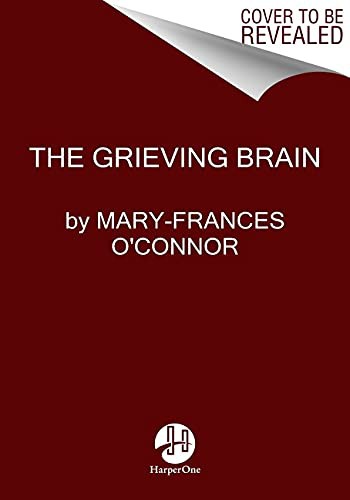
Mary-Frances O’Connor opens The Grieving Brain with a deceptively simple question: why does the death of someone we love feel like a problem the mind cannot solve? Her answer draws on two decades of neuroimaging research, including her own landmark fMRI studies, to demonstrate that attachment creates a neural map — a constantly running prediction model encoding three dimensions she calls “Here, Near, and Alive.” The brain of the bonded person carries an implicit, below-conscious expectation that the beloved occupies a determinate location in physical space, is reachable within a predictable proximity, and is alive. Death violates all three coordinates simultaneously, but the brain cannot simply delete the map. It must learn, trial by painstaking trial, that its predictions are wrong. This is why the bereaved repeatedly “forget” and then re-remember: each wave of grief is not regression but another instance of the brain encountering its own outdated predictions and generating the error signal we experience as anguish. The metaphor of learning rather than stages is the book’s decisive contribution. It retires the Kübler-Ross model not by attacking it but by providing a mechanistic alternative — grief is an epistemological crisis at the neural level, not a sequence of emotional moods.
This reframing carries enormous consequences for how we understand the temporality of grief. Clarissa Pinkola Estés insists that “certain hurts and harms and shames can never be done being grieved,” and Paul Rosenblatt’s diary studies confirm that episodes of intense grief recur across a lifetime with nearly undiminished intensity. O’Connor’s neuroscience explains why this is so: the brain’s predictive map is not erased but overwritten, and contextual cues — a song, a season, the angle of afternoon light — can reactivate the older map at any moment, producing what feels like fresh devastation. The normalization Estés demands is precisely what O’Connor delivers in neurobiological terms. What traditional psychology pathologized as “unresolved grief” is often the brain doing exactly what brains do with deeply encoded relational knowledge — preserving it, activating it situationally, updating it incompletely.
The Nucleus Accumbens Grieves Too: Attachment, Reward, and the Neurobiology of Complicated Loss
O’Connor’s most provocative finding concerns the nucleus accumbens, a core structure of the brain’s reward circuitry. In her 2008 study, she demonstrated that bereaved individuals whose grief was “complicated” — meaning it persisted at high intensity without adaptive movement — showed elevated nucleus accumbens activation when viewing photographs of the deceased, an activation pattern absent in those whose grief was following a more typical trajectory. The implication is stark: in complicated grief, the brain continues to treat reminders of the dead person as cues for reward-seeking behavior. The beloved becomes, neurologically, like an addictive substance — craved precisely because absent, the absence itself generating a dopaminergic pull toward continued searching. This is not metaphor; it is measured activation in the same circuitry implicated in substance dependence.
James Hollis writes that “the experience of loss can only be acute when something of value has been in our life,” and that Freud’s distinction between mourning and melancholy turns on whether the lost object can be grieved or remains frustratingly present-yet-absent. O’Connor essentially provides the neural substrate for this distinction. In uncomplicated grief, the brain gradually learns that reward-prediction linked to the deceased is inaccurate, and the yearning attenuates. In complicated grief, the reward system refuses the update, maintaining what amounts to a state of perpetual craving — Freud’s melancholy rendered in dopamine. Hollis’s insight that “the child whose parent is physically present but emotionally absent cannot grieve, for the parent is not, literally, gone” finds a neurobiological parallel: the brain of the complicated griever has not received the signal that the beloved is truly gone, because its reward circuitry keeps generating the expectation of reunion.
Continuing Bonds Are Not Pathology but Neural Architecture: Why Depth Psychology Was Right All Along
The book’s most therapeutically consequential claim is that healing does not require emotional amputation. O’Connor argues that the brain can develop a revised internal model that preserves the attachment bond — the memories, the internalized values, the felt sense of the person — while updating the predictive dimension so that the brain no longer expects the beloved to walk through the door. This is not “closure,” a word O’Connor treats with appropriate suspicion. It is the formation of what she calls a “virtual” relationship — real in its psychological and neural effects, no longer organized around the prediction of physical return. Hollis captures this same reality when he describes Jung dreaming of Emma after her death and knowing “they were together, whether together or apart,” and when he recounts his own vision of Dr. Ammann: “Nothing which was ever real, which was ever important, which ever had gravity, is ever really lost.” O’Connor’s neuroscience vindicates this depth-psychological intuition by showing that internalization is not metaphor but neural fact — the relational model persists, restructured but intact.
Thomas Moore’s Eleusinian reading of loss — that “any real initiation is always a movement from death to new life” and that “full mothering demands that the child be allowed to take the risk” — describes the mythic grammar of what O’Connor maps neurologically. The brain must descend into the underworld of prediction error, must endure the Demeter-rage of unmet expectation, before it can reorganize around a relationship that honors the dead without seeking their return. Hillman’s insistence that “the question of soul-making is ‘what does this event move in my soul? What does it mean to my death?’” finds unexpected empirical grounding here: O’Connor shows that the brain’s grief-work is precisely this translation of lived attachment into an enduring internal image, a “ship of death” built not from imagination alone but from the slow neuroplastic revision of the brain’s deepest relational architecture.
For readers encountering depth psychology through the portal of neuroscience, The Grieving Brain accomplishes something no other book in this library does: it provides the empirical mechanism for what Jung, Hillman, Hollis, and Estés have described symbolically. It does not reduce soul to synapse. It demonstrates that what the soul undergoes, the brain undergoes — that the “gravity” Hollis finds in the Latin root of grief (gravis) is measurable in neural activation patterns, and that the wisdom traditions’ insistence on the continuing bond with the dead is not sentimental but architecturally encoded in the human nervous system. This is the rare book that makes neuroscience serve depth rather than flatten it.
Sources Cited
- O'Connor, M.-F. (2022). The Grieving Brain: The Surprising Science of How We Learn from Love and Loss. HarperOne. ISBN 978-0-06-294625-6.
- O'Connor, M.-F., Wellisch, D. K., Stanton, A. L., Eisenberger, N. I., Irwin, M. R., & Lieberman, M. D. (2008). Craving Love? Enduring Grief Activates Brain's Reward Center. NeuroImage, 42(2), 969-972.
- Bonanno, G. A. (2009). The Other Side of Sadness: What the New Science of Bereavement Tells Us About Life After Loss. Basic Books.