Seba.Health
Key Takeaways
- Consciousness emerges from the body's ongoing self-representation — the organism's continuous mapping of its own internal states.
- Damasio distinguishes core consciousness (the feeling of the present moment) from extended consciousness (autobiographical self), both rooted in somatic processes.
- The 'feeling of what happens' is the bridge between raw neural processing and subjective experience — and the foundation of interoceptive awareness.
What does it mean to be conscious? Not in the philosophical sense of qualia and thought experiments, but in the biological sense — what is happening in the organism when there is something it is like to be that organism? Antonio Damasio’s The Feeling of What Happens addresses this question with a proposal that is deceptively simple and profoundly consequential: consciousness is the body’s story about itself, told in the currency of feeling. The organism maps its own states. It registers the impact of objects and events on those states. And from that continuous self-mapping emerges the felt sense of a self having an experience. Consciousness does not descend from some ethereal cognitive realm. It rises from the flesh.
The Proto-Self and Core Consciousness
Damasio builds his architecture of consciousness in layers. At the base is the proto-self — not a conscious entity but a coherent, moment-by-moment neural mapping of the body’s internal milieu. The proto-self tracks visceral states, musculoskeletal configuration, internal chemical environment. It is not aware of itself. It is the body’s running ledger, maintained by brainstem nuclei, the hypothalamus, and the insular cortex — the same structures that will later prove central to A.D. Craig’s interoceptive model.
From this foundation emerges core consciousness: the transient, pulse-like awareness that arises when the proto-self is modified by an encounter with an object. Something happens, a sound, a face, a shift in temperature, and the organism registers not just the object but the change that the object produces in the body’s internal landscape. This second-order mapping, this representation of the self-being-changed, is the “feeling of what happens.” It is consciousness in its most elemental form, and it does not require language, autobiographical memory, or higher cognitive function. It requires a body that can register its own perturbation.
Extended consciousness builds on core consciousness by integrating autobiographical memory — the accumulated record of past perturbations, stored as dispositional patterns that can be reactivated. The autobiographical self is richer, more narratively coherent, more recognizably what people mean when they say “I.” But it rests on the more primitive foundation of core consciousness, and core consciousness rests on the body’s capacity for self-representation. Strip away the body’s signals and consciousness does not become abstract. It disappears.
Emotion as the Theater of the Body
One of Damasio’s most clarifying distinctions is between emotion and feeling. Emotions, in his framework, are public, bodily events — observable changes in facial expression, posture, autonomic state, endocrine activity. They are the body’s responses to situations, executed by neural programs that can operate without conscious awareness. Feelings are the private, mental experience of those bodily changes — the mind’s registration of what the body is doing. Emotion happens in the body. Feeling happens when the mind reads the body’s state.
This distinction matters for depth psychology because it relocates the locus of psychological life. The therapeutic traditions that treat feelings as purely mental phenomena, as cognitions to be restructured or narratives to be reinterpreted, miss the foundational layer. The feeling is a reading of a bodily state. If the bodily state is dysregulated — if the autonomic nervous system is locked in hyperarousal, if the visceral signaling pathways have been disrupted by trauma or chronic substance use — then no amount of cognitive reframing will produce a different feeling, because the body is still transmitting the same signal. The signal must change at the source.
The Convergence with Depth Psychology
Jung wrote, in a passage from the 1925 seminars that receives insufficient attention, that “the body is the visibility of the soul.” Damasio would not use that language. But the structural claim is identical: the psyche is not housed in the body as a ghost in a machine. The psyche is the body’s self-experience, its ongoing registration of its own states and the meaning those states carry. What Jung called the feeling function, the evaluative capacity that apprehends worth and significance, is, in Damasio’s framework, the conscious registration of somatic markers, the mind’s reading of the body’s verdicts.
This convergence is not incidental. It points to something that the Homeric tradition understood before either neuroscience or analytical psychology existed: the thūmos, the spirited capacity located in the chest, is the organ of felt evaluation. It is not intellect and not raw appetite. It is the body’s capacity to register what matters, to feel the weight of things before the mind can articulate why they weigh what they do. Damasio’s neurobiology maps the architecture of what Homer described phenomenologically. The anterior insular cortex, the ventromedial prefrontal cortex, the brainstem nuclei that maintain the proto-self — these are the neural substrates of thūmos, the biological machinery of embodied knowing.
Implications for Interoceptive Recovery
For the person in recovery from addiction, Damasio’s model carries a specific and actionable implication. Substance use disorders do not merely alter behavior or distort cognition. They disrupt the body’s self-mapping process — the very foundation on which consciousness rests. Chronic substance use hijacks the reward circuitry, recalibrates autonomic baselines, and degrades the accuracy of the body’s internal signals. The person in early recovery is not simply choosing not to use a substance. That person is attempting to rebuild the body’s capacity to generate reliable self-representations, to feel what is actually happening rather than what the substance taught the nervous system to expect.
Interoceptive rehabilitation — the systematic cultivation of the capacity to attend to, interpret, and respond to the body’s internal signals — is therefore not an adjunct to recovery. It is recovery’s neurobiological core. Damasio’s work makes this claim not as a therapeutic preference but as an implication of how consciousness itself is structured. The feeling of what happens is the foundation of the self. When that feeling is distorted, the self is distorted. Restoration begins where consciousness begins: in the body’s ongoing, patient, indispensable conversation with itself.
Sources Cited
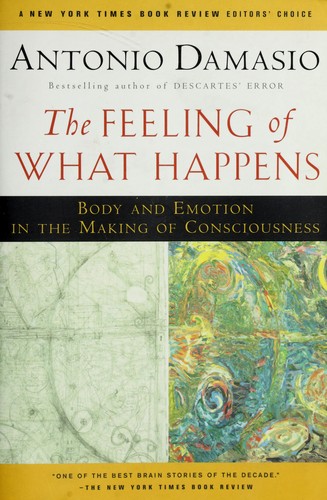
- Damasio, A. (1999). The Feeling of What Happens: Body and Emotion in the Making of Consciousness. Harcourt. ISBN 978-0-15-601075-7.
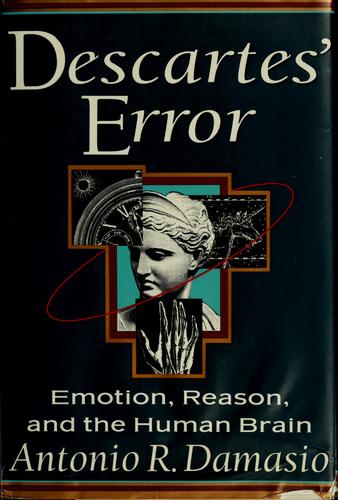
- Damasio, A. (1994). Descartes' Error: Emotion, Reason, and the Human Brain. Putnam.
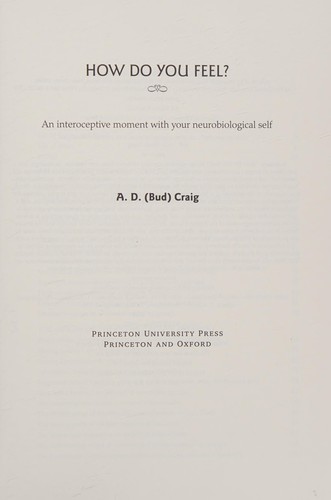
- Craig, A.D. (2015). How Do You Feel? An Interoceptive Moment with Your Neurobiological Self. Princeton University Press.