Seba.Health
Key Takeaways
- The self is not a given but a construction — built from the body's continuous neural mapping of its own interior states, what Damasio calls the 'protoself.'
- Consciousness emerges in layers: protoself (body-state mapping), core self (moment-to-moment awareness), autobiographical self (narrative identity) — each rooted in somatic process.
- The book completes Damasio's trilogy and provides the most complete neurobiological account of how embodied selfhood arises, with direct implications for understanding dissociation, addiction, and interoceptive failure.
Strip the human organism of its capacity to map its own internal states and what remains is not a diminished self but no self at all. This is the argument Antonio Damasio has been building across three decades and two prior volumes, and in Self Comes to Mind he delivers its most complete articulation. The self is not a metaphysical given, not a Cartesian substance, not a ghost hovering above the machinery of the brain. The self is a biological construction, forged in the continuous neural representation of the body’s interior milieu, and it can be understood, layer by layer, circuit by circuit, without abandoning the first-person reality of subjective experience.
The ambition of the book is extraordinary. Damasio proposes nothing less than a neurobiological account of how consciousness arises, and he does so while insisting that consciousness is neither reducible to computation nor inexplicable by science. The body is the key. Not the body as an appendage of the thinking brain, but the body as the foundational substrate from which all thinking, feeling, and self-awareness emerge.
The Protoself: Body as Ground of Being
At the center of Damasio’s framework stands the protoself — a precognitive, preconscious neural representation of the organism’s internal state. The protoself is not something one experiences. It is, rather, the physiological ground upon which experience becomes possible. Brain-stem nuclei, the hypothalamus, the insular cortex, and somatosensory regions generate a continuous, moment-by-moment map of the body’s condition: visceral tone, chemical balance, musculoskeletal position, the state of the internal organs. This mapping operates beneath the threshold of awareness, and yet everything that counts as awareness depends upon it.
The protoself is the neurobiological referent for what depth psychology has long intuited — that identity is rooted in the body before it is elaborated by the mind. When Homer’s warriors speak of thūmos, they locate the seat of feeling, courage, and selfhood in the chest cavity, in the region of the lungs and diaphragm and pounding heart. They are not being metaphorical. They are registering, in the only language available to them, the same somatic self-mapping that Damasio now traces through the neural architecture. The protoself is the biological heir of thūmos: the body’s felt registration of its own aliveness, prior to any narrative elaboration.
Damasio is careful to distinguish the protoself from the more familiar forms of selfhood that depend upon it. The core self arises when the protoself is modified by an encounter with an object — when the organism registers that something has changed its internal state. It is the immediate, felt sense of being affected, the moment of contact between organism and world. Extended consciousness, in turn, layers autobiographical memory, temporal awareness, and narrative capacity onto this core. But the entire edifice rests on the body’s self-representation. Remove the foundation and the upper stories do not simply wobble. They cease to exist.
From Somatic Marker to Conscious Self
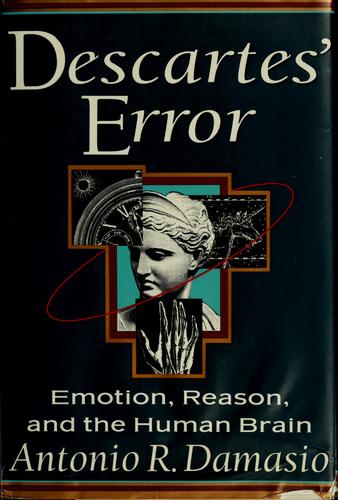
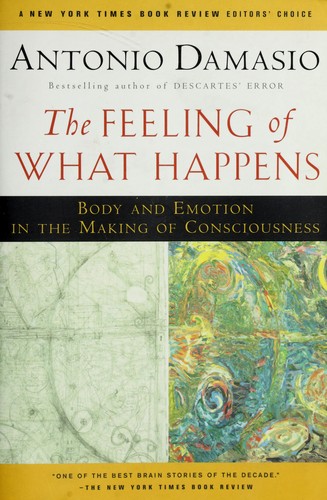
Self Comes to Mind completes a trilogy that began with Descartes’ Error and continued through The Feeling of What Happens. The first book established the somatic marker hypothesis — the demonstration that emotion is constitutive of rational decision-making, not opposed to it. The second introduced the proto-consciousness emerging from the organism’s self-mapping. This third volume integrates both arguments and extends them to address the full architecture of human selfhood.
What distinguishes the 2010 work is Damasio’s increasing precision about the brainstem’s role. Earlier accounts of consciousness in the neuroscience literature emphasized cortical processes — the prefrontal cortex, the association areas, the regions associated with higher cognition. Damasio does not dismiss these contributions, but he insists that consciousness begins deeper, in the ancient structures that regulate homeostasis and generate the protoself. Patients with extensive cortical damage can retain some form of awareness. Patients with certain brainstem lesions lose consciousness entirely. The hierarchy is clear: the body-regulating core comes first, and cortical elaboration follows.
This reordering has consequences that extend well beyond neuroscience. If selfhood is constructed from the body upward rather than imposed from the cortex downward, then any clinical endeavor that addresses the self must reckon with the body. Psychotherapy that operates exclusively at the level of verbal narrative and cognitive reframing, however sophisticated, addresses the autobiographical self while leaving the protoself and core self untouched. The implications for trauma treatment, addiction recovery, and any condition involving dissociation or interoceptive disruption are immediate and substantial.
Interoception, Addiction, and the Failure of Self-Construction
The addicted organism presents a specific problem that Damasio’s framework illuminates with painful clarity. Substances of abuse alter the body’s internal milieu — they modify the very states that the protoself maps. Chronic use reorganizes the baseline. The organism’s self-representation comes to incorporate the substance as a necessary condition of homeostatic stability, which means that withdrawal is not merely uncomfortable. It is, at the level of the protoself, a disruption of the ground of selfhood. The recovering person who reports feeling like a stranger in their own body is not speaking in metaphor. The protoself that constituted their felt identity included the substance, and sobriety requires the construction of a new self from altered physiological ground.
This is the clinical significance of Damasio’s architecture. Recovery is the forging of a self that has never existed before — a self grounded in a body that has learned to regulate without chemical assistance. The process is slow, painful, and physiological before it is psychological. It requires not just talk but practices that address the body’s regulatory systems directly: breathwork, movement, the cultivation of interoceptive awareness, the gradual rebuilding of the organism’s capacity to feel its own states without being overwhelmed by them.
The Vessel and Its Making
Damasio writes as a neuroscientist, but the pattern he traces is recognizable to anyone who has followed the throughline from Homeric thūmos through Jungian feeling function to contemporary interoceptive science. The self is a vessel — not given but made, shaped by the body’s continuous engagement with its own interior. When that vessel is intact, consciousness flows. When it is damaged — by trauma, by substance, by the failure of early attachment to establish the body as a safe interior environment — consciousness fragments, feeling function atrophies, and the organism is left grasping for external regulators to do the work the body cannot do for itself.
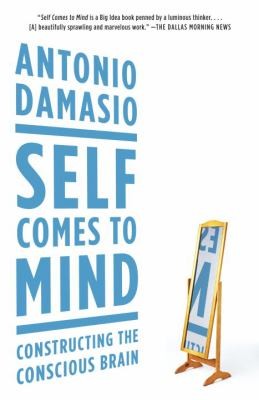
Self Comes to Mind develops the most rigorous neurobiological account of how that vessel is constructed. It does not replace the depth-psychological understanding of selfhood; it grounds it in the body’s own architecture. Together with Descartes’ Error and The Feeling of What Happens, the three volumes constitute the essential neuroscience of embodied selfhood.
Sources Cited
- Damasio, A. (2010). Self Comes to Mind: Constructing the Conscious Brain. Pantheon. ISBN 978-0-307-47495-7.
- Damasio, A. (1999). The Feeling of What Happens: Body and Emotion in the Making of Consciousness. Harcourt.
- Damasio, A. (1994). Descartes' Error: Emotion, Reason, and the Human Brain. Putnam.
- Craig, A.D. (2015). How Do You Feel? An Interoceptive Moment with Your Neurobiological Self. Princeton University Press.