Seba.Health

Key Takeaways
- Huang's restoration of the Ten Wings to structural centrality is not a scholarly preference but a hermeneutic argument: without Confucius's commentaries woven into the hexagram text itself, the I Ching becomes a flat divination manual rather than a living philosophical cosmology, and every prior English translation has committed this truncation.
- The "Tao of I" — the principle that change is absolute yet the law governing change is immutable — functions in Huang's reading as the I Ching's unconscious structure, never stated in the text but revealed only "between the lines," making this the rare translation that treats the book's architecture as its deepest content.
- Huang's insistence on translating Zhun as "Beginning" rather than "Difficulty at the Beginning" is not a quibble but a cosmological correction: it preserves the I Ching's foundational optimism about creation, where even struggle carries the four supreme attributes (yuan, heng, li, zhen), aligning the text with a process psychology rather than a crisis theology.
The I Ching Cannot Fly Without Its Commentaries, and Every English Translation Before Huang Clipped Its Wings
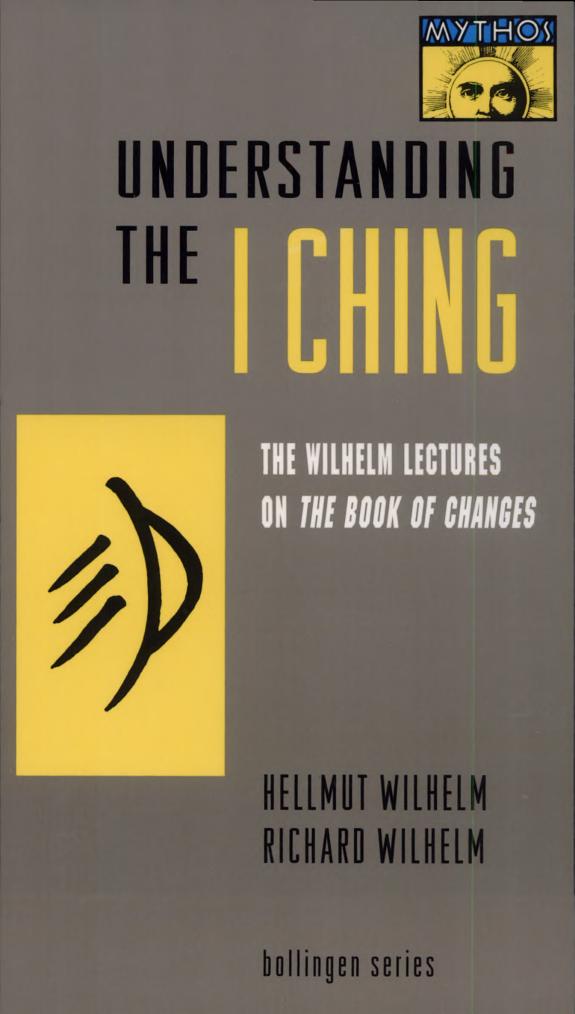
Alfred Huang’s central polemic is stated plainly: “The Chinese say that the I Ching needs the Ten Wings to fly, and with the Ten Wings restored to their central place by Master Huang, the I Ching at last flies in English.” This is not decorative rhetoric. The Ten Wings — Confucius’s commentaries on the hexagrams, lines, images, and sequences — had been either relegated to appendices or excised entirely in the translations of James Legge and Richard Wilhelm. Huang’s structural decision to blend five of the ten commentaries directly into each hexagram chapter, following the Han dynasty editorial tradition, changes what the reader encounters at the level of experience. Where Wilhelm’s edition permits readers to absorb the hexagram text as oracular poetry and then optionally consult Confucius’s elaborations, Huang fuses them, so that the Commentary on the Decision and the Commentary on the Symbol illuminate the Yao Text in real time. This matters because Confucius’s commentaries are not secondary exegesis; they establish the ethical and cosmological grammar through which the hexagram images become intelligible. When Confucius writes of Qian that “alternations of the six yao unfold the truth; transformations of the opposites bring forth the feeling,” he is articulating a dynamic that the bare hexagram text can only suggest. Huang understood, from twenty-two years of meditating on the I Ching during imprisonment and house arrest, that the text without its commentaries produces what he calls depression — “when I used English translations to divine, I was so depressed that I had no desire to do it again.” The commentaries restore hope because they restore meaning-structure.
The Tao of I Is the Book’s Unconscious — Present Everywhere, Stated Nowhere
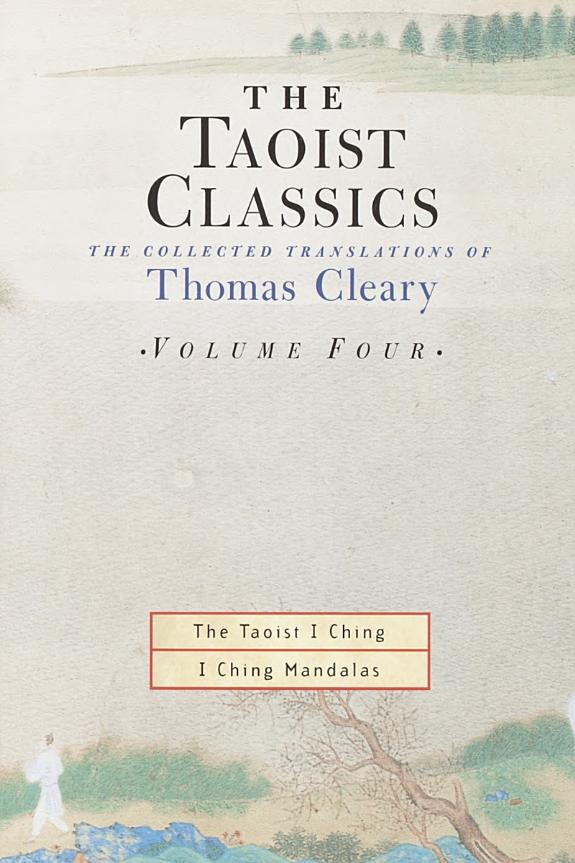
Huang identifies the Tao of I — the principle that everything exists in continuous cyclical change, rising and falling in progressive evolutionary advancement — as “the most valuable treasure” of the I Ching. His crucial observation is that this principle “is never mentioned in the text. It is revealed only between the lines, and in particular is embodied in the succession of the names of the gua and the sequences and structures of the gua and the yao.” This is a remarkable claim: the book’s deepest teaching is structural, not propositional. It lives in the order of the hexagrams, in the progression from Qian (Initiating) through Kun (Responding) to Zhun (Beginning), in the mirroring of the Upper and Lower Canons, in the terminal pair of Already Fulfilled and Not Yet Fulfilled. Jung, in his foreword to Wilhelm’s edition, approached something similar when he described the I Ching’s logic as synchronistic rather than causal — “the moment under actual observation appears to the ancient Chinese view more of a chance hit than a clearly defined result of concurring causal chain processes.” But where Jung located the I Ching’s intelligence in the quality of the moment of consultation, Huang locates it in the book’s own sequential architecture. The Tao of I is not accessed through casting coins but through understanding why hexagram 11 (Advance) must precede hexagram 12 (Hindrance), why the Upper Canon begins with Heaven and Earth and ends with Water and Fire. This structural hermeneutic connects Huang’s work to Liu Yiming’s Taoist I Ching, translated by Thomas Cleary, which similarly reads the hexagram sequence as a map of inner alchemical development. But where Liu Yiming interprets the sequence through the lens of Complete Reality Taoism’s spiritual refinement, Huang reads it through King Wen’s historical and political experience — the founding of the Zhou dynasty, the overthrow of the Shang tyrant, the establishment of feudal lords. The Tao of I, for Huang, is simultaneously cosmological and biographical.
Translation as Moral Act: Why Naming the Third Hexagram “Beginning” Instead of “Difficulty” Changes Everything
Huang’s method of translation rests on two Chinese principles: shu er bu zuo (“narrate, don’t write”) and ning xing bu da (“better to stick to the truth than make the translation smooth”). These are not stylistic preferences but ethical commitments. “Every word added or neglected by the translator can influence readers’ actions. This places a huge moral responsibility on the translator to not lead readers unnecessarily.” The consequences of this commitment are visible throughout the text but most dramatically in the naming of the hexagrams. His rejection of Wilhelm’s “Difficulty at the Beginning” for the third gua is grounded in ideographic evidence — the ancient pictograph of Zhun shows “a tiny blade of newly sprouted grass with a root that deeply penetrates the ground” — and in sequential logic: after Qian (Initiating) and Kun (Responding), how can creation itself be framed as difficulty? King Wen bestows upon this gua the four supreme attributes (yuan, heng, li, zhen), shared with only five other hexagrams. To call it “Difficulty” imports a Western theological anxiety about origins — the Fall, the curse — that the Chinese cosmology explicitly refuses. This is where Huang’s work resonates unexpectedly with depth psychological readings of myth and symbol. Jung’s concept of enantiodromia — the tendency of things to turn into their opposites — maps onto the Tao of I’s teaching that “when situations proceed beyond their extremes, they alternate to their opposites.” But Huang’s framework insists that this alternation is not tragic; it is the law of life itself, and the I Ching’s counsel is to understand one’s position within the cycle and act accordingly, with neither recklessness in prosperity nor despair in adversity.
A Translation Forged in Extremity, Carrying an Authority No Scholar’s Study Could Produce
What distinguishes Huang’s work from every other English I Ching is that it was tested before it was written. Twenty-two years of imprisonment and forced labor, during which Huang meditated on the I Ching and “found the strength to survive,” gave him an existential relationship to the text that no academic sinologist possesses. When he writes that in adverse circumstances one should “never become depressed and despair,” this is not philosophical advice but survival testimony. His translation carries the authority of someone who used the book as a technology for enduring the unendurable. For readers approaching the I Ching through the lens of depth psychology — through Jung’s synchronicity, through the archetypal imagination of active imagination practice — Huang’s version provides what no other does: a Chinese consciousness translating Chinese wisdom for Western readers without the mediating distortions of Western conceptual frameworks. The I Ching in Huang’s hands is not a curiosity, not a projective screen for the unconscious, not a “collection of magic spells” as Jung noted Western scholars had dismissed it. It is a complete cosmological and ethical system whose architecture is its teaching, and whose teaching is that change, rightly understood, is never catastrophe but always the movement of the Tao.
Sources Cited
- Huang, A. (1998). The Complete I Ching: The Definitive Translation. Inner Traditions.
- Wilhelm, R. (trans.) & Baynes, C.F. (English trans.). (1950). The I Ching or Book of Changes. Princeton University Press.
- Shaughnessy, E.L. (1996). I Ching: The Classic of Changes. Ballantine Books.