Seba.Health
Key Takeaways
- Liu Yiming's commentary systematically decodes the I Ching's sixty-four hexagrams as a complete map of psychological individuation, translating alchemical language into a precise phenomenology of how conditioned consciousness ("human mentality") can be reversed back to its primordial wholeness—making this the most rigorous pre-modern depth psychology text in the Chinese tradition.
- The distinction between "true" and "false" yin and yang functions as a diagnostic instrument more clinically precise than Jung's shadow concept: false yin and yang are not merely unconscious contents but structural distortions—isolated, oppositional exaggerations of otherwise healthy psychic polarities—whose identification is the precondition for any authentic inner work.
- Liu Yiming's insistence that the I Ching "is not a book of divination but rather is the study of investigation of principles, fulfillment of nature, and arrival at the meaning of life" constitutes a direct rejection of the oracular-synchronistic framework Jung and the Wilhelm translation popularized, repositioning the text as a manual for deliberate, systematic self-cultivation rather than a mirror of momentary psychic states.
Liu Yiming Transforms the I Ching from Oracle into Operative Psychology
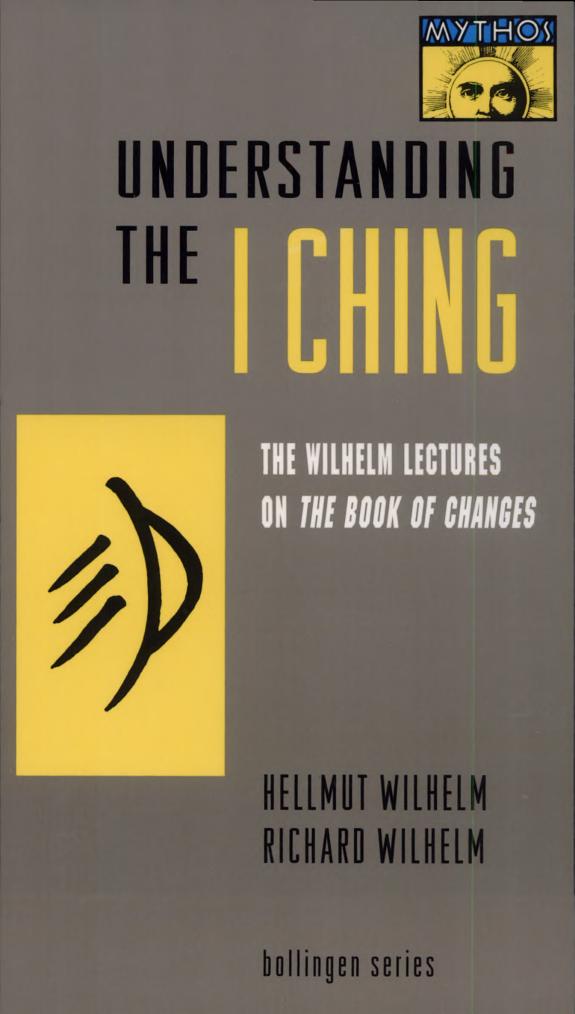
The dominant Western encounter with the I Ching arrived through Richard Wilhelm’s 1950 translation and Jung’s famous foreword, which framed the text as a synchronistic oracle—a device for catching the “hidden individual quality in things and men, and in one’s own unconscious self as well.” Jung’s reading, brilliant as rhetoric, locked the I Ching into the category of divinatory tool, a passive mirror activated by chance. Thomas Cleary’s 1986 translation of Liu Yiming’s 1796 commentary dismantles this framework entirely. Liu states without equivocation: “the I Ching is not a book of divination but rather is the study of investigation of principles, fulfillment of nature, and arrival at the meaning of life.” This is not a minor interpretive preference. It is a wholesale reassignment of the text’s function—from reactive oracle to proactive manual for the systematic reversal of psychological conditioning. Where Jung approached the I Ching as a vessel that “provides spiritual nourishment for the unconscious elements or forces projected as gods,” Liu approaches it as a surgical instrument for identifying precisely where the primordial has been overtaken by the conditioned, and for executing the reversal. The hexagrams become not archetypal portraits to be contemplated but operational directives to be enacted. The Complete Reality school’s insistence on “using things of the world to practice the principles of the Tao, using human affairs to cultivate celestial qualities” grounds this work in a rigor that the oracular tradition, for all its imaginative power, cannot match.
The True/False Yin-Yang Distinction Is a Diagnostic Framework Without Western Parallel
Liu Yiming’s most consequential contribution is his refinement of yin and yang into true and false registers. True yin and true yang “complement, balance, and include one another”; false yin and false yang “are isolated and opposed.” This is not metaphysics. It is clinical description. False yang manifests as impetuosity, aggression, stubbornness—qualities that mimic strength but fracture integration. False yin manifests as quietism, vacillation, dependency—passivity masquerading as receptivity. The alchemical task is to “repel false yin and foster true yang,” then to “blend true yin and true yang,” and finally to transcend both. Consider how this maps onto the problems depth psychology repeatedly encounters. Edinger’s account of ego inflation in Ego and Archetype describes a state where the ego identifies with archetypal energy—a condition Liu would diagnose as false yang, isolated strength severed from its complementary receptivity. Conversely, what Jungian psychology calls ego-Self fusion in its passive mode—the dissolution of ego boundaries into unconscious identification—corresponds precisely to Liu’s false yin: weakness that has lost contact with firm discernment. The Taoist framework is more operationally precise because it does not merely name the pathology; it specifies the directional correction. “Using yin to beckon yang”—employing humility and openness to attract genuine knowledge—is a method, not a description. It tells you what to do next.
The Alchemical Vocabulary Encodes a Phenomenology of Psychic Transformation
Liu’s introduction explains that terms like “medicines,” “firing process,” “crystallization of elixir,” and “maturation of the elixir” are not mystical obfuscation but technical descriptions of stages in inner work. “Vigorous exertion” is the “martial fire”; “easygoing gradual penetration” is the “cultural fire.” “Correct balance of firmness and flexibility” is “crystallization of elixir”; “merging of yin and yang, with total sublimation” is “maturation.” “Imperceptible, unfathomable spiritual transformation” is “releasing the elixir.” This vocabulary functions identically to the stages of the opus in Western alchemy as decoded by Jung in Psychology and Alchemy and Mysterium Coniunctionum—nigredo, albedo, rubedo—but with a crucial difference. Jung read Western alchemical texts as unconscious projections of individuation, discovered retroactively through amplification. Liu Yiming writes as a conscious practitioner who has undergone the process and is transmitting explicit instructions. There is no projection to decode. The commentary on each hexagram specifies the precise psychic configuration—which lines represent true firmness, which represent conditioned flexibility, where danger lies, what action restores balance. The sixty-four hexagrams thus constitute a complete taxonomy of psychic states and their transformations, organized not by archetypal image (as in a Jungian amplification) but by structural analysis of the interplay between firmness and yielding, action and stillness, the primordial and the conditioned.
Stillness as Method, Not Ideology
A persistent misreading of Taoism—one Liu explicitly combats—reduces its emphasis on stillness and emptiness to quietism. The Book of Balance and Harmony, which Cleary’s introduction draws on extensively, makes the correction: “Rest is the foundation of movement, movement is the potential of rest.” Stillness is instrumental, not terminal. It is the clearing of conditioned subjectivity so that “unbiased understanding and action may take place”—what Liu calls the restoration of “innate knowledge and innate capacity” as opposed to “artificial knowledge and artificial capacity.” This distinction between innate and artificial knowing resonates powerfully with Bion’s concept of O versus saturated knowledge, and with the Zen distinction between original mind and acquired mind that Suzuki articulated. But Liu’s formulation is sharper than either because it is embedded in a hexagram-by-hexagram map of exactly how artificial knowledge infiltrates and distorts each specific configuration of psychic forces. The I Ching’s 384 lines “all teach people how to know when they are not simple and ready, and to modify this so that they may eventually become simple and ready.” This is not philosophy. It is a diagnostic checklist.
Why This Book Matters Now
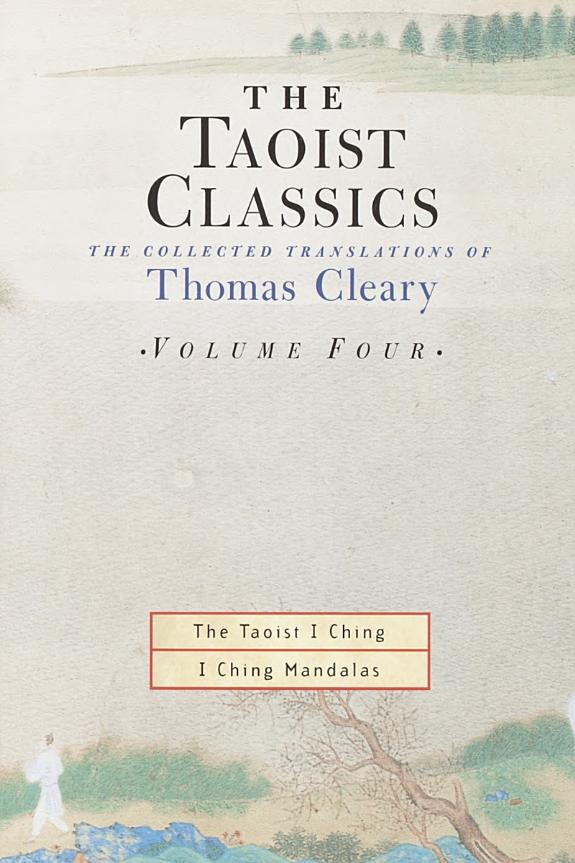
For anyone working seriously with depth psychology, The Taoist I Ching provides something unavailable elsewhere in the library: a pre-modern system of psychological self-diagnosis and correction that is simultaneously complete in scope (sixty-four fundamental situations, 384 specific configurations), operationally precise (each hexagram specifies what to do and what to avoid), and explicitly non-oracular (the text addresses the practitioner’s will and discernment, not chance or synchronicity). It bridges the gap between Jung’s recognition that the I Ching maps psychic reality and the practical question Jung never adequately answered: once you see the map, how do you navigate it? Liu Yiming’s answer—through the disciplined, moment-by-moment discrimination of true from false, primordial from conditioned, in every configuration life presents—constitutes the most rigorous program of self-knowledge in the Chinese tradition, and one that complements and in places surpasses the Western depth psychological canon in operational specificity.
Sources Cited
- Cleary, T. (trans.) & Liu Yiming (commentary). (1986). The Taoist I Ching. Shambhala Publications.
- Jung, C.G. (1944). Psychology and Alchemy. Collected Works, Vol. 12. Princeton University Press.
- Pregadio, F. (2006). Great Clarity: Daoism and Alchemy in Early Medieval China. Stanford University Press.
- Jung, C.G. (1929). Commentary on The Secret of the Golden Flower. In Collected Works, Vol. 13. Princeton University Press.