Seba.Health
Key Takeaways
- Keltner identifies eight reliable sources of awe — moral beauty, collective effervescence, nature, music, visual design, spirituality, life and death, and epiphany — each activating a distinct physiological signature.
- Awe reduces inflammatory cytokines, activates the vagus nerve, and dampens the default mode network, producing measurable shifts in how the self relates to the world.
- The book provides empirical scaffolding for the claim that awe is not a luxury emotion but a regulatory mechanism — one with direct implications for addiction recovery and depth-psychological practice.
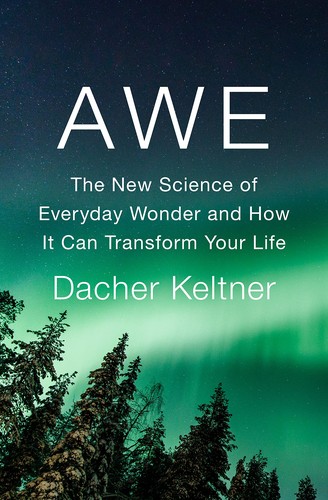
The Greek word σέβας, sebas, names the experience of awe and reverence that stands at the root of religious feeling. That etymology is not incidental to this project. Dacher Keltner’s Awe represents the most comprehensive empirical account of what that experience actually does to the human body, and his findings converge with remarkable precision on the claims that depth psychology has been making for over a century: that encounters with the numinous reorganize the self.
The Taxonomy of Awe
Keltner spent more than two decades collecting awe narratives across twenty-six countries, and the taxonomy he derives from that data is one of the book’s enduring contributions. Eight sources of awe emerge with cross-cultural consistency: moral beauty, collective effervescence, nature, music, visual design, spirituality, encounters with life and death, and epiphany. Each source activates a recognizable physiological signature — goosebumps, tears, chills along the spine, a feeling of expansion in the chest. Each produces the same fundamental cognitive shift: the self shrinks, and the world grows larger (Keltner, 2023).
Keltner’s lab work demonstrates that awe reliably reduces activity in the default mode network, the brain system most associated with self-referential processing. The narrating “I” that loops endlessly through rumination, craving, and defensive self-monitoring goes temporarily quiet. What replaces it is a state Keltner calls the “small self,” a recalibration of proportion, in which the individual recognizes its actual scale relative to the systems it inhabits.
The Body Under Awe
The physiological data is where the book becomes directly relevant to clinical work. Keltner and his collaborators have shown that awe activates the vagus nerve — the longest cranial nerve in the body, running from brainstem to gut, and the primary conduit of the parasympathetic nervous system. Vagal activation slows heart rate, deepens respiration, and triggers the release of oxytocin. It is the body’s own mechanism for shifting from sympathetic mobilization (fight, flight, freeze) into ventral vagal safety (Stellar et al., 2015).
More striking still, awe reduces levels of interleukin-6 and other pro-inflammatory cytokines. Chronic inflammation is now understood as a driver of depression, anxiety, and the neurobiological damage associated with long-term substance use. A state that reliably dampens inflammatory cascades while simultaneously activating prosocial bonding circuits is not an aesthetic luxury. It is a regulatory intervention, one that operates below the threshold of conscious intention.
The implications for addiction recovery are substantial. The addicted nervous system is characterized by sympathetic dominance, collapsed vagal tone, and chronic inflammation. Twelve-step programs have long insisted that recovery requires contact with something larger than the self — what they call a “higher power.” Keltner’s research suggests that this insistence is not theological dogma but an intuitive description of a neurobiological mechanism. Awe produces the very physiological conditions that addiction erodes.
The Small Self and the Numinous
Keltner is a social psychologist, not a depth psychologist, and he does not engage directly with Jung or the analytic tradition. But the convergence between his findings and the Jungian account of numinous experience is too precise to be coincidental. Jung borrowed the concept of the numinous from Rudolf Otto, who described it as the mysterium tremendum et fascinans — an encounter with something wholly other that simultaneously terrifies and attracts. Jung argued that such encounters are the engine of psychic transformation, that the ego must be relativized by contact with the Self before genuine individuation can proceed.
Keltner’s “small self” is the empirical correlate of that relativization. When the default mode network quiets and the vagus nerve fires, the ego’s habitual grip on experience loosens. The result is proportion — a felt recognition that consciousness is nested within larger systems of meaning. This is the state that makes insight possible, that allows the analysand to receive interpretations that would otherwise bounce off the ego’s defenses. It is the state in which transformation becomes thinkable.
The book’s limitation is also its virtue: Keltner stays within the bounds of empirical psychology and does not venture into the phenomenological or imaginal territory that depth work requires. He can tell you that awe reduces inflammation and increases generosity. He cannot tell you what the psyche does with the images that awe produces: the visions, dreams, and symbolic encounters that arise when the ego’s surveillance system stands down. That is the work of the analytic tradition. But Keltner provides something that tradition has always lacked: a physiological grammar for the numinous, a way of understanding why encounters with beauty, vastness, and moral grandeur produce lasting change in the architecture of the self.
Why This Book Belongs on the Awe and Beauty Shelf
Awe is the empirical anchor for this entire shelf. Every other text here — Otto’s phenomenology, Eliade’s morphology, Maslow’s peak experiences, describes the encounter with the sacred from the inside. Keltner describes it from the outside, measuring what happens in the body when that encounter occurs. The two perspectives are not competitors. They are the stereoscopic vision that a serious account of awe requires: one eye on the image, one eye on the vagus nerve. Together they ground the Seba framework’s foundational claim — that awe-based stabilization is a therapeutic mechanism with measurable physiological effects (Keltner, 2023).
Sources Cited
- Keltner, D. (2023). Awe: The New Science of Everyday Wonder and How It Can Transform Your Life. Penguin Press. ISBN 978-1-9848-7968-4.
- Stellar, J. E., John-Henderson, N., Anderson, C. L., Gordon, A. M., McNeil, G. D., & Keltner, D. (2015). Positive affect and markers of inflammation: Discrete positive emotions predict lower levels of inflammatory cytokines. Emotion, 15(2), 129–133.
- Shiota, M. N., Keltner, D., & Mossman, A. (2007). The nature of awe: Elicitors, appraisals, and effects on self-concept. Cognition and Emotion, 21(5), 944–963.