 Seba.Health
Key Takeaways
- Otto argues that the holy is an irreducible category of experience — the numinous — that cannot be collapsed into moral goodness, aesthetic beauty, or rational theology.
- The mysterium tremendum et fascinans names a specific phenomenological structure: an encounter with radical otherness that simultaneously overwhelms and attracts.
- Jung adopted Otto's concept of the numinous as the experiential marker of archetypal activation, making this text a direct ancestor of analytical psychology's understanding of psychic transformation.
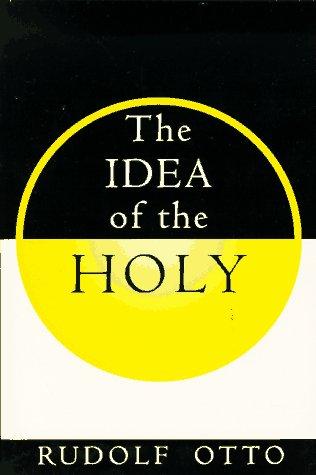
Rudolf Otto’s The Idea of the Holy performs one essential operation: it identifies an irreducible category of human experience and refuses to explain it away. The category is the numinous, the felt encounter with something wholly other, and Otto’s insistence that it cannot be reduced to ethics, aesthetics, or rational theology remains one of the most consequential moves in the modern study of religion. Jung recognized this immediately. The concept of the numinous became central to his understanding of how the psyche transforms, and without Otto’s phenomenological groundwork, the entire Jungian account of archetypal experience would lack its experiential anchor.
The Numinous as Irreducible Category
Otto’s argument begins with a critique. Liberal Protestant theology in the early twentieth century had reduced the holy to moral perfection — God as the supremely good, the ideally rational, the ethically absolute. Otto observes that this reduction strips religious experience of its most distinctive quality: the element of awe, dread, and uncanny fascination that believers across every tradition report when they encounter the sacred. The burning bush does not communicate a moral lesson. It communicates otherness — a presence that does not fit within the existing categories of the mind (Otto, 1923).
The Latin phrase mysterium tremendum et fascinans names the structure of this encounter with precision. Mysterium designates the quality of radical otherness — the unknowable, exceeding the unknown, that which exceeds the capacity of rational comprehension. Tremendum names the awe, dread, and overwhelming power that accompanies this encounter — what Otto calls “creature-feeling,” the sense of one’s own smallness and contingency in the face of absolute majesty. Fascinans names the paradoxical attraction, the pull toward the very thing that overwhelms. The numinous repels and draws simultaneously. It is terrifying and irresistible in the same moment.
The phenomenological structure persists across doctrinal boundaries. Otto demonstrates its presence across Hinduism, Judaism, Christianity, Islam, and indigenous traditions. The bhakti devotee trembling before Vishnu and the Hebrew prophet struck dumb before Yahweh report the same experiential signature. The content differs, the images, the names, the theological frameworks, but the underlying structure of overwhelming encounter remains constant.
Creature-Feeling and the Relativized Ego
Otto’s concept of creature-feeling deserves particular attention because it anticipates, by several decades, what contemporary affective neuroscience now describes as the “small self” effect of awe. Creature-feeling is not humiliation. It is not self-loathing or existential despair. It is a specific phenomenological state in which the boundaries of the self become transparent — in which the ego recognizes, with somatic immediacy, that it is not the center of the field but a participant within something vastly larger (Otto, 1923).
Jung seized on this. In Psychology and Religion, he argues that numinous experiences are the psyche’s own mechanism for relativizing the ego — for breaking the identification between consciousness and the totality of the personality. The ego that has never been shaken by an encounter with the numinous remains inflated, convinced that its perspective is the whole picture. The ego that has been shaken, that has felt the tremendum and survived, gains the capacity for a different relationship with unconscious material. It can receive without defending. It can integrate without controlling.
This is the mechanism through which archetypal images produce transformation rather than mere fascination. A dream of a great flood, a vision of a terrible mother, an encounter with a figure of luminous authority — these are numinous events. They carry the charge of the mysterium tremendum. And it is precisely that charge, that surplus of meaning and affect that exceeds the ego’s interpretive capacity, that forces the psyche to reorganize around a wider center.
The Numinous and the Recovery of Awe
Otto wrote in 1917, long before neuroscience could measure vagal tone or map the default mode network. His method is purely phenomenological — he describes the structure of experience from within, using the testimony of mystics, prophets, and ordinary believers as his data. The result is an account that contemporary science is only now beginning to confirm. Keltner’s research on awe, the vagus nerve, and the dampening of self-referential processing provides the physiological correlate of exactly what Otto described as creature-feeling (Jung, 1969).
For recovery work, this convergence matters. The addicted psyche is characterized by a collapsed relationship with the numinous. The substance becomes the sole source of transport, of self-transcendence, of contact with something larger than the grinding circuit of craving and relief. Recovery requires the restoration of other channels — other ways for the psyche to encounter the fascinans without the tremendum being mediated by a chemical. Otto’s taxonomy provides a map of what those channels look like from the inside. The encounter with sacred music, with natural vastness, with moral beauty, with the presence of death — each carries the numinous charge that the addicted psyche has been seeking through the substance all along.
The Idea of the Holy is not an easy book. Otto’s prose is dense, his examples drawn from Sanskrit and Hebrew texts that assume considerable erudition. But the core argument is forged with extraordinary clarity: the holy is not a concept but an experience, and that experience has a structure that can be described, recognized, and — with the right conditions — recovered. Every text on this shelf owes something to that argument. Without Otto’s insistence that the numinous is real and irreducible, depth psychology would have no language for the transformative encounter at the heart of its practice.
Sources Cited
- Otto, R. (1923). The Idea of the Holy (J. W. Harvey, Trans.). Oxford University Press. ISBN 978-0-19-500210-2. (Original work published 1917)
- Jung, C. G. (1969). Psychology and Religion: West and East (CW 11). Princeton University Press.
- Eliade, M. (1959). The Sacred and the Profane: The Nature of Religion. Harcourt, Brace & World.