Seba.Health
Key Takeaways
- Maslow argues that peak experiences — moments of ecstatic unity, beauty, and self-transcendence — are the natural core of religious life, which organized religion then codifies, domesticates, and ultimately suppresses.
- The 'peaker' and the 'non-peaker' represent two distinct orientations toward experience, and Maslow contends that modern psychology pathologized the peaker while rewarding the defended, desacralized non-peaker.
- Peak experiences are not rare gifts but natural capacities of the healthy organism — a claim that anticipates the Seba framework's insistence that awe-based stabilization is accessible, trainable, and physiologically grounded.
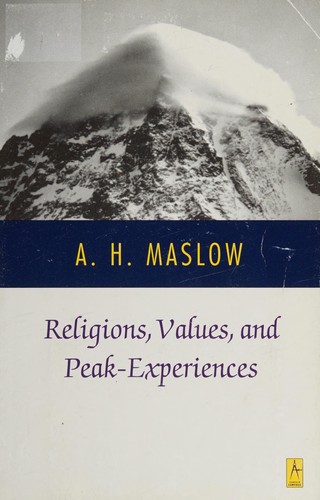
Abraham Maslow published Religions, Values, and Peak-Experiences in 1964, at the height of his break with orthodox behaviorism and the beginning of what he called the “Third Force” in psychology. The book is short, polemical, and prophetic. Its central argument — that organized religion exists to domesticate the very experiences that gave rise to it — remains one of the most incisive critiques of institutional spirituality ever written. For the Seba framework, Maslow’s contribution is foundational: he establishes that contact with the numinous is not the province of saints, mystics, or the mentally ill, but a natural function of the healthy human organism.
The Core Religious Experience
Maslow begins where William James left off. James, in The Varieties of Religious Experience, had demonstrated that the raw material of religion is personal, experiential, and pre-doctrinal — that creeds and institutions are secondary formations built atop individual encounters with the sacred. Maslow radicalizes this claim. He argues that at the core of every major religious tradition lies a founder’s peak experience: Moses on Sinai, the Buddha under the Bodhi tree, Paul on the road to Damascus. The experience is primary. Everything that follows, the scriptures, the hierarchies, the rituals, the ethical codes, is an attempt to preserve and transmit that experience. And the attempt always fails, because institutions are designed for stability, and peak experiences are inherently destabilizing (Maslow, 1964).
The result is a paradox that Maslow names with characteristic directness: the church becomes the enemy of the prophet. The institution that exists to honor the founder’s vision must, by its nature, suppress any repetition of that vision in its members. Fresh peak experiences threaten the authority of established doctrine. They produce heretics, mystics, and schismatics — individuals whose direct contact with the sacred makes them ungovernable. Organized religion resolves this threat by teaching that revelation is closed, that the sacred is accessible only through authorized channels, and that spontaneous encounters with the numinous are suspect.
Peakers and Non-Peakers
Maslow’s distinction between “peakers” and “non-peakers” is crude but useful. The peaker is the individual for whom moments of ecstatic unity, beauty, and self-transcendence are defining features of experience. The non-peaker is the individual who has organized life around the avoidance of such moments — who values control, predictability, and rational mastery over the vulnerable openness that peak experiences require. Maslow contends that modern Western culture, and modern psychology in particular, rewards the non-peaker and pathologizes the peaker. The defended ego is called healthy. The ego that dissolves in the presence of a sunset, a symphony, or another person’s suffering is called unstable (Maslow, 1964).
This is the same observation that depth psychology makes in different language. Jung’s concept of the persona, the adaptive mask that the ego presents to the social world, describes the non-peaker’s situation with precision. The persona functions by excluding everything that does not serve adaptation: the shadow, the anima or animus, and above all the numinous experiences that threaten to overwhelm the ego’s carefully maintained boundaries. The non-peaker is not a person without access to the sacred. The non-peaker is a person whose defenses are working overtime to keep the sacred out.
Peak Experience as Natural Function
The book’s most consequential claim is that peak experiences are not rare, pathological, or reserved for spiritual elites. They are a natural capacity of the organism, as natural as hunger, sleep, or sexual desire, and they emerge spontaneously when conditions are right. Maslow identifies those conditions: safety, belonging, esteem, and the fulfillment of basic physiological needs. His hierarchy is often caricatured as a ladder to be climbed, but his actual argument is more subtle. The peak experience is not the reward for having climbed. It is the natural flowering of an organism that is no longer spending all its energy on survival and defense (Maslow, 1971).
This reframing has direct implications for recovery. The addicted organism is trapped at the base of Maslow’s hierarchy — consumed by physiological dysregulation, social isolation, and the collapse of self-esteem. Its access to peak experience is not absent but rerouted: the substance provides a chemical simulation of the ecstatic state, a counterfeit transcendence that borrows against the body’s future capacity for genuine awe. Recovery, in Maslow’s framework, requires the systematic restoration of the conditions under which peak experiences arise naturally — safety, connection, meaning, and the slow rebuilding of an organism that can tolerate the vulnerability of being moved.
The Unfinished Bridge
Maslow’s limitation is his optimism. He writes as though peak experiences are uniformly positive, as though the encounter with the sacred carries no danger. Otto knew better. The mysterium tremendum is terrifying as well as attractive, and the ego that opens to the numinous without adequate structure risks not transformation but disintegration. Jung knew this too — the inflation that follows an uncontained encounter with the archetype is one of the central dangers of the individuation process.
The Seba framework holds both poles. Awe-based stabilization is the disciplined cultivation of the conditions — somatic, relational, imaginal — under which the encounter with the numinous can be received and integrated rather than merely undergone. Maslow provides the vision: that awe is the birthright of the healthy organism, not a symptom to be managed. Otto and Jung provide the caution: that the vessel must be tempered before it can hold what awe delivers. Together, they describe not a contradiction but a therapeutic sequence — the restoration of capacity first, the encounter with the sacred after, and the slow integration of both into a life that can bear the weight of meaning.
Sources Cited
- Maslow, A. H. (1964). Religions, Values, and Peak-Experiences. Ohio State University Press. ISBN 978-0-14-019487-6.
- Maslow, A. H. (1971). The Farther Reaches of Human Nature. Viking Press.
- James, W. (1902). The Varieties of Religious Experience. Longmans, Green, and Co.