A wolf in a dream is never a synonym for danger — it is a hunger, and the only real questions are what it wants and whether it means to devour you or be fed. That claim cuts against the easy verdict that reduces the animal to your aggression, your inner predator, a threat you have not yet faced, filed away with a label as though one wolf could stand for all wolves. But the wolf that shows up at night refuses that flattening. There is the wolf at the door and the wolf in the herd; the wolf that hunts you and the wolf you become; the lone wolf circling the firelight and the pack closing in around it. None of these is danger in the abstract. Each is a particular appetite, wearing fur, asking to be recognized before it is judged.
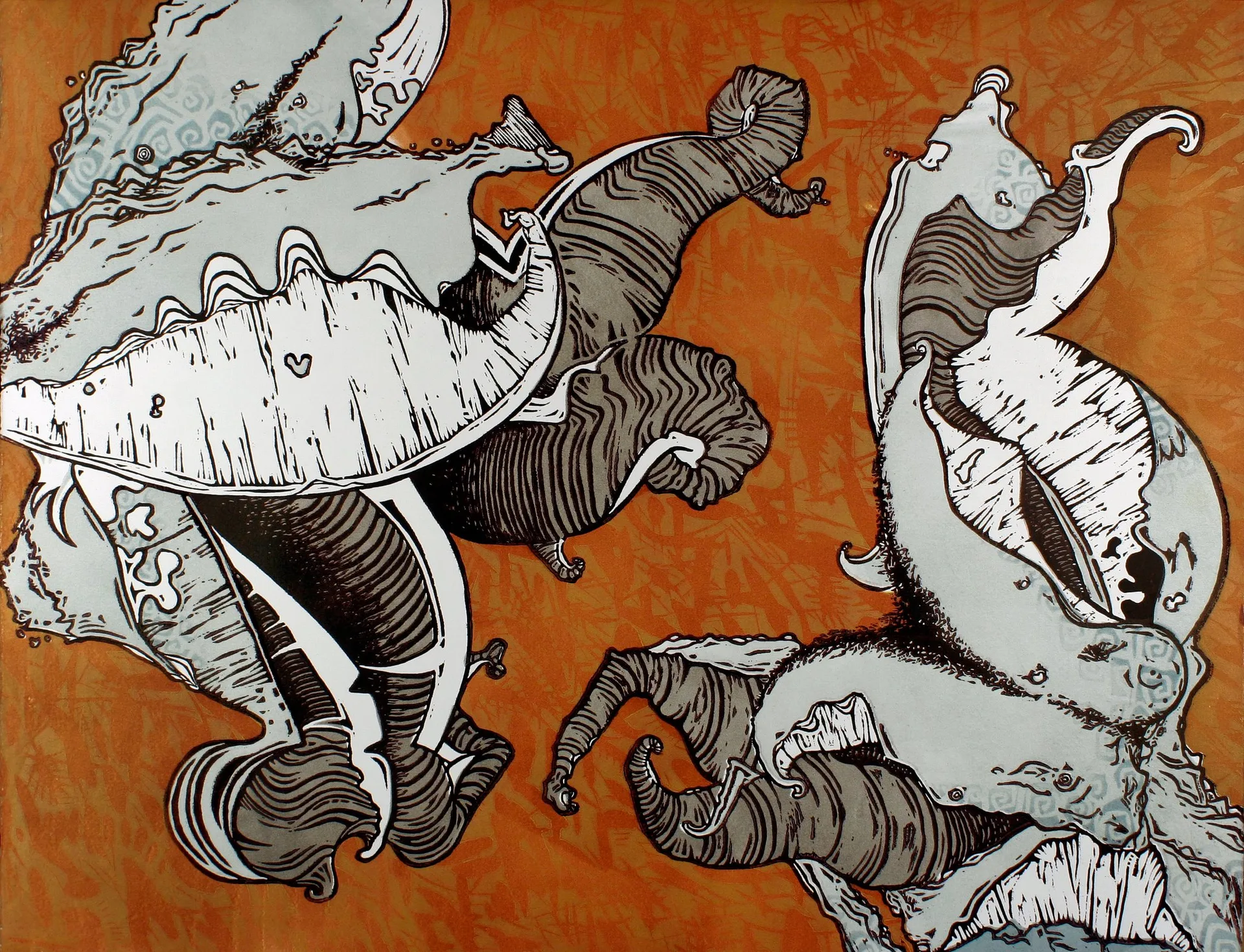
Begin with the hunger, because the tradition begins there. Marie-Louise von Franz draws the wolf as appetite with no floor to it: “the wolf represents that strange indiscriminate desire to eat up everybody and everything, to have everything.” It is not power, not sex, but something older — “the desire to have and get everything,” a drivenness in which “it is never that they want it; it wants it” (von Franz, Shadow and Evil in Fairy Tales, 1974). This is the wolf as the part of the psyche that can never be filled, that “wants really to eat the whole world.” The dream of the wolf at the door may be a dream about a hunger in you that has stopped recognizing limits.
Jung saw the same animal rise out of the body’s own depths. He records a mother who, in psychosis, “saw herself as an animal, especially as a wolf or pig, and acted accordingly, running about on all fours, howling like a wolf” — becoming “the symbol of the all-devouring mother” (Jung, Symbols of Transformation, 1952). For Jung the wolf belongs to the bestiary of the dreaming psyche, the “lions, bulls, dogs, and snakes” that stand for “an undifferentiated and as yet untamed libido.” The wolf in the dream is not an intruder from outside. It is instinct that has not yet been given a human shape.
The Greeks knew this wolf as a madness that wears a muzzle. Ruth Padel finds the predator lodged inside the very vocabulary of derangement: lussa, the word tragedy uses for frenzy, “means ‘rabies, dog-madness, wolfish rage.’” Even in people, she writes, “madness is canine or lupine” (Padel, In and Out of the Mind, 1994). When Pentheus is hunted down, the maenads are urged on as “hounds of Lyssa,” and the same word that names a war hero’s killing fury in Homer names the foaming dog (Padel, Whom Gods Destroy, 1995). To dream a wolf, in this register, is to dream the moment when one’s own passion turns predatory — when the thing inside you stops obeying and begins to hunt.
But the most unsettling thing the classics know about the wolf is that you can turn into one. Walter Burkert reconstructs the rite at Mount Lykaion, where the myth of Lykaon — the king “related to the wolf even in his name” — stands behind a real initiation. The boy who tasted human flesh “would change into a wolf”; he could turn back “in the tenth year,” but “if he ate it, he remained a beast forever” (Burkert, Homo Necans, 1972). Burkert reads the wolf-time as a passage, not a damnation: “Life as a wolf in the wilderness,” roughly between sixteen and twenty-five, the exile that must precede return, for “expulsion has to precede inclusion.” The wolf in the dream may be the threshold animal — the self that has to go feral in the wilderness before it can come back human.
This is where the wolf shows its second face, and the trap closes if you forget it. The alchemists fed the wolf to the work. Edward Edinger reads the mortificatio image in which the dead king’s body is given “to a ravening wolf; that is, the ego has been devoured by hungry desirousness.” But then “the wolf in turn is fed to the fire” — and since “wolf = desire and desire = fire,” the appetite finally “consumes itself,” and “after a descent into hell, the ego (king) is reborn, phoenixlike, in a purified state” (Edinger, Anatomy of the Psyche, 1985). The wolf is not only what eats you. It is what must itself be burned for anything new to be born.
And there is the wolf you are starving rather than fattening. Clarissa Pinkola Estés follows the predator that crawls “in through our psychic windows at night,” the figure that decimates a woman’s inner life and leaves the soul “burnt to ashes.” In that ash the hunger swells until it “staggers to its feet and takes over, ferocious and famished” — the “starved soul” that will “take any food regardless of its condition” (Estés, Women Who Run With the Wolves, 2017). Here the wolf is double in a single breath: the predator that wastes you, and the wild Self underneath that “whispers, whimpers, calls” and keeps trying to save you. A dream wolf at the edge of the dream may be that wild Self, starved by everything that has captured your life, asking to be fed before it eats indiscriminately.
So the question the wolf-dream asks is never simply “what are you afraid of.” It is: what is this hunger, and what relation do you have to it. Is it the devouring greed von Franz names, the untamed libido Jung sees, the lupine frenzy Padel hears in the tragedies — or is it the threshold beast of Burkert’s wilderness, the desire Edinger says must be burned, the starved wild Self Estés says is still trying to call you home. The tradition is unanimous on one point only: you do not defeat the wolf by locking the door. The image holds its ground between the predator that eats the world and the instinct that, fed rightly, becomes the thing that finally carries you. The dream is not asking you to run. It is asking whether you know what you are hungry for.