Seba.Health
Key Takeaways
- Porges's hierarchy of autonomic states—ventral vagal, sympathetic, dorsal vagal—is not merely a neurophysiological taxonomy but an implicit map of the preconditions for psychic life, establishing that symbolic process, imaginal work, and relational depth are biologically gated by the nervous system's neuroception of safety.
- The polyvagal framework dissolves the classical mind-body split that depth psychology has struggled against since Freud by demonstrating that what clinicians call "dissociation," "resistance," or "psychic deadness" are phylogenetically conserved survival strategies operating below volition—making the unconscious not only psychological but autonomic.
- By grounding the capacity for social engagement in the myelinated ventral vagal complex—an evolutionarily recent mammalian adaptation—Porges provides the first neurobiological account of why human beings require felt safety from another person before the soul can do its work, vindicating attachment theory and the analytic temenos in a single stroke.
The Nervous System Is the Gatekeeper of the Imaginal: Porges Reveals That Depth Work Has Autonomic Prerequisites
Stephen Porges’s The Polyvagal Theory makes a claim that depth psychology has intuited but never been able to ground in physiology: the capacity for symbolic life—for imagination, for relational attunement, for what Jung called the transcendent function—depends on a prior biological event that Porges terms neuroception. This is the nervous system’s subconscious evaluation of environmental risk, operating faster and more primitively than any conscious appraisal. When neuroception detects danger, the sympathetic nervous system mobilizes fight-or-flight. When it detects life-threat, the phylogenetically ancient unmyelinated dorsal vagal complex triggers shutdown, collapse, dissociation. Only when neuroception registers safety does the evolutionarily recent myelinated ventral vagal complex come online, enabling the social engagement system—the integrated circuit of facial expression, vocal prosody, middle-ear attunement, and cardiac regulation that makes human connection possible. Porges’s decisive insight is hierarchical: these three states are not options on a menu but a phylogenetic ladder, and the system defaults downward under threat. This means that every depth-psychological intervention—Active Imagination, free association, amplification, dream work—presupposes a ventral vagal state that the clinician cannot simply assume. As Chiara Tozzi’s integration of polyvagal principles into Jungian practice makes explicit, “the active promotion of security, linked to feelings of well-being and bodily relaxation, can spur creativity and activate deep images.” The body’s autonomic state is not background noise to the analytic process; it is the precondition for that process to occur at all.
Dorsal Vagal Shutdown Is Not Resistance but Phylogenetic Memory: Porges Reframes Dissociation as Biological Intelligence
One of the most consequential implications of polyvagal theory for clinical work is its reframing of what psychoanalysis has long called “resistance” and what trauma studies recognize as dissociation. The dorsal vagal response—immobilization without fear, metabolic conservation, psychological numbness—is not a pathological failure of ego function but the oldest survival strategy in the vertebrate repertoire, shared with reptiles and predating the mammalian nervous system by hundreds of millions of years. Porges demonstrates that when the social engagement system fails and sympathetic mobilization proves inadequate, the organism does not malfunction; it enacts a phylogenetically conserved program of feigned death. This reframes the clinical picture entirely. The patient who goes blank on the couch, the trauma survivor who cannot access affect, the analysand whose imaginal life feels dead—these are not people whose egos have failed. They are organisms whose nervous systems have correctly calculated that the environment does not support higher-order engagement. Hillman’s insistence in Re-Visioning Psychology that “pathologizing is a royal road of soul-making” retains its force, but Porges adds a necessary caveat: the soul cannot pathologize its way into meaning if the body is in dorsal collapse. The “falling apart” Hillman celebrates as Dionysian loosening presupposes a nervous system that has enough ventral vagal tone to hold the dissolution without tipping into reptilian shutdown. Without this distinction, the clinician risks aestheticizing a state that is not imaginal descent but autonomic emergency.
Porges Vindicates the Temenos: Social Engagement as the Neurobiological Basis of Analytic Containment
The ventral vagal complex does not operate in isolation. Its activation is fundamentally co-regulatory—dependent on cues of safety received from another nervous system through face, voice, and prosody. This is Porges’s deepest contribution to the understanding of therapeutic relationship. The analytic temenos, the ritual container that Jung and his successors recognized as essential to the work, is not merely a symbolic or architectural arrangement. It is a neurobiological event: two nervous systems signaling safety to each other through the social engagement system, enabling the ventral vagal state that permits symbolic process. Tozzi’s clinical report from pandemic-era practice makes this concrete: when collective dysregulation stressed the experience of danger, she found that “some forms of psychoeducation and clinical application of the polyvagal theory, as a support to stabilize the Ego, are valuable in bringing relief to dysregulated states, not accessible verbally, preparing the ground for an imaginal and analytical work.” The phrase “not accessible verbally” is crucial. Porges demonstrates that dorsal vagal states are, by definition, pre-verbal—they predate the mammalian social engagement circuitry that makes language-mediated therapy possible. This means that purely interpretive interventions directed at a patient in autonomic collapse are categorically mismatched to the level of nervous system organization that is active. Peterson’s account in The Middle Voice of convergence—the state where “both doors are closed” and the soul must hold rather than flee or collapse—finds its neurophysiological correlate here: the Middle Voice becomes accessible only when the ventral vagal system is sufficiently resilient to prevent dorsal shutdown under pressure, allowing the organism to remain present in extremity rather than dissociating into phylogenetic retreat.
The Polyvagal Hierarchy Parallels Hillman’s Critique of Ego-Psychology—And Corrects Its Blind Spot
Hillman’s critique of “the monotheistic hero myth (now called ego-psychology)” targets the fantasy that a single, centralized ego can master psychic diversity through will. Porges arrives at a structurally similar critique from below: the ego’s executive functions are themselves dependent on a ventral vagal state that is neither willed nor chosen but reflexively activated by neuroception. The ego does not decide to be present; the nervous system permits presence. This convergence between archetypal psychology’s critique of ego-sovereignty and polyvagal theory’s demonstration of autonomic primacy is more than analogical—it is architecturally necessary. Hillman saw that “ego consciousness as we used to know it no longer reflects reality” and that “ego has become a delusional system.” Porges supplies the mechanism: the ego’s apparent sovereignty is an artifact of sustained ventral vagal activation, and it dissolves the instant neuroception shifts. The gods that Hillman discovers in the complexes are, from the polyvagal perspective, phylogenetic strata of autonomic response—each with its own logic, its own temporality, its own mode of engagement with the world.
For the reader encountering depth psychology today, The Polyvagal Theory is indispensable not because it replaces imaginal or archetypal frameworks but because it identifies the biological floor beneath them. It answers the question that neither Jung nor Hillman could: why does the same person who can engage in profound Active Imagination on Tuesday sit mute and dissociated on Thursday? The answer is not psychodynamic but autonomic. Safety is not a metaphor. It is a measurable physiological state, and without it, the soul’s deepest operations are neurobiologically foreclosed. No other book in the library makes this claim with this precision.
Sources Cited
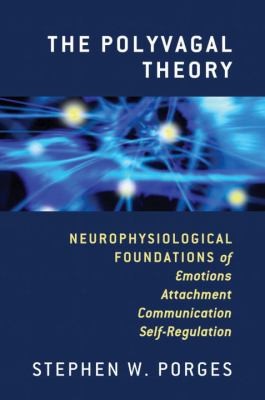
- Porges, S.W. (2011). The Polyvagal Theory: Neurophysiological Foundations of Emotions, Attachment, Communication, and Self-Regulation. W.W. Norton. ISBN 978-0-393-70700-7.
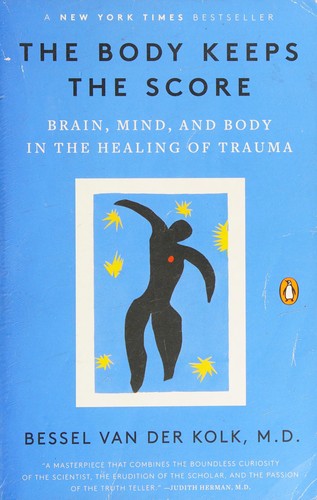
- van der Kolk, B. (2014). The Body Keeps the Score: Brain, Mind, and Body in the Healing of Trauma. Viking.
- Levine, P. (1997). Waking the Tiger: Healing Trauma. North Atlantic Books.