Seba.Health
Key Takeaways
- The coniunctio — the alchemical marriage of opposites — is Jung's ultimate symbol for the goal of individuation: the union of conscious and unconscious in a totality that transcends the ego.
- Jung's analysis of Sol and Luna, Rex and Regina, reveals how the masculine and feminine principles function as psychic opposites whose integration constitutes wholeness.
- Completed in Jung's eighty-first year, this is the culmination of his life's work and the deepest statement of his psychological philosophy.
Jung’s Magnum Opus
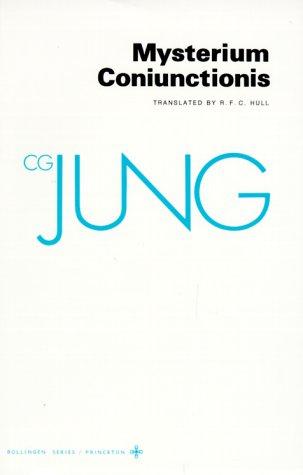
Mysterium Coniunctionis is the summit of Jung’s intellectual life. Completed when he was eighty-one years old, it represents the fullest articulation of the insight that had organized his work for three decades: that the alchemical tradition, properly understood, constitutes the most elaborate symbolic record of the individuation process ever produced by Western culture. Where Psychology and Alchemy established the thesis and Alchemical Studies explored its ramifications, Mysterium Coniunctionis pushes the argument to its ultimate conclusion. The alchemical coniunctio, the marriage of opposites, is the supreme image of psychic wholeness (Jung, 1955-56).
The Opposites and Their Union
The organizing problem of the work is the separation and synthesis of psychic opposites. Jung traces the alchemical pairs, Sol and Luna, Rex and Regina, sulphur and salt, body and spirit, as symbolic expressions of the fundamental tension that structures all psychic life: the opposition between consciousness and the unconscious, between the known and the unknown aspects of the personality. The alchemists did not resolve this tension through abstract philosophy. They enacted it through the symbolic drama of the opus, in which the opposites are first separated (separatio), then purified, and finally united in a new totality that transcends both (Jung, 1955-56).
The Coniunctio as Individuation
The coniunctio oppositorum, the conjunction of opposites, is not a comfortable resolution. Jung insists that genuine union requires the full differentiation and conscious acknowledgment of both poles. There is no wholeness without darkness, no integration without the sustained encounter with what consciousness would prefer to reject. The alchemical marriage is not the elimination of conflict but its transformation into a paradoxical unity that holds the tension without collapsing it. This is the psychological meaning of the philosopher’s stone, the lapis that is also the Self: a center that includes everything the ego has excluded (Jung, 1955-56).
Difficulty and Reward
This is, by any measure, the most demanding volume in the Collected Works. The text is dense with Latin quotations, alchemical terminology, and cross-references to obscure medieval and Renaissance sources. Jung does not simplify, and the reader who comes unprepared will struggle. But for the reader who has worked through CW 12 and CW 13, Mysterium Coniunctionis delivers something no other text in the Jungian canon offers: the complete vision, rendered in extraordinary symbolic depth, of what it means for the psyche to become whole.
It is the book Jung spent his life preparing to write, and it remains the deepest single statement of analytical psychology’s understanding of the human soul.
Sources Cited
- Jung, C.G. (1955-56). Mysterium Coniunctionis. Collected Works of C.G. Jung, Vol. 14. Princeton University Press.