 Seba.Health
Key Takeaways
- The essay on the spirit Mercurius is the single best entry point into Jung's understanding of the trickster archetype and its role in alchemical transformation.
- The philosophical tree essay demonstrates how modern patients spontaneously produce alchemical imagery without any knowledge of the historical tradition.
- These five essays serve as both introduction and supplement to Psychology and Alchemy and Mysterium Coniunctionis, bridging Jung's early and late alchemical thought.
Five Essays Spanning Three Decades of Alchemical Thought
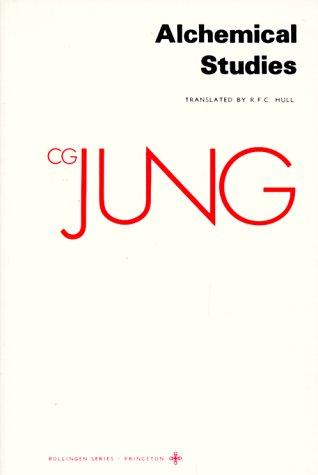
Alchemical Studies collects five extended essays written between 1929 and 1954, tracing Jung’s developing engagement with alchemical symbolism across nearly the entire second half of his career. The volume is sometimes overlooked in favor of the more systematic Psychology and Alchemy (CW 12) or the monumental Mysterium Coniunctionis (CW 14), but it contains some of Jung’s most vivid and psychologically precise alchemical writing. These essays function both as introduction and as essential supplement to the larger works (Jung, 1967).
The Spirit Mercurius
The essay on the spirit Mercurius stands as Jung’s definitive treatment of the trickster as an alchemical and psychological figure. Mercurius is the prima materia and the lapis, the beginning and the end of the work, the poison and the cure. Jung reads the Grimm fairy tale “The Spirit in the Bottle” as a parable of the ego’s encounter with an unconscious content that is simultaneously dangerous and indispensable. Mercurius cannot be conquered by force; he must be recognized and related to. This dual nature, destructive and transformative, chaotic and creative, makes Mercurius the alchemical figure closest to the phenomenology of the unconscious itself (Jung, 1967).
The Philosophical Tree
The essay on the philosophical tree offers striking clinical evidence for Jung’s central claim about alchemy: that its imagery is not historically contingent but archetypal. Jung presents drawings and paintings by modern patients who, with no knowledge of alchemical tradition, spontaneously produce tree symbolism that mirrors the arbor philosophica of medieval alchemical texts. The tree as an image of growth, verticality, and the union of chthonic roots with celestial branches recurs across cultures and centuries. It is the individuation process rendered visible (Jung, 1967).
Paracelsus and the Eastern Parallel
The remaining essays — on Paracelsus, on the visions of Zosimos, and on The Secret of the Golden Flower — extend the alchemical investigation into both Western esotericism and Eastern contemplative practice. The commentary on The Secret of the Golden Flower, Jung’s earliest published engagement with alchemical material, reveals how a Chinese Taoist meditation text confirmed his developing intuition that the unconscious produces mandala symbolism as part of a natural process of psychic centering.
For readers approaching Jung’s alchemical psychology, this volume offers the most accessible and varied entry point before taking on the sustained density of CW 12 and CW 14.
Sources Cited
- Jung, C.G. (1967). Alchemical Studies. Collected Works of C.G. Jung, Vol. 13. Princeton University Press.