 Seba.Health
Key Takeaways
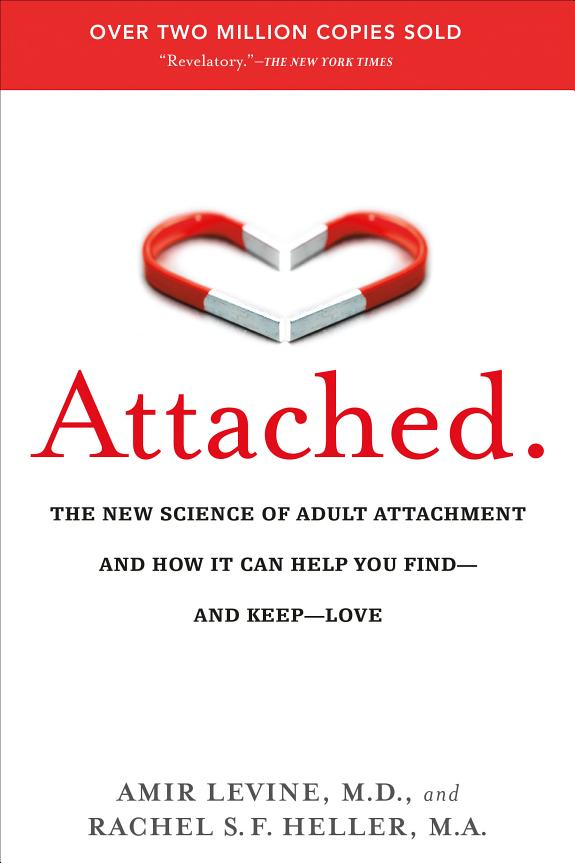
- Levine and Heller perform a radical inversion of depth psychology's valorization of independence by recasting secure dependency not as developmental arrest but as the neurobiological baseline from which all genuine autonomy emerges.
- The book's tripartite taxonomy of attachment styles (anxious, avoidant, secure) functions less as personality typology and more as a diagnostic grammar for decoding the protest behaviors, deactivating strategies, and projective patterns that depth psychologists have long described in mythological or archetypal language.
- By positioning the avoidant style as the culturally rewarded default in Western romance, Levine and Heller expose a collective shadow: the ideal of self-sufficiency in love is not maturity but a socially sanctioned defense mechanism that perpetuates the very isolation it claims to transcend.
Attachment Theory Dismantles the Western Romance of Self-Sufficiency, Not the Need for Others
The conceptual engine of Attached is a direct challenge to one of the most entrenched assumptions in both popular culture and depth psychology: that emotional independence is the hallmark of maturity. Levine and Heller draw on decades of empirical research—Bowlby, Ainsworth, Hazan and Shaver—to argue that the human nervous system is wired for co-regulation, and that dependency on a specific attachment figure is not regression but biological design. This confronts a tradition running from Rilke’s injunction to “stand guard over the solitude of the other” through Hollis’s insistence that “no one can give me what I most deeply want or need. Only I can.” Hollis frames the mature relationship as one in which each party is “primarily in charge of his or her own individuation,” and warns that attachment hunger signals developmental arrest. Levine and Heller would not disagree that projection-fueled merger is destructive, but they refuse the corollary that needing your partner’s consistent emotional presence is itself pathological. Their core claim—that secure attachment is the platform from which individuation becomes possible, not its antithesis—reframes what Hollis calls the “fusion model” versus the “basin-shaped container” by adding a neurobiological third term: the regulated nervous system that only forms through reliable relational contact. The anxious person is not merely projecting parental complexes; they are operating from a dysregulated baseline that no amount of solitary insight can correct without relational repair.
The Avoidant Style Is Not Autonomy—It Is the Culture’s Preferred Defense
One of the book’s sharpest contributions is its identification of avoidant attachment as the culturally endorsed ideal. Levine and Heller detail how avoidant individuals deploy “deactivating strategies”—mentally cataloguing a partner’s flaws, fantasizing about the phantom ex, maintaining rigid independence as a preemptive strike against vulnerability—and demonstrate that Western dating culture mistakes these maneuvers for strength. This resonates powerfully with Hollis’s observation that modern men inhabit a “numbed zone” in the chest, conditioned to shun feeling and override inner truth, becoming “strangers to themselves and others, slaves to money, power and status.” The avoidant style, in Levine and Heller’s framework, is precisely this numbing elevated to relational strategy. Greene and Sasportas make the complementary point from a developmental angle: the infant who bites and loses the breast learns that aggression—that is, authentic assertion of need—means losing love, and carries forward “a deeply ingrained belief that if we are assertive or aggressive we risk losing love, wholeness, and a sense of unity.” The avoidant adult has internalized this equation so thoroughly that they preempt the loss by never fully arriving. What Attached adds to this depth psychological insight is the behavioral specificity: deactivating strategies are catalogued, named, and made identifiable in real time, giving the reader diagnostic power that mythological amplification alone cannot provide.
Protest Behavior as the Anxious Style’s Shadow Language
Equally precise is the book’s treatment of “protest behavior”—the escalating bids for contact that anxious individuals deploy when their attachment system is activated: excessive calling, score-keeping, threatening to leave without meaning it, acting hostile to provoke engagement. Levine and Heller frame these not as character defects but as the desperate output of a nervous system that has learned its signals will be inconsistently received. This clinical specificity maps onto what Hollis describes in his portrait of Norma, who “chooses wrongly, sabotages every relationship by inordinate expectations and demands that drive the other away, resulting in the very loneliness she fears.” Hollis reads this pattern as the repetition compulsion of primal wounding and prescribes the courage to embrace loneliness. Levine and Heller would agree that insight is necessary but add a structural corrective: the anxious person does not merely need to embrace aloneness—they need to stop pairing with avoidant partners whose intermittent reinforcement keeps the attachment system in permanent alarm. The book’s most practical and controversial claim is that the anxious-avoidant pairing, far from being the tragic fate of wounded souls, is a predictable systemic trap that can be exited through conscious partner selection. This is not naïve optimism; it is an intervention at the level of behavioral pattern that complements, rather than replaces, the depth work of examining one’s complexes.
The Secure Base as the Ground of Individuation, Not Its Opposite
The deepest provocation of Attached is its revaluation of the secure style as generative rather than merely stable. Secure individuals, in Levine and Heller’s account, communicate needs directly, tolerate ambiguity without deactivating or escalating, and—crucially—support their partner’s autonomy precisely because their own nervous system is not under threat. This mirrors what Wiener, drawing on Siegel’s interpersonal neurobiology, calls the “transference matrix”: a relational structure whose energy is “greater than the combination of the two people within it,” a co-constructed womb from which genuine psychological development can emerge. The secure relationship is not Hollis’s “fusion model” but something closer to his ideal “basin-shaped container”—except that Levine and Heller insist the basin is neurobiologically constructed, not merely willed into being through insight and courage. Hillman’s daimon, which “sees what is already there in the acorn,” selects the beloved for reasons that exceed rational comprehension; but Attached argues that what we do once the daimon has spoken—how we regulate proximity, communicate distress, and tolerate separateness—follows lawful patterns that can be understood and deliberately shifted.
For readers encountering depth psychology today, Attached occupies a unique and necessary position: it provides the behavioral and neurobiological grammar that makes the archetypal and analytic traditions actionable in daily relational life. It does not replace the soul-work of Hollis, the imaginal precision of Hillman, or the developmental archaeology of Bowlby-via-Greene and Sasportas. What it does, with uncommon clarity, is translate attachment theory’s empirical findings into a decision-making framework for choosing and sustaining intimate partnership—a territory where depth psychology has too often oscillated between the counsel to embrace one’s solitude and the acknowledgment that we are relational to the marrow. Levine and Heller hold both truths and show that the second is not the enemy of the first.
Sources Cited
- Levine, A., & Heller, R. (2010). Attached: The New Science of Adult Attachment and How It Can Help You Find—and Keep—Love. TarcherPerigee. ISBN 978-1-58542-795-0.
- Bowlby, J. (1969). Attachment and Loss, Vol. 1: Attachment. Basic Books.
- Hazan, C., & Shaver, P. (1987). Romantic Love Conceptualized as an Attachment Process. Journal of Personality and Social Psychology, 52(3), 511–524.
- Flores, P. J. (2004). Addiction as an Attachment Disorder. Jason Aronson.
- Main, M., & Hesse, E. (1990). Parents' Unresolved Traumatic Experiences Are Related to Infant Disorganized Attachment Status. In M. T. Greenberg, D. Cicchetti, & E. M. Cummings (Eds.), Attachment in the Preschool Years (pp. 161–182). University of Chicago Press.