Seba.Health
Key Takeaways
- Wu Wei's *Handbook* strips the I Ching of its cosmological and philosophical superstructure to produce a purely functional divinatory instrument, inadvertently demonstrating that accessibility and depth are genuinely antagonistic rather than complementary goals in oracular literature.
- By eliminating the tension between text and commentary that every serious I Ching edition preserves, Wu Wei collapses the hermeneutic space that makes divination psychologically productive — the very ambiguity Jung identified as the oracle's mechanism for surfacing unconscious content.
- The book's real contribution is diagnostic: it reveals what a contemporary Western audience wants from an oracle (clear answers, reduced anxiety, actionable guidance) and thereby exposes the ego's resistance to the numinous encounter that oracular consultation is designed to provoke.
The Desire for a Handbook Is Itself the Problem the I Ching Was Designed to Address
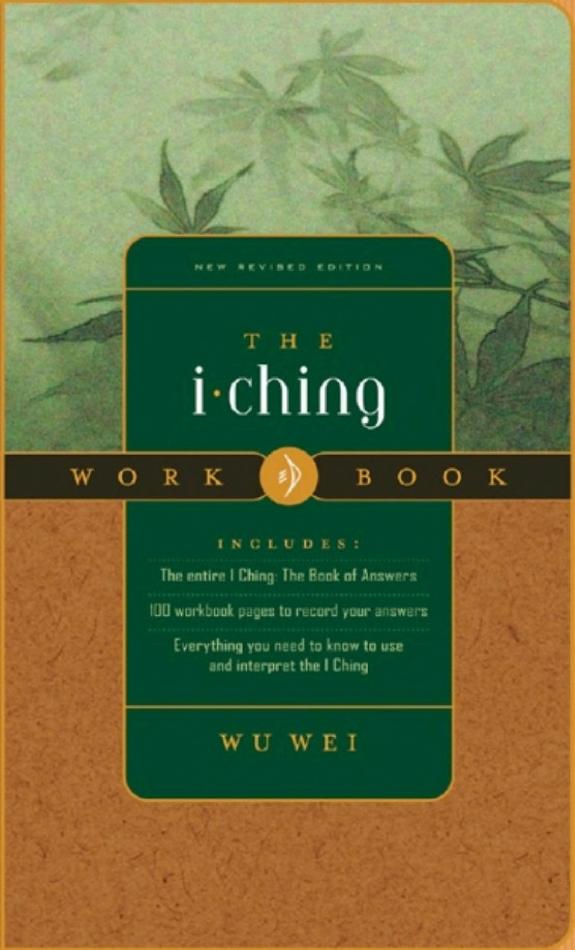
Wu Wei’s The I Ching Handbook (1999) arrives in a crowded field with a deceptively simple proposition: make the I Ching easy to use. The book reorganizes the sixty-four hexagrams into a quick-reference format, provides plain-language interpretations shorn of classical commentary, and offers step-by-step instructions for coin and yarrow-stalk methods. It positions itself as a practical gateway — the oracle as self-help tool. What Wu Wei does not acknowledge, and what the entire tradition of I Ching scholarship makes unavoidable, is that the difficulty of the text is the text. The obscurity, the layered metaphor, the resistance to single interpretation — these are not obstacles to divination but constitutive of it. Alfred Huang, whose Complete I Ching (1998) appeared the year before, insists that “reading the I Ching does not mean reading sentences that make sense, but rather creating their own personal understanding from archetypal, poetic images.” Wu Wei’s project of clarity works against precisely this generative ambiguity. The handbook format promises resolution where the oracle demands suspension.
Reducing Polysemy to Prescription Forecloses the Unconscious Dialogue That Gives Divination Its Power
The most consequential decision in Wu Wei’s book is the flattening of each hexagram’s meaning into a digestible advisory paragraph. Compare this with Ritsema and Karcher’s I Ching: The Classic Chinese Oracle of Change (1994), which emerged from the Eranos Foundation’s decades of Jungian scholarship and deliberately preserves what they call the “multivalence” of each term — translating characters as gerunds to maintain their status as “fields of action” rather than fixed nouns. Ritsema and Karcher’s method is painstaking: one-to-one character translation, strict preservation of word order, no added connectives to manufacture grammatical sense. The result is difficult, sometimes baffling prose — and that is the point. Their translation functions as what they call “an imaginative space set off for a dialogue with the gods or spirits, the creative basis of experience now called the unconscious.” Wu Wei’s handbook, by contrast, closes that space. When you tell a reader what a hexagram means rather than presenting the conditions under which meaning might emerge, you have replaced divination with advice. The reader gets an answer but loses the encounter. Jung, in his foreword to the Wilhelm/Baynes edition, was explicit about this mechanism: the I Ching’s “peculiar fact — that a reaction that makes sense arises out of a technique which at the outset seemingly excludes all sense — is the great achievement of the I Ching.” The sense must arise; it cannot be pre-installed. Wu Wei pre-installs it.
The Missing Ten Wings: What Happens When You Sever an Oracle from Its Philosophical Skeleton
Huang’s translation devotes extensive attention to the structural logic of the sixty-four hexagrams — the sequence of names, the architecture of Upper and Lower Canons, the way Confucius’s Ten Wings function not as supplementary commentary but as the interpretive framework without which the terse original text (fewer than five thousand characters) remains opaque. Huang argues that “without Confucius’s commentaries the I Ching cannot be understood” and that “the Tao of I” — the principle that everything undergoes continuous cyclic change, reverting to its opposite at extremes — is “never mentioned in the text” but “revealed only between the lines.” Wu Wei’s handbook, designed for rapid consultation, necessarily sacrifices this structural intelligence. The reader receives hexagram-level guidance without understanding why hexagram 3 follows hexagram 2, without grasping the cosmological grammar that makes each reading part of a larger pattern of change. Thomas Cleary’s Taoist I Ching (1986), presenting Liu Yiming’s 1796 commentary, demonstrates what is possible when an interpreter brings a complete philosophical framework — in Liu’s case, Complete Reality Taoism — to bear on the hexagram texts. Liu reads every hexagram as a station on the path of inner alchemy, a guide to “comprehensive self-realization while living an ordinary life in the world.” Whether one accepts Liu’s Taoist framework or not, the commentary generates depth because it connects each hexagram to a coherent understanding of psychic transformation. Wu Wei offers no such connective tissue.
The Synchronistic Principle Requires Resistance, Not Fluency
Jung’s concept of synchronicity, first articulated in connection with the I Ching and developed formally in his 1952 monograph, depends on the oracle producing something that initially resists the conscious attitude. The hexagram must be strange enough to crack the ego’s framing of the question. Jung describes how the I Ching, consulted about his own foreword, “tells me of its religious significance, of the fact that at present it is unknown and misjudged” — an answer that surprised and reoriented him. The oracle’s power lies in its capacity to produce what Jung calls “meaningful coincidences” that feel both alien and uncannily apt. A handbook that pre-digests meaning reduces the probability of this productive estrangement. The reader who consults Wu Wei’s text encounters their own expectations mirrored back in accessible language rather than confronting the archaic, symbolic density that forces genuine psychological work. Richard Wilhelm understood this: his translation, produced through years of collaboration with the scholar Lao Nai-hsüan, preserved the text’s strangeness precisely because Wilhelm “did not envisage the learned world as his only audience” yet refused to sacrifice the depth that makes the book function as what Jung called “a method of exploring the unconscious.”
Wu Wei’s Handbook matters not for what it accomplishes but for what it symptomatically reveals: the modern appetite for oracular consultation stripped of oracular difficulty. For the depth psychology reader, it serves as a precise negative image of how divination actually works. Read it alongside Huang, Ritsema/Karcher, or the Wilhelm/Baynes edition, and you see with unusual clarity that the I Ching’s therapeutic function depends on exactly those features — opacity, multivalence, structural complexity, resistance to easy comprehension — that Wu Wei labored to remove.
Sources Cited
- Wu Wei. (1999). The I Ching Handbook: A Practical Guide. Power Press.
- Wilhelm, R. (trans.) & Baynes, C.F. (English trans.). (1950). The I Ching or Book of Changes. Princeton University Press.
- Karcher, S. (2002). Total I Ching: Myths for Change. Time Warner Books.