Seba.Health
Key Takeaways
- Otto's *numinous* is not a feeling but a category of encounter — an irreducible mode of apprehension that precedes and conditions all theological rationalization, making it the phenomenological ground zero for every subsequent depth-psychological account of the archetype.
- The "wholly other" (*ganz andere*) functions in Otto's system not as mystical escapism but as a structural negation that protects religious experience from collapse into ethics, aesthetics, or psychology — a move Walter F. Otto would later radicalize by insisting the divine manifests not in the soul's retreat but in the world's own form.
- Otto's separation of the numinous from moral and rational content exposes the same fault line Jung would exploit: if the holy is pre-rational, then the god-image in the psyche cannot be reduced to wish-fulfillment, and Freud's entire derivation of religion from trauma becomes a category error.
The Numinous Is a Perceptual Category, Not an Emotion — and This Changes Everything About How We Read the Archetypes
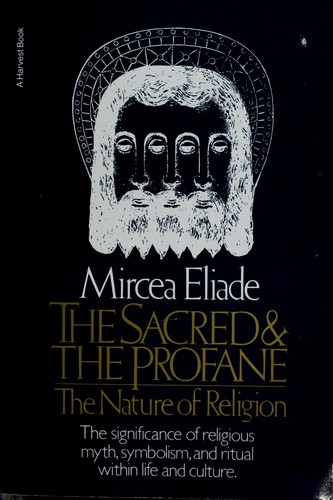
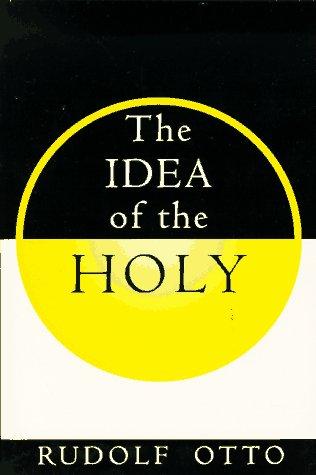
Rudolf Otto’s central achievement in The Idea of the Holy is not the coinage of the word “numinous” but the argument that the numinous constitutes an autonomous category of human apprehension — a sui generis mode of knowing that cannot be decomposed into fear, awe, love, or moral respect, though it contains analogues of all these. The mysterium tremendum et fascinans — the holy as terrifying mystery that simultaneously repels and attracts — is Otto’s phenomenological anatomy of what happens when a human being stands before something that registers as wholly other. As Mircea Eliade noted in his introduction to The Sacred and the Profane, Otto’s originality lay in bypassing the God of the philosophers entirely: “Instead of studying the ideas of God and religion, Otto undertook to analyze the modalities of the religious experience.” This is not merely a methodological preference. It is a foundational claim: the encounter with the sacred is prior to any concept of the sacred. Theology is secondary elaboration. The trembling comes first. For depth psychology, this reordering is decisive. If the numinous is a primary datum of consciousness and not a derivative of repression or projection, then Jung’s insistence that archetypes carry autonomous charge — that they seize the ego rather than being constructed by it — receives its most rigorous philosophical justification from a Lutheran theologian, not from clinical observation.
The “Wholly Other” Is Not a Doctrine of Transcendence but a Structural Prohibition Against Reduction
Otto’s ganz andere — the “wholly other” — is routinely misread as a statement about God’s remoteness. It is better understood as a formal constraint: whatever the holy is, it cannot be adequately captured by any category drawn from natural, psychological, or moral experience. Language, as Eliade observed, “is reduced to suggesting by terms taken from that experience” precisely because human expression has no native vocabulary for what exceeds the human frame. This negative epistemology places Otto in surprising alignment with the apophatic traditions of Christianity and the Eastern religions he studied, but it also places him in direct tension with Walter F. Otto’s later critique. In Dionysus: Myth and Cult, Walter Otto objected that Rudolf Otto’s holy “manifests itself only psychologically and can be comprehended only by the methods of psychology.” For Walter Otto, the divine is not the “wholly other” withdrawn behind the veil of subjective feeling; it is “the world itself as a divine form, as a plenitude of divine configurations.” The god does not retreat into the trembling soul — the god appears as the world’s own face. This is the sharpest critique Rudolf Otto’s framework ever received from within the tradition of religious scholarship, and it exposes a genuine tension: does the numinous experience reveal something about the structure of reality, or only about the structure of the psyche that encounters it? Rudolf Otto would say both, but his method tilts toward the subjective pole, and Walter Otto saw this clearly.
Otto Unwittingly Provides the Missing Phenomenology for Jung’s Archetypes — and the Missing Critique of Freud’s Reductionism
James Hillman noted, with characteristic precision, that “Otto transposed a Roman term from the imagistic context of polytheism into a Judeo-Christian theological feeling,” and that the word numen properly implies not “a wholly other Holy Power, but rather the religious nature of an image.” This is a devastating genealogical observation. It means that when Jungians invoke the “numinosity” of an archetype — as they ceaselessly do — they are borrowing a concept already stripped of its imagistic, polytheistic roots and reframed through Otto’s Lutheran monotheism. The archetype’s charge, in Hillman’s reading, does not come from its participation in the “wholly other” but from its nature as image — as a particular god with a particular face. Hillman’s critique reanimates exactly the objection Walter F. Otto leveled: the divine is not an undifferentiated abyss of feeling but a specific configuration, a Gestalt. Yet even granting Hillman’s correction, Otto’s contribution remains indispensable. His phenomenology of the tremendum — the creature-feeling of radical dependence, the sense of majestas before overwhelming power, the mysterium that exceeds conceptual capture — provides the descriptive grammar that depth psychology needs but cannot generate from within its own clinical vocabulary. When a patient in analysis encounters a dream image that leaves them shaken, speechless, and somehow enlarged, it is Otto’s categories, not Freud’s, that describe what has happened. Freud, as Walter Otto bluntly observed, derived religion from “a traumatic accident out of which man invented a ‘god’ to meet his needs” — a derivation that mistakes the fossil for the living organism, the secondary rationalization for the primary encounter. Otto’s framework makes this reduction structurally impossible: if the numinous is a category of apprehension, then it cannot be explained by what it itself makes possible.
Why the Numinous Still Precedes Every Depth-Psychological System
For contemporary readers approaching depth psychology, The Idea of the Holy occupies a position analogous to Kant’s Critique of Pure Reason in philosophy: it does not tell you what to believe, but it maps the conditions under which belief — or encounter — becomes possible. No reader of Jung, Hillman, Eliade, or Edinger can fully understand the weight these authors place on words like “numinous,” “sacred,” or “hierophany” without grasping that Otto established these terms as technical categories with precise phenomenological content. Eliade built his entire sacred-profane dialectic on Otto’s foundation while deliberately expanding beyond it: “We propose to present the phenomenon of the sacred in all its complexity, and not only in so far as it is irrational.” Walter F. Otto broke with the framework to restore the externality and specificity of the god. Hillman turned the numinous back into an attribute of the image rather than of a transcendent Other. Each correction presupposes the original structure. What no subsequent thinker has replaced is Otto’s demonstration that the encounter with the holy is irreducible — that it cannot be sourced to anxiety, wish, social need, or cognitive error without destroying the very phenomenon one claims to explain. This is what makes The Idea of the Holy not merely a classic of religious studies but the indispensable phenomenological ground for every serious engagement with the psyche’s encounter with what exceeds it.
Sources Cited
- Otto, R. (1923). The Idea of the Holy (J. W. Harvey, Trans.). Oxford University Press. ISBN 978-0-19-500210-2. (Original work published 1917)
- Jung, C. G. (1969). Psychology and Religion: West and East (CW 11). Princeton University Press.
- Eliade, M. (1959). The Sacred and the Profane: The Nature of Religion. Harcourt, Brace & World.