Seba.Health
Key Takeaways
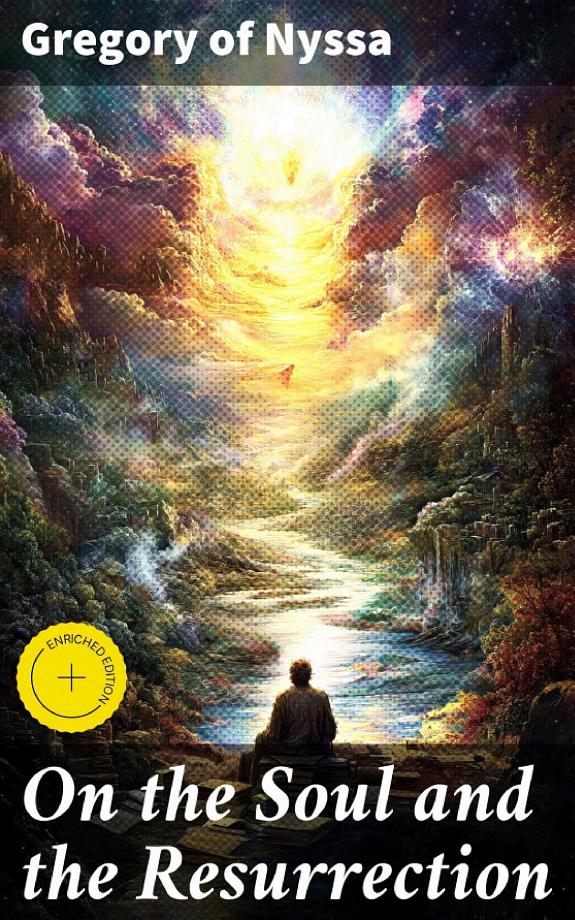
- Gregory constructs the soul not as a metaphysical substance but as a cognitive force—an epistemic principle that tracks, recognizes, and reassembles its own material elements, anticipating depth psychology's insistence that psyche is fundamentally a knowing activity rather than a static entity.
- The dialogue's architecture—Gregory as grief-stricken questioner, Macrina as dying Teacher—enacts the very psychic process it describes: consciousness moving through dissolution toward reintegration, making the text itself a performative model of the resurrection it argues for.
- Gregory's doctrine of universal restoration (apokatastasis) reframes divine punishment not as retribution but as purgative individuation—a process proportioned to the measure of psychic entanglement with passion, structurally identical to what Jung would later describe as the burning away of identification with complexes.
The Soul as Epistemic Force: Gregory Invents a Psychology of Elemental Recognition
Gregory of Nyssa’s On the Soul and the Resurrection is not a treatise on immortality in any conventional doctrinal sense. It is an investigation into what the soul does—and what it does, in Gregory’s formulation, is know. The soul “remains after dissolution in those very atoms in which she first grew up, and, like a guardian placed over private property, does not abandon them when they are mingled with their kindred atoms, and by the subtle ubiquity of her intelligence makes no mistake about them.” This is a radical claim: the soul’s identity is constituted by its relationship to particularity, not by abstract self-subsistence. Gregory deploys the painter analogy—an artist who mixed colors into a specific tint would recognize each constituent dye if the mixture were dissolved—to argue that psyche persists as a differential intelligence, a capacity for discrimination that survives the collapse of composite form. This places Gregory in direct conversation with Jung’s insight in Aion that consciousness is fundamentally an act of discrimination, a separating-out of elements from the undifferentiated matrix. Where Jung locates this discriminating function in the ego-Self axis, Gregory locates it in the soul’s inalienable relationship to its own embodied history. The soul does not flee matter; it inhabits matter’s dispersal with an exactitude that borders on obsession.
Macrina’s Deathbed as the Alchemical Vessel
The dialogue’s setting is not decorative. Gregory arrives shattered by grief over Basil’s death; Macrina lies dying. She “gave in to me for a little while, like a skilful driver, in the ungovernable violence of my grief; and then she tried to check me by speaking, and to correct with the curb of her reasonings the disorder of my soul.” The metaphor of the charioteer is deliberate—it directly invokes and repurposes the Platonic Phaedrus, yet Macrina immediately dismisses Platonic soul-theory as inadequate. What replaces it is a dialogical process in which grief itself becomes the medium of transformation. Gregory confesses that Scripture’s promises strike him as “mere commands compelling us to believe,” not as truths grasped by reason—a startlingly honest admission of the gap between doctrinal assent and psychic conviction. Macrina does not close that gap with authority; she closes it with sustained dialectical pressure, forcing Gregory to articulate the strongest objections against the soul’s persistence so she can metabolize them. This structure mirrors what James Hillman describes in Re-Visioning Psychology as the soul’s need to “see through” its own literalisms. Macrina’s method is not apologetics but psychagogy—a leading of the soul through its own resistances. That she accomplishes this while dying makes the dialogue a contained alchemical operation: the vas is mortality itself, and the opus is the transformation of grief into understanding.
Passion as Accretion, Not Essence: Gregory’s Proto-Theory of Complexes
Gregory’s treatment of anger and desire constitutes one of the most psychologically sophisticated moves in patristic literature. Against those who would make thumos and epithumia essential to the soul (the Platonic tripartite model), Macrina insists they are “not originally part of ourselves” but “varying states” accrued through the soul’s entanglement with animal existence. She invokes Moses as evidence: he was “meek beyond all men” and “desired none of those things about which we see the desiring faculty in the generality so active,” proving that these passions can be wholly shed without destroying the person. This is not Stoic suppression—it is a claim about ontological priority. The passions are the “tares” sown among the wheat of the soul’s intellectual nature. Gregory’s “coats of skins”—the garments God gave Adam and Eve after the Fall—are explicitly decoded as “that conformation belonging to a brute nature with which we were clothed when we became familiar with passionate indulgence.” Strip the coats, and what remains is the image of God. This maps with startling precision onto Edward Edinger’s account in Ego and Archetype of the ego’s progressive dis-identification from inflated complexes. For Gregory, as for Edinger, the self’s authentic form is revealed not by adding something but by removing what was never essential. The purgatorial fire Gregory describes is not punitive but analytic—it burns away precisely what does not belong.
Resurrection as Reconstitution: The Seed, the Ear, and the Return to Original Form
Gregory defines resurrection as “the reconstitution of our nature in its original form”—not the reassembly of a corpse but the restoration of the human image to its pre-lapsarian wholeness. He appropriates Paul’s seed metaphor with extraordinary specificity: “We too were once in a fashion a full ear; but the burning heat of sin withered us up.” The first Adam was the original ear; humanity in its fallen state is the scattered grain. Resurrection reverses this: “instead of that single primitive ear we become the countless myriads of ears in the cornfields.” This is not a return to Eden but an eschatological amplification—the original unity proliferates into a more complex, more differentiated wholeness. The parallel to Jung’s concept of individuation is structural, not merely analogical. Jung insists in Mysterium Coniunctionis that the goal is not regression to an original unconscious unity but the achievement of a conscious wholeness that integrates what was dissolved. Gregory’s vision of the resurrected body—“not indeed into this organization with its gross and heavy texture, but with its threads worked up into something more subtle and ethereal”—describes exactly this: the same elements, the same identity, but woven into a higher order of integration.
What makes this text irreplaceable for anyone working within depth psychology is its refusal to separate the question of the soul’s nature from the question of the soul’s activity. Gregory does not ask what the soul is made of; he asks what the soul does when everything it depended on collapses. His answer—that it persists as a discriminating intelligence, tracking its own scattered elements through dissolution, maintaining identity not through substance but through relational knowledge—provides a fourth-century foundation for the depth-psychological conviction that psyche is not a thing but a process, not a possession but a vocation of attention.
Sources Cited
- Gregory of Nyssa (c. 380). On the Soul and the Resurrection. Trans. in Nicene and Post-Nicene Fathers, Second Series, Vol. 5. Christian Literature Publishing, 1892.
- Meredith, Anthony (1999). Gregory of Nyssa. Routledge.