Seba.Health
Key Takeaways
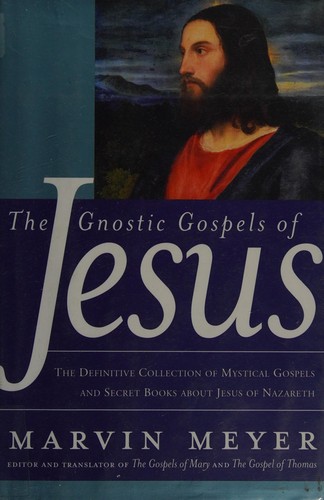
- Meyer's collection demonstrates that the earliest strata of Jesus tradition—Q, Thomas, and the wisdom sayings—already contain the gnostic seed of self-knowledge as salvation, making Gnosticism not a later corruption of Christianity but a parallel bloom from the same root.
- The volume's most radical interpretive move is reframing the Gnostic divine pleroma as psychology rather than metaphysics: the emanations of the divine One (nous, pronoia, ennoia, epinoia, sophia) are simultaneously cosmic myth and a map of the mind's own structure—making these texts direct precursors to depth psychology's cartography of the psyche.
- By assembling gospels of wisdom alongside gospels of the cross, Meyer exposes the canonical narrowing of Christianity as a specific editorial decision rather than an inevitable theological outcome, revealing a suppressed tradition in which ignorance—not sin—is the fundamental human affliction, and awakening—not atonement—is the cure.
Gnosis as Self-Knowledge: The Delphic Imperative at the Heart of the Jesus Tradition
Meyer’s forty-page introduction to this collection is not a neutral preface but a sustained argument: the historical Jesus was a Jewish wisdom teacher whose earliest sayings already pointed toward the gnostic imperative of self-knowledge, and the gnostic gospels represent a legitimate—not heretical—elaboration of that original impulse. The key passage is Meyer’s observation that in the Gospel of Thomas, Jesus “is not a teacher in the conventional sense” but “more like a bartender” who serves the intoxicating drink of knowledge that people must consume for themselves (13:5). This is the gnōthi sauton of Delphi transplanted into Galilean soil. Meyer draws the explicit line from the Greek oracular inscription through Plato’s Alcibiades I and Plutarch’s On the E at Delphi to Thomas, Philip, and the Secret Book of James. The implication is architectonic: the gnostic Jesus is not a Hellenistic distortion of a Jewish prophet but the convergence point of two ancient traditions of interior knowledge. Hans Jonas, whom Meyer cites on the metaphors of forgetfulness and sleep that pervade gnostic anthropology, made the same point structurally in The Gnostic Religion: the gnostic experience of the self as alien in a hostile cosmos is not derivative but constitutive. Karen King, in What Is Gnosticism?, extended Jonas’s insight by arguing that Gnosticism and Christianity are “two species of the same genus,” contemporaneous responses to the same existential crisis. Meyer’s collection provides the primary evidence for both claims, assembled in one place for the first time with this degree of translational care.
The Pleroma Is Within: Gnostic Cosmology as Depth Psychology Avant la Lettre
The most consequential feature of Meyer’s editorial framing is his insistence that the mythological cosmologies of the Sethian and Valentinian texts are simultaneously maps of interiority. He notes that in the Holy Book of the Great Invisible Spirit and the Secret Book of John, “the emanations and expressions of the divine One are mental characteristics and capabilities—mind (nous), forethought (pronoia), thought (ennoia), insight (epinoia), wisdom (sophia), even mindlessness (aponoia). Hence, the story of the unfolding of the divine One is as much a story about psychology as it is about mythology and metaphysics.” This is not an incidental remark. It is the hermeneutic key to the entire volume. When Elaine Pagels, in Beyond Belief, identifies epinoia as “a latent capacity within our hearts and minds that links us to the divine,” she is reading the Secret Book of John as Jung read alchemical texts—as projections of psychic processes onto cosmological screens. Meyer positions his translations to make this reading unavoidable. The Gospel of Philip’s declaration that “what is innermost is the fullness, and there is nothing further within” (68) is a statement that collapses the distinction between transcendent pleroma and immanent psyche. The Gospel of Mary’s account of the soul’s ascent through darkness, desire, ignorance, and wrath reads less like celestial geography than like a phenomenology of psychological integration—a passage through what Jung would call the shadow, the anima/animus, and the inflation of ego-consciousness. Edward Edinger’s reading of the ego-Self axis in Ego and Archetype finds an uncanny precursor here: the gnostic spark within the human being is structurally identical to the Self as the ordering center of the total psyche, and the process of gnosis—the flash of self-recognition—maps precisely onto what Edinger calls the encounter with the numinosum that relativizes the ego.
Gospels of Wisdom versus Gospels of the Cross: The Suppressed Alternative
Meyer’s organizational principle—gathering twelve texts that are explicitly not gospels of the cross—constitutes a polemical act of recovery. He observes that the New Testament gospels are, as one scholar put it, “passion narratives with long introductions,” and that the canonical narrowing to a theology of atonement through crucifixion excluded an entire tradition in which “the human problem that is addressed is not sin but rather ignorance.” In the Gospel of Truth, Valentinus transforms the crucifixion itself: Jesus “was nailed to a tree, and he became fruit of the knowledge of the father”—not a sacrifice for sin but a disclosure of divine will. The Second Discourse of Great Seth goes further, depicting the living Christ laughing on high while the cosmic rulers crucify the wrong person entirely. These are not marginal curiosities. They represent what Meyer calls “multiple gospels, multiple proclamations of good news, multiple ways of understanding Jesus.” The Round Dance of the Cross, extracted from the Acts of John, delivers the most psychologically sophisticated formulation: “If you knew how to suffer you would be able not to suffer. Learn how to suffer and you will be able not to suffer” (96). Meyer, following Pagels, notes that this wisdom “resembles the wisdom of the Buddha.” It also resembles the core insight of modern trauma theory—that understanding suffering’s mechanism is the precondition for its transcendence. Bessel van der Kolk’s thesis in The Body Keeps the Score that traumatic memory must be consciously processed rather than merely endured is structurally the gnostic claim: unconscious suffering (ignorance) destroys; conscious knowledge of suffering liberates.
Why This Collection Matters Now
Meyer’s volume is not merely a convenient anthology. It is an argument, conducted through translation choices, editorial framing, and strategic juxtaposition, that the gnostic tradition constitutes an unbroken lineage of interior knowledge stretching from Delphi through first-century Palestine into the Valentinian schools of second-century Rome—a lineage that depth psychology has been unconsciously continuing. For anyone working through Jung’s Aion or Answer to Job, or tracing the archetype of the divine child through Kerényi, or wrestling with Hillman’s insistence that soul-making requires the dissolution of literalized belief, Meyer’s translations provide the missing textual substrate. No other single volume makes the primary sources of gnostic Christology this accessible while simultaneously arguing, with scholarly precision, that these texts are not theological aberrations but the earliest systematic explorations of what it means to know oneself—and in knowing oneself, to encounter the divine. The bartender metaphor is Meyer’s quiet masterpiece: Jesus does not teach; he serves. The drinking is yours to do.
Sources Cited
- Meyer, Marvin W. (2005). The Gnostic Gospels of Jesus: The Definitive Collection of Mystical Gospels and Secret Books about Jesus of Nazareth. HarperSanFrancisco.
- Robinson, James M. (ed.) (1977). The Nag Hammadi Library in English. Harper & Row.