 Seba.Health
Key Takeaways
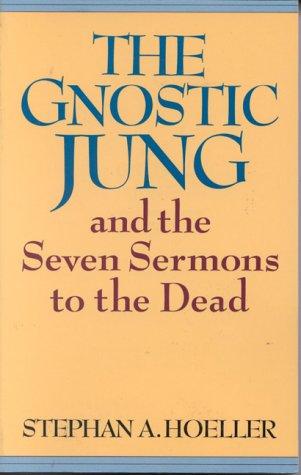
- Hoeller's central achievement is demonstrating that the *Seven Sermons to the Dead* is not a biographical curiosity but the structural blueprint of Jung's entire analytical psychology—every major concept from archetypes to individuation to synchronicity exists in embryonic form within this 1916 Gnostic text.
- The book reclaims "Gnostic" as a precise psychological category—not a heresy, not a philosophy, but the designation for anyone whose relationship to the numinous is experiential rather than creedal—thereby dissolving the false dichotomy between Jung-as-scientist and Jung-as-mystic that has distorted reception of his work for decades.
- Hoeller's reading of Abraxas as the "dynamism of the fullness of being" provides the missing link between Jung's concept of the Self and the problem of evil, positioning the *Seven Sermons* as Jung's earliest and most radical attempt at what he would later formalize in *Answer to Job*—the insistence that wholeness, not goodness, is the telos of psychic life.
The Seven Sermons Is Not Jung’s Juvenilia but the Source Code of Analytical Psychology
Stephan Hoeller’s The Gnostic Jung and the Seven Sermons to the Dead makes a claim that most Jungian commentators either dance around or actively suppress: the Septem Sermones ad Mortuos, that strange pseudo-Gnostic text Jung privately printed around 1916, is not an embarrassing footnote to the Collected Works but the “fount and origin” of the entire system. Hoeller traces, sermon by sermon, how every load-bearing concept in analytical psychology—the Pleroma, the archetypes as autonomous gods, the compensatory structure of the unconscious, the coincidentia oppositorum, the distinction between personal and collective unconscious, the religious function of the psyche—appears first in this visionary document, clothed in the mythological idiom of Basilides of Alexandria rather than the clinical idiom of Zurich. What Jung later formalized as the Self is here called the Pleroma; what he would call individuation is here described as the human being becoming a “portal” between macrocosm and microcosm. The implication is severe: analytical psychology is not a science that incidentally resembles Gnostic myth—it is a modern Gnostic system that adopted scientific language to survive the twentieth century. Hoeller states this without hedging, citing Jung’s own admission in the Red Book appendix that he worked on the visionary material for sixteen years, “a period of time far in excess of the one usually assumed.” This positions the Seven Sermons alongside what Edward Edinger, in The New God-Image, identified as the central crisis of modern psychology: the realization that the God-image is not external dogma but a living, evolving structure within the objective psyche.
Abraxas Solves the Problem That Answer to Job Later Formalizes
The most electrifying section of Hoeller’s commentary concerns the Third Sermon and its figure of Abraxas—the terrifying deity who is “the dynamism of the fullness of being,” beyond good and evil, simultaneously creative and destructive. Hoeller recognizes that Abraxas is Jung’s earliest articulation of the dark side of the God-image, the insight that wholeness necessarily includes what the ego experiences as evil. This is the same insight that would take Jung another thirty-five years to express in the language of theology in Answer to Job (1952), where Yahweh’s unconsciousness and moral ambiguity become the engine of divine transformation. But where Answer to Job works through the existing scriptural tradition, the Third Sermon operates without apology in full Gnostic register: Abraxas is “that force which you do not wish to acknowledge” precisely because acknowledgment shatters the ego’s comfortable moral bifurcation. Hoeller quotes Miguel Serrano’s formulation—that Abraxas means “Total Man”—and connects it to Jung’s lifelong insistence that the Self is not a pleasant archetype but a “mysterium tremendum et fascinans.” This places the Seven Sermons in direct conversation with Erich Neumann’s Depth Psychology and a New Ethic, which argues that the integration of shadow is not a private therapeutic affair but a civilizational imperative. What Neumann worked out philosophically, Jung had already enacted mythopoetically in 1916.
Gnosis as Method Dissolves the Faith-Versus-Science Deadlock
Hoeller’s most consequential interpretive move is his rigorous distinction between Gnosis as experience and Gnosticism as historical doctrine. Drawing on Gilles Quispel’s thesis in Gnosis als Weltreligion—that Gnosticism is neither philosophy nor heresy but “a specific religious experience which then manifests itself in myth and/or ritual”—Hoeller argues that calling Jung a Gnostic is not a slur (as Martin Buber intended) but a precise description of his epistemological method. Jung did not believe in the unconscious; he experienced it. He did not theorize archetypes; he encountered them as autonomous entities with the force of gods. This reframing has massive implications for how we read the entire Jungian corpus. It means that active imagination is not a therapeutic technique borrowed from art therapy but a modern form of theurgic practice—the magician standing in the protective circle of consciousness while conversing with conjured entities. Hoeller draws this parallel explicitly, connecting Jung’s method to the ceremonial magic tradition of Proclus, Iamblichus, and the Hermetic grimoires. This is territory that James Hillman would later approach from a different angle in Re-Visioning Psychology, insisting that the gods are real as psychological presences; but where Hillman de-centers the ego in favor of polytheistic imaginal pluralism, Hoeller’s Jung retains the alchemical container of consciousness—the opus contra naturam—as essential to the work. Without that container, one does not practice Gnosis; one merely inflates.
The Dead Are Not Metaphors—They Are the Unlived Life of the Culture
Hoeller’s reading of “the dead” in the Sermons’ framing device deserves particular attention. He connects them to the Gnostic inversion of life and death drawn from Heraclitus: “The life of the body is the death of the soul.” The dead who come “back from Jerusalem” demanding teaching are not ghosts but representatives of a Christian civilization that has lost its own Gnosis—souls who believed without knowing, who possessed doctrine but not experience. This is the same diagnosis Jung would render clinically when he described the “general neurosis of our time” as meaninglessness. Hoeller makes clear that the Sermons’ dramatic structure—dead souls interrogating a living Gnostic master—is not literary ornament but an enactment of the compensatory relationship between the conscious attitude of an age and its unlived unconscious content. When the dead mock Basilides about “church and holy community” in the Fifth Sermon, they express the cynicism of a culture whose religious institutions have calcified into precisely the dead faith that Gnosis was meant to replace. This resonates powerfully with Murray Stein’s analysis in Jung’s Map of the Soul of how collective psychological stagnation drives compensatory eruptions from the unconscious.
For anyone navigating the intersection of depth psychology and spiritual practice today, Hoeller’s book does something no other commentary achieves: it demonstrates that Jung’s most important text is not Memories, Dreams, Reflections, not The Red Book, and not Answer to Job, but a seven-page Gnostic treatise he gave away to friends and tried to forget. The Seven Sermons is the seed; everything else is the tree. Hoeller provides the only sustained, sermon-by-sermon exegesis that treats this text with the seriousness of a scriptural commentary, revealing analytical psychology not as a branch of medicine but as the Western tradition’s most recent—and perhaps most successful—attempt to restore the experiential knowledge of the soul that orthodoxy buried seventeen centuries ago.
Sources Cited
- Hoeller, Stephan A. (1982). The Gnostic Jung and the Seven Sermons to the Dead. Quest Books / Theosophical Publishing House.
- Jung, C.G. (1916). Septem Sermones ad Mortuos. Private printing; later appended to Memories, Dreams, Reflections (1963).