 Seba.Health
Key Takeaways
- Greene's central move is not rehabilitating Saturn astrologically but redefining it as the Jungian shadow — the psychic mechanism by which unconscious pain becomes the sole gateway to individuation, making Saturn the operative bridge between esoteric astrology and depth psychology.
- The book dismantles the "malefic" category in astrology by demonstrating that it rests on the same moral splitting that Christianity imposed on the psyche — the separation of God from Satan, light from shadow — and that restoring Saturn's duality is structurally identical to integrating the shadow in Jungian analysis.
- Greene treats relationships not as sites of happiness but as Saturnian crucibles where unconscious projection is the actual mechanism of attraction, anticipating relational psychoanalytic models and rendering synastry a diagnostic tool for shadow work rather than compatibility matching.
Saturn Is Not a Planet but a Name for the Shadow’s Demand That Consciousness Be Earned
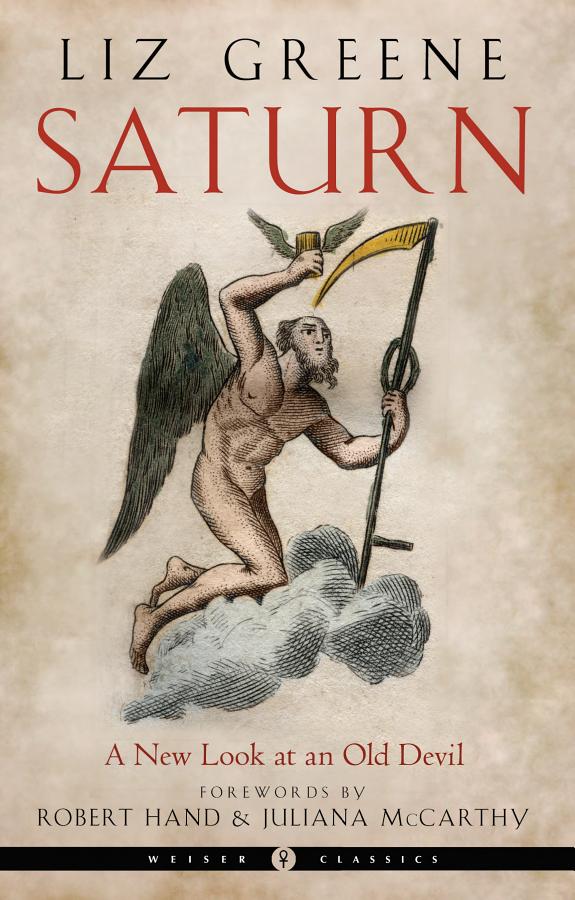
Liz Greene opens Saturn with the fairy tale of Beauty and the Beast and never leaves its logic. The Beast does not become the Prince through the heroine’s tolerance or patience; he transforms only when loved for his own sake — as Beast. This is Greene’s interpretive key to everything that follows. Saturn, traditionally astrology’s “greater malefic,” is reconceived not as an external affliction but as the psychic process by which an individual encounters the refused, feared, and repressed dimensions of selfhood. Greene draws explicitly on Jung’s concept of the shadow — “the dark side of the conscious ego which contains qualities which we either repress because they are not in accord with our self-image or which we are unaware of because they are in embryonic, or infantile, form.” Saturn’s sign and house placement maps where the shadow concentrates, and its aspects reveal how that shadow distorts or enriches every other psychic function. This is not metaphor applied retroactively; Greene argues that Saturn is the shadow rendered in symbolic language, and that astrology without this psychological dimension produces only “flat, two-dimensional” interpretation indistinguishable from moral prescription. The claim aligns her with Edward Edinger’s insistence in Ego and Archetype that symbolic systems become sterile when severed from the lived experience of the ego-Self axis, and it anticipates James Hillman’s later polemic against literalizing archetypal images into behavioral diagnoses.
The Christianization of Astrology Produced the Same Split That Christianization Inflicted on the Psyche
Greene’s most provocative structural argument is historical: the classification of planets into “benefics” and “malefics” mirrors the Christian bifurcation of good and evil into absolute, irreconcilable opposites. “Carl Jung once wrote that before Christianity, evil was not quite so evil,” she notes, “and it might be said that in Christianising astrology, we have lost many of the subtle paradoxes which this rich symbolic system contains.” This is not a throwaway cultural observation. Greene is diagnosing a collective pathology — the refusal of ambivalence — that operates at both the cultural and intrapsychic level. In Gnostic teaching, she reminds us, Jesus and Satanael were twin sons of God, each necessary; the Sun and Saturn are “two faces of one psychic fact which we call the ego.” The medieval alchemists knew that lead (Saturn) already contained gold (Sol). What the tradition of malefic astrology accomplished was, in effect, a cosmic projection: it externalized the shadow onto the planetary symbol and then called the resulting suffering “karma” or “fate” — precisely the maneuver Freud identified as projection and Jung elaborated as the shadow mechanism. This argument resonates powerfully with Marion Woodman’s work on the body as shadow-carrier in Addiction to Perfection, where culturally sanctioned splitting produces symptoms that appear as individual pathology but are collective in origin.
Relationships Are Saturn’s Laboratory, Not Venus’s Garden
Perhaps the most clinically useful dimension of Saturn is Greene’s treatment of synastry. She overturns the popular assumption that relationships exist “for the purpose of being happy” and replaces it with the assertion that “we form them to complete something incomplete, and they are therefore a process of growth rather than an end in themselves.” Saturn’s exaltation in Libra, the sign of partnership, is no accident. When one person’s Saturn contacts another’s Sun, what erupts is not mere “limitation” but the full theater of shadow projection: the Saturnian partner unconsciously attempts to live through the solar partner, stifling creative expression out of fear, while the solar partner remains blind to Saturn’s vulnerability because Saturn “is so proficient at presenting a cool and uncaring face.” Greene’s analysis of Mars-Saturn contacts is equally penetrating: the contact produces not repulsion but compulsive fascination, because Mars openly displays the very qualities Saturn’s native cannot express. The person whose Saturn is triggered becomes “resolved on the domination and control of the person who threatens him.” This is attachment theory avant la lettre, dressed in astrological symbolism but describing the same anxious-avoidant dynamics that later researchers would document empirically. It also parallels Jung’s own analysis of the anima/animus projection in Aion, where the contrasexual image serves as the vehicle through which unconscious contents seize the ego.
Saturn as Scaffolding: The Destruction Must Be Timed or the Building Collapses
Greene introduces a crucial clinical caveat that separates her from the reckless “shadow work” popularized in later self-help culture. Saturn, she writes, “is the necessary scaffolding around the building of the self while this building is in construction.” The scaffolding ranges from “the unconscious defense mechanisms which stem from fear to the wise and discriminating use of silence and privacy.” If this scaffolding is shattered prematurely — particularly through the explosive contacts of Saturn with outer planets Uranus, Neptune, and Pluto — “a new one must be built, a task which may take longer than the individual has to live.” This is a direct warning against spiritual bypass and forced individuation, one that echoes Donald Kalsched’s later work in The Inner World of Trauma, where premature dissolution of defenses re-traumatizes rather than liberates. Greene’s Saturn is not simply to be “integrated” like a homework assignment; it must be approached with the same timing and respect one would accord a wound that is still healing. The alchemical nigredo — the blackening — precedes gold, but skipping stages produces not enlightenment but psychic fragmentation.
What makes Saturn irreplaceable nearly five decades after publication is not its astrological content per se but its demonstration that symbolic systems and psychological systems describe the same territory in different grammars. Greene does not subordinate astrology to psychology or vice versa; she reveals them as parallel languages for the single phenomenon of consciousness confronting its own refusals. For anyone entering depth psychology through the door of personal crisis — which is to say, through Saturn’s door — this book provides the most precise cartography available of what that threshold actually demands: not patience, not endurance, not positive thinking, but the willingness to ask why.
Sources Cited
- Greene, L. (1976). Saturn: A New Look at an Old Devil. Weiser Books.
- Jung, C.G. (1951). Aion: Researches into the Phenomenology of the Self. Collected Works, Vol. 9ii. Princeton University Press.
- Von Franz, M.-L. (1974). Shadow and Evil in Fairy Tales. Spring Publications.
- Arroyo, S. (1975). Astrology, Psychology, and the Four Elements. CRCS Publications.