Seba.Health
Key Takeaways
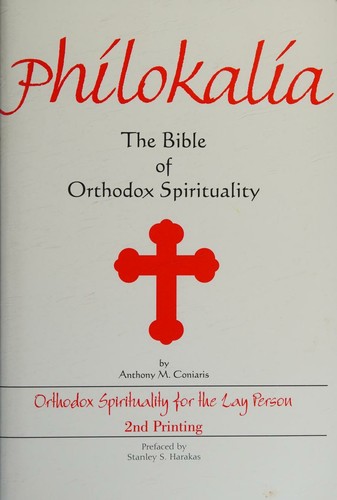
- Coniaris does not popularize the Philokalia so much as perform an act of liturgical translation—moving its monastic grammar into the vernacular of lay sacramental life without severing it from its ecclesial roots, a feat that exposes how most Western appropriations of contemplative practice are disembodied from their sacramental ground.
- The book's central psychological insight—that baptismal grace lies buried under the passions "like an ember in the ashes"—reframes spiritual work not as acquisition but as excavation, paralleling depth psychology's claim that wholeness is recovered rather than constructed.
- By insisting that the Philokalia's counsels require synergy (the cooperative interplay of human effort and divine grace), Coniaris articulates an anthropology that stands as a direct counterweight to both Calvinist passivity and Pelagian self-improvement, positioning Orthodox askesis closer to Jung's concept of active imagination than to any moralistic self-help program.
The Philokalia Is Not a Manual of Technique but a Sacramental Ecology, and Coniaris Knows This
Coniaris opens with a diagnostic that could have come from any number of depth psychologists: Alexander Solzhenitsyn’s observation that modernity suffers from “spiritual dispersal and squandering of spiritual values,” producing “an inner, aching spiritual and moral vacuum that attracts people to all sorts of gurus and spiritual charlatans.” The book’s entire architecture is a response to this vacuum. But Coniaris refuses the move that most popularizers make—extracting contemplative techniques from their living matrix and marketing them as portable wellness tools. He insists, repeatedly, that the Philokalia’s spiritual path “is inextricably bound up with the specific sacramental and liturgical life of the Orthodox Church. To attempt to practice it apart from its sacramental and liturgical moorings is to cut it off from its living roots. It will wither and die.” This is not defensive parochialism; it is a precise phenomenological claim. The Jesus Prayer, nepsis (inner watchfulness), hesychia (stillness)—these are not freestanding methods. They are organs within a body: baptism, Eucharist, chrismation, confession, the liturgical calendar. Coniaris understands that the modern hunger for “spirituality” typically severs interiority from community and sacrament, producing exactly the fragmentation it seeks to heal. Compare this to James Hillman’s critique in Re-Visioning Psychology, where Hillman attacks the ego-centered therapeutic project for isolating the psyche from its imaginal and cultural ground. Coniaris makes an analogous move from within the Orthodox tradition: the heart cannot be purified in isolation from the Body of Christ any more than a dream image can be interpreted outside its archetypal field.
Buried Grace and the Archaeology of the Soul: Where Patristic Anthropology Meets Depth Psychology
The most psychologically potent image in Coniaris’s text is St. Nicodemos’s metaphor of baptismal grace as “an ember in the ashes,” buried beneath the passions and requiring excavation through repentance, prayer, and the Jesus Prayer. This is not a metaphor of construction—building virtue brick by brick—but of recovery: the grace is already there, deposited in baptism, occluded by accumulated passions as ashes smother a coal. The task is removal, clearing, uncovering. Anyone trained in Jungian thought will recognize the structural parallel to the individuation process as described by Edward Edinger in Ego and Archetype: the Self is present from the beginning, but the ego’s identification with persona, shadow, and complex buries access to it. The therapeutic work is not to create the Self but to restore the ego-Self axis. Coniaris would never use this language, but his patristic sources articulate an identical dynamic: the image of God (the imago Dei) is ontologically given; the passions (logismoi) distort and obscure it; ascetic and sacramental practice clears the obstruction. The Philokalia’s doctrine of the passions—catalogued by Evagrius into eight principal categories, complete with specific scriptural “counter-statements” (antirrhesis) for each—functions as a diagnostic taxonomy of psychic disturbance that predates modern psychopathology by fifteen centuries. Coniaris makes this accessible without flattening it, quoting the fathers extensively so the reader encounters the texture of the original thought.
Synergy as the Antidote to Both Inflation and Deflation
One of Coniaris’s most important chapters concerns synergy—the Orthodox doctrine that salvation is neither a unilateral act of divine grace nor a human achievement, but a cooperative labor. He quotes St. Macarius: “We do not reach the final stage of spiritual maturity through divine power and grace alone, without ourselves making any effort; but neither on the other hand do we attain the final measure of freedom and purity as a result of our own diligence and strength alone.” This is psychologically sophisticated. In Edinger’s terms, inflation is the ego’s claim to be the Self (pure human effort), while alienation is the ego’s collapse before the Self’s numinosity (pure passivity before grace). Orthodox synergy occupies the precise middle ground: the human person acts, struggles, fasts, prays, repents—but all of this is response to and cooperation with a grace that initiates and sustains. Coniaris draws the practical implications with a story about George Wilson, who refused a presidential pardon and was hanged: “A gift is not valid until it is accepted.” Grace is real but not irresistible. The human will must participate. This anthropology also stands in sharp contrast to the deterministic undertones of much neuroscientific reductionism and to the helplessness paradigm that can infect trauma therapy when agency is not restored alongside safety. Gabor Maté’s work in In the Realm of Hungry Ghosts documents how addiction fills exactly the spiritual vacuum Solzhenitsyn describes; Coniaris’s presentation of the Philokalia offers not a competing diagnosis but a competing pharmacology—one rooted in sacrament, community, and the slow labor of inner attention rather than in chemical or behavioral management alone.
Theosis: The Telos That Western Psychology Lost
The book’s culminating doctrine is theosis—deification, union with God—which Coniaris calls “the foundational teaching of the Orthodox Church.” The Philokalia is, in St. Nicodemos’s words, “the instrument itself of deification.” Coniaris devotes an entire chapter to demonstrating that theosis is not an esoteric teaching for elites but the baptismal vocation of every Christian. This matters for depth psychology because it supplies what the Western therapeutic tradition conspicuously lacks: a telos. Jung gestured toward it with the concept of the Self as the God-image within the psyche, and Edinger explicitly connected individuation to the experience of the numinous. But mainstream psychology has no doctrine of final purpose, no account of what the fully realized human being looks like. Coniaris, drawing on the fathers, offers one: the human person, created in the image of God, is called to grow into the likeness of God through purification, illumination, and union. This three-stage schema—praktike, theoria, theosis—maps onto and enriches any developmental psychology of spiritual maturation.
For the contemporary reader navigating the proliferation of decontextualized mindfulness apps, secularized meditation retreats, and therapeutic frameworks that address symptoms without naming purposes, Coniaris’s book performs an irreplaceable service. It is not a scholarly edition of the Philokalia, nor does it pretend to be. It is a bridge—built by a pastor, not an academic—between the most concentrated body of contemplative wisdom in the Christian East and the lay person who senses that something essential has been lost. What Coniaris uniquely illuminates is that the Philokalia is not a collection of spiritual techniques but an integrated ecology of transformation: sacramental, communal, ascetic, and contemplative at once. No other single volume makes this case with such directness, such extensive quotation from the sources, and such uncompromising insistence that the roots must remain attached to the tree.
Sources Cited
- Coniaris, Anthony M. (1998). Philokalia: The Bible of Orthodox Spirituality. Light and Life Publishing.
- Palmer, G.E.H., Sherrard, Philip, & Ware, Kallistos (trans.) (1979-1995). The Philokalia. 4 vols. Faber and Faber.