 Seba.Health

Key Takeaways
- Campbell's foundational move is not comparative mythology but comparative zoology applied to the sacred: he treats gods and demons as species within an evolutionary taxonomy, subject to mutation, selection pressure, and ecological adaptation — making *Primitive Mythology* the first attempt at a Linnaean classification of numinous experience.
- The book's central psychological mechanism is not Jungian archetypes but the ethological concept of the Innate Releasing Mechanism (IRM), which grounds mythological recurrence not in a collective unconscious but in the hardwired sensory-motor architecture of the human organism — a materialist foundation that separates Campbell from Jung far more than either's followers typically acknowledge.
- Campbell identifies the "mythological event" — the primordial killing that inaugurates time, death, and sex simultaneously — as the nuclear insight of planting cultures, arguing that this is not a regression to infantile fantasy but humanity's first unflinching philosophical confrontation with the monstrosity of existence, a position that anticipates and exceeds existentialist formulations by rooting dread in ritual rather than cognition.
Mythology as Zoology: Campbell’s Darwinian Ambition for the Study of the Sacred
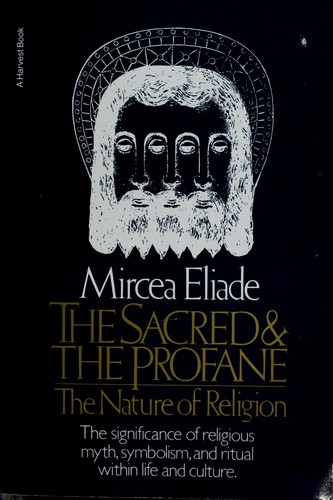
Campbell opens Primitive Mythology with a declaration that is easy to read past and devastating to take seriously: “as in the visible world of the vegetable and animal kingdoms, so also in the visionary world of the gods: there has been a history, an evolution, a series of mutations, governed by laws; and to show forth such laws is the proper aim of science.” This is not metaphor. Campbell means it as a disciplinary charter. He proposes a “natural history of the gods and heroes” modeled explicitly on zoology and botany — a classificatory science in which no deity is “sacrosanct or beyond its scientific domain.” The ambition is Baconian: to survey all available evidence, identify taxonomic regularities, and derive operative laws. What makes this radical is that Campbell refuses the two dominant frameworks of his era. He rejects the Frazerian approach that reduces myth to primitive error (the “superstition” reading), and he equally refuses the theological approach that treats certain myths as genuine revelation while dismissing others. Both, for Campbell, are provincial. The kaleidoscope metaphor he deploys — a few elements, always the same, endlessly recombined — is not decorative but structural. It posits a finite morphological inventory underlying infinite cultural variation, the mythological equivalent of what Adolf Bastian called Elementargedanken (elementary ideas) versus Völkergedanken (folk ideas). This taxonomic frame is what separates Primitive Mythology from Mircea Eliade’s The Sacred and the Profane, published the same year. Where Eliade works phenomenologically, describing the structure of sacred experience from within, Campbell works naturalistically, asking what biological and environmental forces produce the structures in the first place.
The Innate Releasing Mechanism Displaces the Archetype
The most consequential intellectual move in the book occurs in its first major chapter, where Campbell imports the ethological concept of the Innate Releasing Mechanism from Konrad Lorenz and Nikolaas Tinbergen into the study of myth. The IRM — a genetically coded behavioral response triggered by specific environmental signals — provides Campbell with a non-metaphysical explanation for the universality of mythological motifs. Birds perform ritual dances; bees communicate through patterned movement; human infants respond to the configuration of a face before they can possibly have learned what a face signifies. Campbell extends this logic: if organisms are pre-wired to respond to “sign stimuli” with species-typical behaviors, then humanity’s recurring mythological images — the devouring monster, the nurturing mother, the threshold guardian — may be grounded not in a transpersonal psychic layer (Jung’s collective unconscious) but in the vertebrate nervous system itself. This is a sharper materialism than Jung ever entertained. Where Jung’s archetypes remain ontologically ambiguous — are they inherited memory traces? Platonic forms? Structural potentials of psyche? — Campbell’s IRMs are biological mechanisms subject to empirical investigation. The Frobenius anecdote about the child and the burnt match-witch is deployed not as charming illustration but as clinical evidence: the child’s seizure demonstrates the spontaneous activation of a mythological response through play, a “self-induced belief” that operates below rational correction. This is Campbell’s answer to the question that haunted the entire Eranos circle: why do myths compel? They compel because the organism is built to be compelled. The “supernormal sign stimulus” — an exaggerated version of a natural releaser that produces an intensified response — becomes Campbell’s explanation for why ritual masks, sacred images, and mythological narratives carry emotional charges disproportionate to their literal content. This framework anticipates by decades the evolutionary psychology of religion developed by scholars like Pascal Boyer and Scott Atran, and it grounds Campbell’s later, more popular work in a rigor his audiences rarely perceived.
The Killed Dema and the Philosophical Core of Planting Culture
The book’s deepest interpretive achievement is its treatment of the mythologies of the primitive planters, specifically the figure of the killed Dema — the primordial being whose murder inaugurates the world of time, death, sex, and food. Drawing on Adolf Jensen’s fieldwork among the Marind-anim and West Ceramese, Campbell identifies in this mythologem something far more than an etiological tale. The Dema sacrifice is, he insists, “a new insight, fostering not a return to infancy but a willed affirmation of man’s fate and of the ruthless nature of being.” The planting cultures discovered that life feeds on death — that the yam, the animal, and the human body are all food — and encoded this recognition in rites that placed “sudden, monstrous death” at the center of the communal system rather than relegating it to accident. Campbell’s phrase is exact and terrible: “mythology is a verification and validation of the well-known — as monstrous.” This constitutes an epiphany, not an explanation. The rites do not operate on a do ut des logic of exchange with the divine; they are “fresh enactments, here and now, of the god’s own sacrifice in the beginning.” This reading anticipates René Girard’s Violence and the Sacred (1972) in identifying ritual killing as the generative center of culture, but diverges fundamentally: for Girard, the sacrificial mechanism conceals its own violence through the scapegoat; for Campbell, the planting rite reveals the violence of being as its highest truth. The qualm before dealing death is “precisely the human crisis here overcome.” Where Girard sees mystification, Campbell sees philosophical courage.
Why This Book Remains Irreplaceable
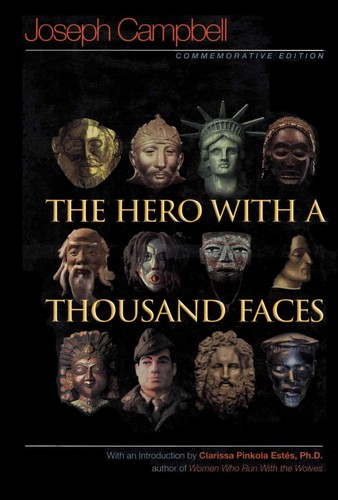
For a reader encountering depth psychology today — saturated in Jungian vocabulary, habituated to archetypal amplification — Primitive Mythology administers a necessary shock. It insists that the mythological imagination is not a free-floating psychic capacity but a biological endowment shaped by gravity, infant dependency, predator-prey relations, and the rhythms of plant life. It refuses the comfort of treating myth as “merely symbolic” while equally refusing the fundamentalist insistence that myth is literal history. The mask, Campbell demonstrates in his opening pages, is simultaneously known to be a fabrication and experienced as a genuine apparition of the god — and this double consciousness, this “as if,” is not primitive credulity but the foundational operation of all culture. No other single volume maps the trajectory from Australopithecus to the hieratic city-state while maintaining psychological coherence. It is the indispensable basement beneath Campbell’s more celebrated upper floors, and without it, The Hero with a Thousand Faces floats unanchored — a morphology of narrative without a morphology of the organism that produces narrative.
Sources Cited
- Campbell, Joseph (1959). Primitive Mythology (The Masks of God, Volume I). Viking Press.
- Campbell, Joseph (1949). The Hero with a Thousand Faces. Pantheon Books.