 Seba.Health
Key Takeaways
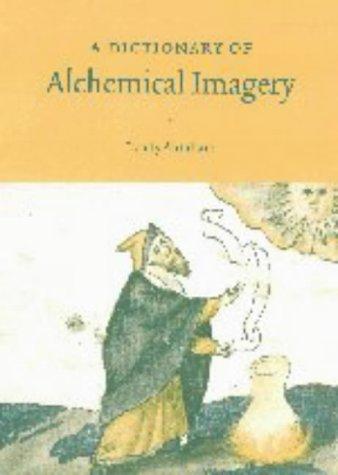
- Abraham's dictionary reveals that alchemical symbols do not have stable referents but transform their meaning according to the stage of the opus — making the dictionary itself a map of psychic process rather than a glossary of static definitions.
- The book demonstrates that the multiplicity of names for a single substance (Mercurius, the prima materia, the philosopher's stone) is not confusion but an epistemological commitment: the instability of representation mirrors the instability of the transforming substance it describes.
- By pairing every alchemical entry with literary quotations from Chaucer to Nabokov, Abraham proves that alchemical imagery is not a dead symbolic system awaiting Jungian recovery but an active current in Western literary consciousness across six centuries.
Alchemical Symbols Are Not Fixed Signs but Shape-Shifting Agents of Transformation
Abraham’s dictionary operates under a deceptively simple format — alphabetical entries, definitions, citations — but the cumulative effect dismantles any expectation that alchemical symbolism can be pinned down. The entry for “king,” for instance, reveals that it can symbolize common gold, the raw matter of the Stone, “our sulphur,” or the completed red stone, and that its meaning shifts as the substance it represents undergoes transformation. The vessel itself changes name — coffin and grave during the nigredo, womb and garden during generation — not because alchemists were careless with language but because their symbolic system tracked a living process. This is the dictionary’s fundamental insight, and it separates Abraham’s work from every prior alchemical lexicon from Martin Ruland’s 1612 Lexicon alchemiae to Mark Haeffner’s 1991 effort: she treats the mobility of meaning as the defining feature of the system rather than an obstacle to be resolved. When Jung, in Psychology and Alchemy, described alchemical imagery as the product of unconscious projection onto chemical matter, he was working from the same textual tradition Abraham catalogues. But Abraham pushes back. She argues that writers like Gerhard Dorn, Heinrich Khunrath, Thomas Vaughan, Donne, and Milton were “consciously aware of expressing purely spiritual truths in alchemical symbolism,” and that the Renaissance world view of correspondences between substances and states of mind “was not necessarily the result of unconscious projection, but a valid perception of an inner, subtle connection existing between things.” This is not a minor qualification. It reframes the entire Jungian project of reading alchemy as compensatory unconscious material, suggesting instead that at least some alchemists were doing deliberately what Jung claimed they were doing blindly.
The Multiplicity of Names Is an Epistemology, Not a Failure of Precision
Abraham devotes careful attention to the fact that a single substance — Mercurius — can be dragon, serpent, mermaid, whore, virgin, wife, flower, hermaphrodite, fleeing hart, tears, rain, dew, sea, fountain, bee, lion, priest, and philosophical tree. The philosopher’s stone is equally profligate: elixir, tincture, rose, lily, red lion, medicine, tree, ruby, red king, sun, son, daughter, homunculus, orphan, bird, phoenix. Abraham frames this not as allegorical opportunism but — drawing on Michael Bath’s work on emblematics — as “a consequence of taking the mutable variety of the created world as a source of symbols for immutable and unitary truths.” The alchemists themselves insisted on this: the author of Zoroaster’s Cave declares that “although the wise men have varied names, and perplext their sayings, yet they allwayes would have us think that of One Thing, one Disposition, one Way.” This epistemological claim has direct implications for depth psychology. When Robert Bosnak, in Embodiment, describes Jung’s method of amplification — bouncing dream images off “a backboard of collectively existing cultural image-patterns such as found in art, story, myth, and ritual” — he is describing exactly the hermeneutic practice that Abraham’s dictionary makes possible for alchemical imagery. The dictionary is, in effect, the most comprehensive amplification apparatus available for anyone working with alchemical motifs in dreams, art, or therapeutic material. But Abraham’s insistence on contextual meaning — that the moon can signify silver, argent vive, the white queen, the albedo, or the white elixir depending on the stage of the work — adds a discipline that pure amplification lacks. It demands that the interpreter know where in the process the image appears before assigning meaning.
Literary Alchemy Is Not Metaphor Borrowed but Vision Sustained
The dictionary’s most distinctive structural feature is its dual citation method: every entry includes both an alchemical source and, where possible, a literary one. This is not decorative. When Abraham places Donne’s sermon language about “liquefaction, a melting into tears, not only an ablution and a transmutation” alongside the alchemical definition of ablution, or when she sets Marvell’s “Distills the World with Chymick Ray” beside the alchemical account of sublimation, she demonstrates that these poets were not borrowing metaphors from a science they half-understood. They were participating in a unified symbolic discourse in which chemical, philosophical, and spiritual truths were interchangeable. Milton’s “arch-chemic sun” in Paradise Lost explicitly distinguishes spiritual alchemy from material alchemy — this is a writer who has internalized the tradition’s own internal critique. The literary citations run from Chaucer’s Canon’s Yeoman’s Tale through Shakespeare, Jonson, Dryden, and Herrick to Goethe, Durrell, Nabokov, Wodehouse, and Kingsley Amis. Abraham thus maps a continuous six-century literary tradition that no other reference work has documented with this density. The Amis citation — a schizophrenic son claiming he was “put together by these alchemists using the philosopher’s stone… Kept in a vault in Barcelona till needed, then triggered off by radio beam” — demonstrates that alchemical imagery persists in popular consciousness not as antiquarian decoration but as a language for speaking about fabricated identity, artificial creation, and the uncanny origins of selfhood.
The Dictionary as Instrument for Contemporary Depth Work
For a reader coming to depth psychology today, Abraham’s dictionary fills a gap that neither Jung’s alchemical trilogy nor von Franz’s specialized studies adequately address. Jung’s Mysterium Coniunctionis presupposes familiarity with the symbolic vocabulary; von Franz’s Alchemy provides narrative interpretation but not systematic reference. Abraham provides the lexical infrastructure. Her entry on the chemical wedding, for example, traces the coniunctio from its pre-Christian origins through its manifestation as animal coupling (cock and hen, amorous birds of prey), human lovers (red man and white woman), and royal marriage (Sol and Luna as king and queen), demonstrating that the image’s refinement tracks the refinement of the substance — the level of the image indicates the level of the work. This single observation transforms how one reads coniunctio imagery in dreams or in Jung’s own texts. The dictionary does not replace interpretive engagement; it makes it possible with precision. No other single volume gives the contemporary practitioner, scholar, or poet this degree of access to the symbolic system that Jung called “the historical counterpart of my psychology of the unconscious.”
Sources Cited
- Abraham, Lyndy (1998). A Dictionary of Alchemical Imagery. Cambridge University Press.
- Jung, C.G. (1944). Psychology and Alchemy. Collected Works, Vol. 12. Princeton University Press.